Organize a genuinely non-owner-occupied Ohio rental purchase or refinance around supported income, complete ownership costs and address-specific operating requirements.
Talk with Lyndi Gajan about your investment scenario · Call 816-792-2360
Ohio business-purpose rental financing
A debt service coverage ratio, or DSCR, program can evaluate an eligible rental investment using supported property income. It still requires a lender review of credit, funds, reserves, appraisal, condition, title and the actual rental arrangement. This resource concerns investment properties that will not be occupied by the borrower or the borrower’s immediate family. It does not describe owner-occupied home financing.
Ohio Administrative Code 1301:8-7-02(G) addresses loans used to invest in a dwelling for rental or resale profit, while preserving a different treatment when the borrower or immediate family occupies the dwelling or a unit. Purpose, occupancy and the full transaction must be accurately documented. An LLC is not a substitute for those facts, and a refinancing plan must identify how the loan will actually be used.
Use local operating checks before relying on rent
Ohio cities use different registration, inspection and documentation systems. Cleveland and Toledo investors should investigate lead-safe requirements for older housing. Cincinnati distinguishes registration from its targeted residential rental inspection program. Columbus adopted a rental registry ordinance in April 2026, so investors should review current implementation and property status directly with the city. Akron’s rental information system supports a review of complaint history. Canton and Youngstown have their own owner-registration and property-record resources.
A lender appraisal does not establish compliance with a city’s rental rules. Ask for registration records, outstanding orders, permitted unit counts and seller disclosures early enough to investigate them before closing. Arrange inspections and written contractor quotes for known work. The tenant-ready date, insurance coverage and reserve budget should agree with the property’s actual condition.
Coverage and ownership cash flow are different calculations
Ask the lender which rent evidence and payment components it uses. A residential DSCR calculation commonly compares supported monthly rent with principal, interest, taxes, insurance and applicable association charges. A ratio above one describes coverage under that method, not net operating profit or guaranteed approval. Vacancy, management, maintenance, leasing and future replacements still need funding.
For a hypothetical Ohio rental, $1,800 of supported rent divided by a $1,440 qualifying payment produces 1.25. If collected rent is reduced by one vacant month, annual revenue becomes $19,800 while twelve qualifying payments total $17,280. The remaining $2,520 precedes all other operating expenses. Those numbers are examples, not current Ohio rents, loan quotes or advertised thresholds.
Prepare a complete investor file
Bring the address, purchase price or estimated value, desired loan amount, rent evidence, leases, taxes, insurance quote, association charges, repair scope, occupancy, available funds and intended ownership structure. Separate supported figures from assumptions. If multiple units are involved, provide the unit-by-unit rent roll and utility responsibilities. If short stays are intended, investigate local authorization, insurance and lender acceptance separately.
For cash-out refinancing, compare both the proceeds received and the payment left on the subject rental. Verify ownership history, seasoning, value and any prepayment terms. Avoid using all released capital on another purchase before the first property’s operating and repair reserves are protected. Loan availability and terms remain subject to lender review; this guide does not promise a lender commitment.
Ohio metro investor guides
Use the local guides below as they become available. Each separates illustrative financing calculations from real case-study evidence and links directly to primary local resources.
- Columbus DSCR investor guide — rental registry and campus-oriented leases.
- Cleveland DSCR investor guide — occupancy documents and lead-safe checks.
- Cincinnati DSCR investor guide — Ohio-side tri-state scope and rental inspection.
- Dayton DSCR investor guide — base access, duplex vacancy and turn timing.
- Akron DSCR investor guide — complaint records and unit-by-unit income.
- Toledo DSCR investor guide — lead-safe timing and first-tenant reserves.
- Canton–Massillon DSCR investor guide — permit history and ownership registration.
- Youngstown–Warren DSCR investor guide — rental versus vacant-property diligence.
Related investor resources
- DSCR loan overview
- DSCR qualification requirements
- Investor reserve planning
- LLC borrower documentation
For ongoing operations, Blue Castle’s landlord and leasing education can help organize questions for local professionals; this link does not imply Ohio property-management services.
Request a property-specific review
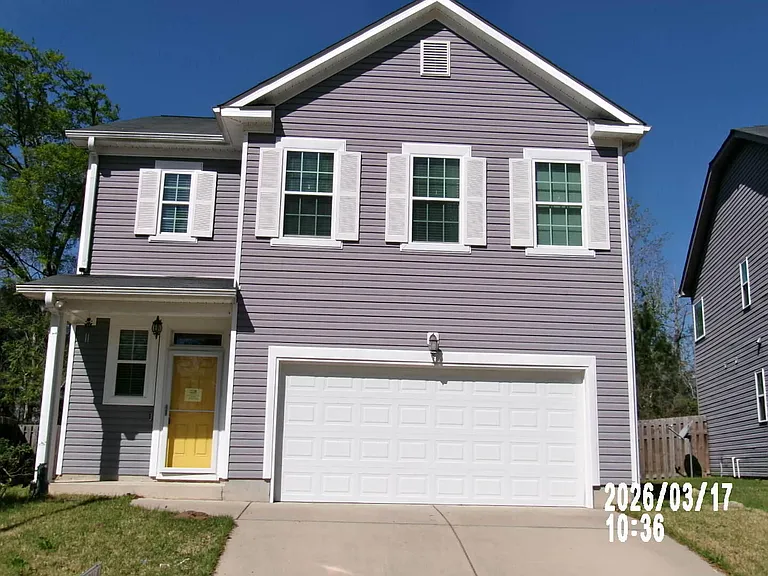
Real closing example — Georgia
No Personal Income Needed for This Rental Purchase
This example is from Grovetown, Georgia, not Ohio. See how an investor used the property’s estimated $1,826 monthly rent to qualify for an $184,000 DSCR loan at 7.49% with no prepayment penalty—and how the deal pencils to approximately $205.83 monthly cash flow before other operating expenses.

DSCR and Investor Loan Guidance
Talk Through DSCR Loan Options With Lyndi Gajan
Real estate investors can work with Lyndi Gajan to talk through DSCR loan questions, rental income scenarios, refinance options, and investor documentation before choosing a loan path.
Lyndi Gajan NMLS ID 88249. 360 Mortgage Inc. NMLS ID 80777. Loan availability, licensing, and guidelines vary by state, property, and loan purpose.
Primary legal sources
Reviewed October 13, 2026: Ohio rule 1301:8-7-02(F)–(G); RMLA definitions; Credit Services Organization Act definitions; Real-estate broker definitions. Actual services, purpose and occupancy determine the applicable scope.
Frequently asked questions about Ohio DSCR loans
Can rental income be the main qualifying evidence?
An eligible DSCR program may evaluate supported property income. Credit, assets, reserves, appraisal, condition, genuine purpose and lender review still matter.
Does a qualifying ratio establish net rental profit?
No. Vacancy, management, utilities, maintenance, leasing and replacements can reduce the owner’s cash flow beyond the qualifying payment.
Does an LLC alone establish a licensing exemption?
No. Actual purpose, use and occupancy must be documented. Entity formation does not settle underwriting or applicable requirements.
Does mortgage approval settle municipal rental compliance?
No. Confirm local registration, licensing, inspections, legal units and rental-use requirements separately for the actual address.