

Review Canton–Massillon business-purpose rental financing with supported income and property-specific operating checks.
Review your rental scenario Call 816-792-2360
Review Canton and Massillon as one metro with distinct local files
A Canton–Massillon rental investment begins with the exact address, intended lease and verified building description. The metropolitan label is useful for regional comparison, but it does not make the cities’ operating rules interchangeable. A Canton house and a Massillon duplex need their own municipal records and applicable requirements.
An eligible debt service coverage ratio program may use supported rental income to evaluate financing. Credit, funds, reserves, appraisal, title, condition and program acceptance still require review. This guide concerns genuinely business-purpose properties with no occupancy by the borrower or immediate family. Disclose a different arrangement at the beginning, including a unit intended for a relative. An LLC alone does not establish an exemption. Send Lyndi the actual rental plan so any financing discussion is grounded in the property being purchased rather than an assumed investment classification.
Use the population threshold without overstating the market
The Census Bureau estimates the Canton–Massillon metro at 400,246 residents as of July 1, 2025. This is a metro total rather than the population of either city alone. It establishes the geographic scale for this guide without predicting a particular building’s occupancy or rental income.
Build a comparison set that matches the subject’s unit type, bedrooms, bathrooms, condition, parking and lease duration. Identify which expenses are included in the advertised rent. Note dates and distinguish current asking prices from verified leases. A property in the same metro can still compete for a different tenant use or require a different operating budget. Akron’s larger market offers nearby regional context but should not supply an unsupported rent assumption for a Canton–Massillon purchase. Explain the relevant comparisons rather than relying on a single headline regional average.
Canton’s permit-record transition matters when reviewing older work
Canton’s official Rental Property FAQ explains that its current software went live October 1, 2025. The page states that new plans and permits created from that date can be searched online, while older plan, permit and inspection questions require contact with the city’s office. Do not interpret an incomplete online search as proof that a building has no relevant older record.
Ask the seller for permit numbers, invoices and correspondence concerning previous conversions or major-system work. If the activity predates the software transition, use the city’s stated contact process to investigate the history. Match the records to the subject address and work being described. An attractive renovation does not establish that every alteration was approved. Make any unresolved question visible before the appraisal or insurance request depends on a specific unit count, building layout or system description.
Registration is an ownership task to investigate before closing
Canton’s rental-registration questions describe annual registration of non-owner-occupied residential properties and a registration window following a new acquisition. Verify the current instructions, fees and inspection status for the exact building with the city. A prior owner’s application or informal assurance should not be assumed to settle the new owner’s obligations.
For an occupied purchase, request the applicable registration records and any outstanding notices. For a vacant property, ask which steps must occur before renting. Identify who will submit documents, arrange access and coordinate repairs. Keep those tasks in the closing and turn schedule alongside lender conditions. Financing approval is not municipal operating approval. If the address is in Massillon or another municipality, investigate that jurisdiction’s process instead of copying the Canton checklist. The correct local file is part of a credible rental plan.
Clarify what can be finished while the property is vacant
A Canton–Massillon turn budget should describe the condition at possession and the work needed for tenant-ready operation. Have an independent inspector identify issues requiring specialist assessment. Obtain written contractor scopes that specify labor, materials, access, timing and any permits required for the work. Distinguish essential repairs from optional improvements.
Consider how a delay affects insurance, utilities and debt service. If the selected DSCR program requires rentable condition at closing, disclose unfinished work before assuming it can be completed later. A separate acquisition or renovation financing path may be needed for some situations, subject to availability and review. Do not rely on a future refinance as committed funding or an expected after-repair value as an appraisal. Our fix-and-rent resource helps organize the stages and questions without treating every renovation plan as an immediate DSCR loan.
Confirm legal units and reconcile the rent roll
For a small multifamily purchase, verify the legal number of units and inspect each separately. Identify access, utility meters, common systems and parking. A finished attic, basement room or separate door does not by itself establish an approved apartment. Request supporting records for any seller-described conversion.
Collect leases, receipts, expiration dates, concessions and security-deposit information. Confirm who pays water, sewer, trash and heating. A higher combined gross rent may conceal significant owner-paid costs or near-term turnover. For a vacant unit, gather defensible comparable evidence and ask the lender how it supports that income. Do not blend room-rental projections with whole-unit leases without an explanation. The contract, insurance application, appraisal discussion and finance request should all describe the same verified building. A mismatch found near closing can change value, eligible programs or the cash needed to operate.
An illustrative purchase can have adequate coverage and limited margin
A common residential DSCR method compares supported monthly rent with principal, interest, taxes, insurance and applicable association charges. Ask for the lender’s exact method and verify the quoted payment components. Principal and interest alone do not describe the complete obligation used in many programs.
For a hypothetical Canton–Massillon rental, $1,700 of supported monthly rent divided by a $1,360 qualifying payment produces 1.25. These figures illustrate the method and are not local rent estimates, quoted terms or an approval requirement. The $340 difference is before vacancy, management, maintenance, leasing and replacements. If verified taxes and insurance raise the payment to $1,500, coverage falls to approximately 1.13. Use our rent evidence guide to distinguish an income assumption from the documentation and amount accepted by a program.
Stress-test the period between ownership and first rent
With hypothetical rent of $1,700, one vacant month reduces annual collected revenue to $18,700. Twelve $1,360 payments total $16,320, leaving $2,380 before other costs. An illustrative eight-percent management allowance on collected rent is $1,496, leaving $884 before repairs, leasing and capital reserves. A modest unexpected expense can consume the remaining margin.
Now add a hypothetical $4,500 turn project. The investment needs additional owner cash during that year even though its full-occupancy financing ratio was 1.25. This is a stress test, not a contractor estimate or market forecast. Obtain the actual scopes and build a reserve matching the planned work and vacancy exposure. Preserve those funds after closing instead of treating all remaining capital as available for another acquisition. Our reserve guide explains the difference between lender documentation and practical ownership planning.
Verify insurance and taxes for the proposed rental arrangement
Request the subject’s parcel tax information and seek appropriate local guidance on the post-purchase estimate. Obtain an insurance quote using the actual unit count, condition, building age and lease duration. The seller’s premium may reflect a different insured party or occupancy and should not silently become the buyer’s financing assumption.
Identify any association charges and known assessments. Review owner-paid utilities and management charges separately from debt service. For an LLC purchase, align the intended title, borrower and lender-required insurance documentation. Those checks protect the investment file from internal contradictions. Keep written quotes and clearly label estimates awaiting verification. A low asking price does not make omitted operating costs unimportant; the more modest the expected monthly surplus, the more visible those costs become in the first-year outcome.
A cash-out refinance should retain a workable rental
Define the business objective of a Canton–Massillon refinance before selecting the maximum loan amount. Compare existing balance, payment, remaining term, costs and prepayment conditions with the proposed debt. Confirm value, ownership history, seasoning, rent evidence and condition before treating expected proceeds as available.
For illustration, $1,700 rent against a $1,360 payment produces 1.25. A new payment of $1,550 reduces coverage to about 1.10 and removes $190 of monthly margin, or $2,280 annually. Determine whether the intended use of the released capital justifies the added obligation and whether the subject’s repair reserve remains protected. The cash received at closing does not erase future property expenses. Our cash-out planning guide can help organize both sides of that comparison without promising a particular proceeds amount.
Send a complete Canton–Massillon scenario
Provide the address and municipality, price or estimated value, requested loan, rent evidence, lease arrangement, unit count, occupancy, tax information, insurance quote, utilities, repairs and cash available after closing. Include relevant registration and permit records, especially where the city software transition makes older records harder to locate. Identify the document source and any unresolved question.
Use the Ohio DSCR hub and requirements resource to prepare. Akron and Youngstown guides offer nearby regional comparisons, but their operating rules are separate. Blue Castle’s landlord education can help organize questions for local providers without suggesting local management services. Loan availability and terms depend on borrower, property, actual purpose, occupancy and lender review. Numerical examples are hypothetical; the separately labeled Georgia case study is not presented as a Canton or Massillon transaction.
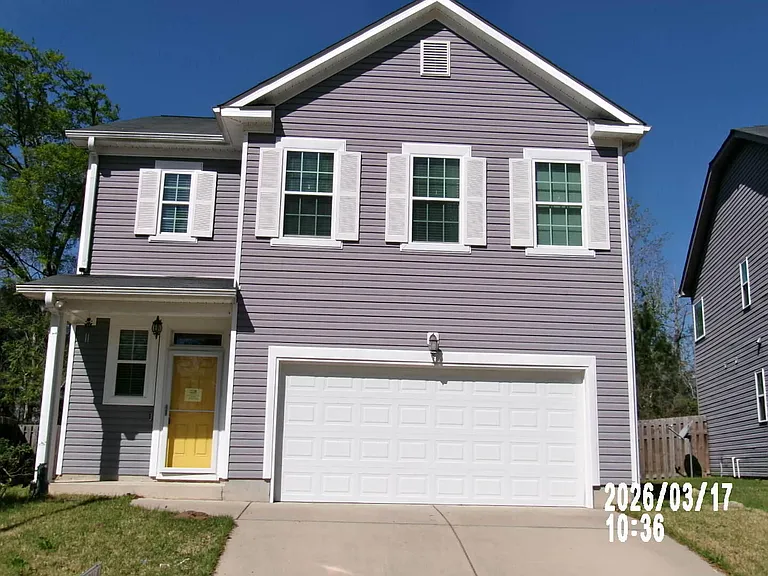
Real closing example — Georgia
No Personal Income Needed for This Rental Purchase
This example is from Grovetown, Georgia, not Canton–Massillon. See how an investor used the property’s estimated $1,826 monthly rent to qualify for an $184,000 DSCR loan at 7.49% with no prepayment penalty—and how the deal pencils to approximately $205.83 monthly cash flow before other operating expenses.

DSCR and Investor Loan Guidance
Talk Through DSCR Loan Options With Lyndi Gajan
Real estate investors can work with Lyndi Gajan to talk through DSCR loan questions, rental income scenarios, refinance options, and investor documentation before choosing a loan path.
Lyndi Gajan NMLS ID 88249. 360 Mortgage Inc. NMLS ID 80777. Loan availability, licensing, and guidelines vary by state, property, and loan purpose.
Request your Canton–Massillon investment financing review
Share the address, supported rent and intended use so Lyndi can review documentation and eligible options.
Frequently asked questions about Canton–Massillon DSCR loans
Does a Canton–Massillon metro label identify the applicable city rules?
No. Confirm the property’s municipality. Canton and Massillon need their own local operating records and requirements.
Why can older Canton permits be missing from an online search?
Canton states that its current portal covers new plans and permits created from October 1, 2025. Older records require contact with the city office.
Does prior registration settle the obligations of a new Canton owner?
Do not assume it does. Verify the current registration instructions, inspection status and ownership-update requirements for the subject.
Can a renovated attic be treated as an additional rental unit?
Not without verification. Confirm legal unit count and supporting records before relying on added rent or a different property classification.
Does a low price eliminate the need for repair reserves?
No. Payments, taxes, insurance and required services continue while a property is vacant or being repaired.
Can an LLC establish exemption while family lives in a unit?
No. Disclose actual purpose and occupancy. This guide excludes borrower and immediate-family occupancy.
Sources and review notes
Reviewed October 13, 2026. Population is the Census metro estimate for July 1, 2025. Numerical examples are hypothetical, not local transactions, rent estimates or current loan quotes.