

Review Akron business-purpose rental financing with supported income and property-specific operating checks.
Review your rental scenario Call 816-792-2360
Start an Akron purchase with a property-history review
An Akron rental investment should be evaluated through its income, condition and operating history together. A debt service coverage ratio program may use supported rent to assess eligible financing, but it does not answer whether unresolved building issues will delay occupancy or create a large first-year cash requirement. Begin with the actual address and records rather than a headline cap-rate claim.
Describe the intended lease structure, legal unit count and occupancy to Lyndi. This guide addresses genuine business-purpose properties that neither the borrower nor immediate family will occupy. If an investor plans to live in a duplex unit or provide housing to a relative, that needs a separate review. An LLC alone does not establish an exemption. Credit, assets, reserves, appraisal, title and program acceptance remain relevant even when personal income is not the primary qualifying measure.
Use the Akron metro figure without overstating local demand
The Census estimate for the Akron metropolitan area is 701,780 residents as of July 1, 2025. That count is a metro total, not Akron city’s population, and it should not be treated as evidence of a particular property’s achievable rent. A lender and investor still need a credible comparison file for the specific housing being purchased.
Separate rental evidence by unit type, bedrooms, condition, parking, utility responsibilities and lease term. Note the dates on advertisements and distinguish asking rent from a verified lease. If a comparable is outside the city, explain differences in operating rules and services. Nearby Cleveland and Canton provide regional context without becoming interchangeable rental markets. A useful analysis makes the competing properties and remaining uncertainty visible rather than applying a single citywide income assumption to every acquisition.
Akron’s rental information system offers an early records checkpoint
The City of Akron’s Rental Information system provides a search for complaints about properties, including code and environmental concerns. Its help page explains searching by address or owner and suggests partial-name or street searches when an exact query does not identify a record. Use that resource as one part of purchase diligence before assuming the building’s history is straightforward.
Review records with the seller and appropriate city contacts to determine what remains current, resolved or unrelated to the proposed acquisition. An old complaint is not proof that the same condition persists; absence of a search result is not proof that the building has no issues. Match the information to the correct address and owner. Keep the records alongside the independent inspection, repair quotes and financing file so differences can be investigated before your decision depends on a planned move-in date.
Turn a complaint history into questions instead of assumptions
If an Akron search identifies prior concerns, create an issue list describing the record date, reported condition, any available resolution and the evidence you still need. Ask the seller for repair invoices, relevant permits and correspondence. Have a qualified inspector examine the actual building and recommend specialist investigation where needed.
Separate recurring or unresolved items from historical matters that were corrected. The objective is to understand the property being purchased, not to make unsupported accusations about an owner or draw broad conclusions about a neighborhood. Translate confirmed findings into a cost and timing plan. If a heating, electrical or water-intrusion issue could prevent lender acceptance or occupancy, disclose it before relying on a standard DSCR structure. A visible paper trail can help the lender and buyer work from the same facts rather than conflicting summaries of the property’s past.
Check unit count and utility arrangements before underwriting gross rent
For an Akron duplex or small multifamily investment, establish the legal number of units and inspect each layout. A finished room, separate entrance or informal tenant arrangement does not establish an approved additional unit. Ask about prior alterations and obtain records relevant to conversion or major-system work. Keep that verified description consistent in the insurance request, appraisal discussion and loan application.
Identify separate meters, common heating equipment, water charges and any services paid by the owner. Gross rent should be considered alongside those obligations. A building with two leases at the same amount may still have very different maintenance and utility economics from another duplex. Review current leases, actual receipts, concessions, deposit transfers and expiration dates. The lender’s supported income may differ from a seller’s pro forma, especially where units are vacant or the arrangement is unusual.
Voucher participation has its own inspection and documentation path
Akron Metropolitan Housing Authority publishes information about inspections for its voucher program, including the role of safety and major building systems. If the investment includes that rental arrangement, contact the administering authority about the actual unit, applicable process and required records. Do not assume a prior inspection transfers automatically to a new lease or that program participation establishes mortgage eligibility.
Ask the lender how it documents the income and which lease or assistance records it accepts. Keep the proposed rent, lease, responsibilities and inspection status aligned. Verify payment timing and separate any tenant share from other receipts in the ownership forecast. This is a preparation framework, not advice about a specific voucher approval or a screening policy. Use objective, lawful criteria and qualified local assistance for tenancy decisions. The financing conversation should describe supported income and operation without treating one tenant-payment arrangement as a guarantee of collection.
An illustrative duplex ratio is only the first calculation
Ask the lender whether its payment includes principal, interest, taxes, insurance and applicable association charges, and which rent evidence it uses. For a hypothetical Akron duplex with two $950 rental-income assumptions, total monthly income is $1,900. A qualifying payment of $1,520 produces 1.25 coverage. These figures are illustrations, not local rents, advertised loan terms or approval requirements.
If one unit is vacant for four months, collected annual revenue becomes $19,000 instead of $22,800. Twelve qualifying payments total $18,240, leaving $760 before management, repairs, leasing and replacements. A full-occupancy ratio therefore does not establish the cash result for that year. Review the weaker unit’s condition and lease schedule and calculate its specific vacancy effect. Our rent evidence guide helps distinguish the amount an investor expects from the income accepted by a program.
Set a repair reserve that reflects the inspection findings
An Akron acquisition budget should identify immediate work, turnover work and future replacements separately. Obtain written scopes for confirmed issues and ask which jobs need specialist assessment. A general reserve percentage may be useful for a first pass, but it should not replace a quote for a system already known to be failing.
Consider a hypothetical $3,000 repair and two months without $950 rent from a unit. The combined funding need is $4,900 before ordinary expenses. It may consume far more cash than the investment’s expected monthly surplus suggests. Keep financing reserves and operating cash available through the work, rather than assigning every remaining dollar to a second purchase. If the seller will complete work before closing, agree with your transaction professionals on how completion and quality will be documented. A verbal assurance should not silently replace the evidence needed for a reliable budget.
Refinance an Akron rental for a measurable objective
An investment refinance should be compared with the existing obligation, including the balance, payment, remaining term and any prepayment provision. Confirm value, ownership history, seasoning and condition before treating cash-out proceeds as available. Explain the genuine business use of any released funds rather than assuming every refinance on rental collateral is automatically business purpose.
Using the hypothetical $1,900 income example, a payment increase from $1,520 to $1,750 lowers coverage from 1.25 to about 1.09. The additional $230 per month reduces annual margin by $2,760. Decide whether the proposed use of proceeds justifies that change and whether the subject property still has enough repair and vacancy cash. Our cash-out financing resource helps frame the decision around both the capital received and the continuing responsibility for the Akron rental.
Budget taxes and insurance using the actual ownership plan
Verify the subject’s parcel tax information and ask appropriate local professionals which assumptions belong in the post-purchase forecast. Obtain an insurance quote that accurately describes unit count, age, condition, occupancy and lease duration. The seller’s premium may reflect a different arrangement, deductible or insured party. Do not carry that number into the DSCR payment without confirmation.
For an entity purchase, align the title, borrowing entity and insurance documentation required by the lender and insurer. Review owner-paid utilities, association charges where applicable and any known special costs separately from debt service. A higher supported rent does not help as much if omitted expenses absorb the difference. Keep documented quotes in the file and mark preliminary estimates clearly. This allows the financing discussion to focus on the real payment rather than a temporarily optimistic version of the investment.
Prepare the Akron file around evidence and unresolved items
Send the address, price or value, loan request, unit-by-unit rent evidence, lease structure, occupancy, tax and insurance figures, utilities, repairs and available funds. Include relevant city records and explain what still needs confirmation. For voucher-assisted income, identify the administering program and provide the applicable documents for lender review. For an LLC, organize ownership and signing authority without treating the entity as proof of exemption.
Use the Ohio DSCR hub, requirements guide and reserve planning resource to prepare. Cleveland and Canton guides offer regional comparisons with different city processes. Blue Castle’s landlord education can help organize questions for local providers without implying Akron management services. Loan terms and availability remain subject to property, borrower, actual purpose, occupancy and lender review; the separately labeled Georgia case study is not represented as an Akron closing.
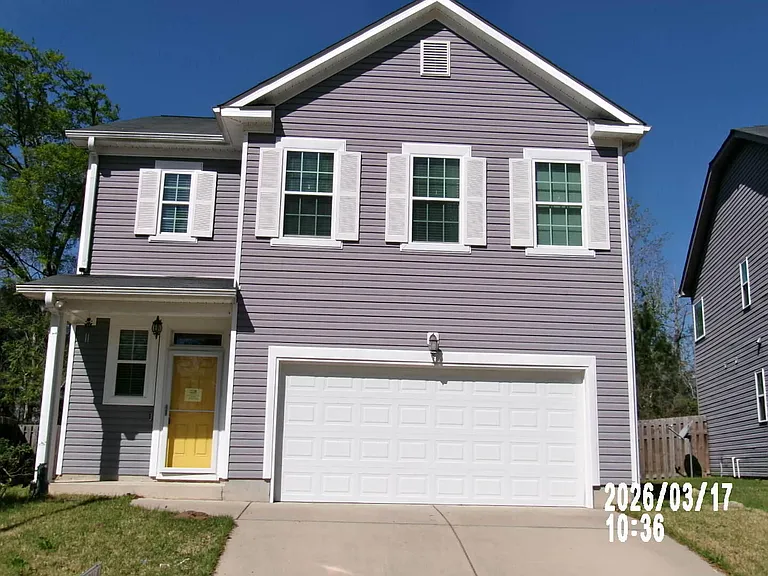
Real closing example — Georgia
No Personal Income Needed for This Rental Purchase
This example is from Grovetown, Georgia, not Akron. See how an investor used the property’s estimated $1,826 monthly rent to qualify for an $184,000 DSCR loan at 7.49% with no prepayment penalty—and how the deal pencils to approximately $205.83 monthly cash flow before other operating expenses.

DSCR and Investor Loan Guidance
Talk Through DSCR Loan Options With Lyndi Gajan
Real estate investors can work with Lyndi Gajan to talk through DSCR loan questions, rental income scenarios, refinance options, and investor documentation before choosing a loan path.
Lyndi Gajan NMLS ID 88249. 360 Mortgage Inc. NMLS ID 80777. Loan availability, licensing, and guidelines vary by state, property, and loan purpose.
Request your Akron investment financing review
Share the address, supported rent and intended use so Lyndi can review documentation and eligible options.
Frequently asked questions about Akron DSCR loans
Can an Akron rental be reviewed through a DSCR program?
An eligible program may use supported rental income, subject to borrower, assets, reserves, property, condition and actual-use review.
Does an Akron complaint search prove current property condition?
No. Investigate the record’s status and obtain an independent inspection. A historical complaint or missing search result does not settle current condition.
Can I search Akron rental records by owner as well as address?
The city’s search instructions describe address and owner searches, including partial-name and street searches when an exact query does not identify a record.
Does voucher participation automatically establish mortgage eligibility?
No. Confirm the actual program’s documents and inspection status, and ask the lender how it supports that rental income.
Does a full-occupancy duplex ratio establish annual profit?
No. Unit vacancy, turnover, owner-paid utilities and repairs can substantially change annual ownership cash flow.
Does an LLC remove the need to disclose family occupancy?
No. The actual purpose and occupancy must be disclosed. This guide excludes borrower and immediate-family occupancy.
Sources and review notes
Reviewed October 13, 2026. Population is the Census metro estimate for July 1, 2025. Numerical examples are hypothetical, not local transactions, rent estimates or current loan quotes.