

Review Cleveland business-purpose rental financing with supported income and property-specific operating checks.
Review your rental scenario Call 816-792-2360
Start with the rental-occupancy file, not just the listing price
Cleveland rental financing deserves a coordinated review of municipal records, property condition and lender evidence. A debt service coverage ratio program can use supported rent to evaluate an eligible investment, but it cannot turn an incomplete occupancy file into a ready-to-rent property. Ask which documents the seller has already obtained and which must be updated after ownership changes.
This guide focuses on genuine business-purpose rental investments that will not be occupied by the borrower or immediate family. That distinction is separate from whether the building is physically residential. A duplex rented entirely to unrelated tenants presents a different scope from a duplex where an investor or family member will live in one unit. Explain occupancy at the beginning. Lyndi can then review documentation and eligible financing options without relying on the misleading assumption that an LLC automatically determines the loan’s purpose.
Use Cleveland’s metro size without importing one neighborhood’s rent
The U.S. Census Bureau estimates the Cleveland metro population at 2,165,775 as of July 1, 2025. This is a metropolitan-area figure, not Cleveland city’s population. The number establishes regional scale; it does not make a asking rent achievable at a specific address. A useful investment file narrows the market from the metro to comparable property and lease characteristics.
Separate single-family rentals, duplexes and larger buildings when gathering evidence. Record location, bedrooms, parking, condition, owner-paid utilities and lease duration. Explain why each comparable competes with the subject instead of presenting a broad city average. A recently renovated unit with laundry and separate meters may not support the same income as a dated unit with shared expenses. If your evidence is limited to active advertisements, label the uncertainty and obtain the lender’s assessment of supported rent before committing to a maximum loan amount.
Registration and permission to occupy are different milestones
Cleveland’s rental-registration page states that owners of non-owner-occupied residential properties must register annually. It also distinguishes an application receipt from the Certificate Approving Rental Occupancy issued after required documents are submitted. A buyer should obtain the actual certificate and related records rather than assuming that proof of payment means the entire process is complete.
Ask the seller to identify the property’s current registration status, outstanding document requests and any enforcement correspondence. Verify the address and unit count on those records. For a vacant building, ask the city which vacant-property process applies and how it transitions when rental occupancy begins. Put the administrative timeline into the investment plan. An unexpected delay in obtaining required documents can create another month of payment, utilities and maintenance without rent even if the loan itself closes on schedule.
Lead-safe certification belongs in an older-property budget
The city lists a lead-safe certificate among the rental-registration documents for units built before 1978 and provides a separate application process. Review the subject’s construction date and certificate status with the appropriate qualified professionals. A freshly painted unit or a seller’s general assurance about condition is not the same evidence as the required city-issued documentation.
Do not attempt to estimate a remediation scope from photographs. Obtain professional assessment and written recommendations where needed, then identify the cost, contractor availability and clearance steps. Discuss any condition issues with the lender before relying on an appraisal or closing timetable. Include the potential period without rent in your cash plan. This is a practical due-diligence framework, not a determination that a particular Cleveland property contains a hazard or qualifies for a specific certification. The actual address and documented findings control that decision.
Local oversight and heating records can change the work before closing
Cleveland’s published document list identifies Local Agent in Charge requirements for owners outside Cuyahoga and specified surrounding counties. It also lists heating-system documentation for rental properties with four or more units. Confirm the requirements for the exact ownership and building configuration directly with the city. Do not assume that a relative, contractor or occasional maintenance contact automatically satisfies an agent requirement.
For an out-of-area investor, ask who will receive notices, arrange access and coordinate urgent work. Obtain a management proposal that explains responsibilities and charges. For a four-unit building, investigate common versus individual heating equipment and the records already available. These operational questions affect how you budget and organize the acquisition even when no immediate repair is needed. Financing approval and a service agreement should refer to the same legal unit count and actual systems, rather than conflicting descriptions in a listing and rent roll.
Understand why a duplex’s combined ratio can hide a weak unit
A residential DSCR calculation commonly compares supported rental income with principal, interest, taxes, insurance and applicable association charges. Ask how the lender treats the specific property and leases. For a hypothetical Cleveland duplex, supported rent of $1,150 per unit produces $2,300 monthly income. With a $1,840 qualifying payment, the combined ratio is 1.25. The numbers illustrate the method; they are not a Cleveland rent estimate or loan quote.
Now let one unit remain vacant for three months while the other is occupied all year. Collected annual rent becomes $24,150 rather than $27,600. Twelve qualifying payments total $22,080, leaving $2,070 before management, repairs, leasing and replacement reserves. A combined ratio measured at full occupancy does not describe that year. Review each unit’s lease, condition and turnover needs independently and make a vacancy test part of the purchase analysis.
Protect reserves against both turnover and replacements
An older Cleveland rental should have more than a minimum lender-reserve number in the ownership plan. Consider separate allowances for routine operations, an upcoming turnover and major equipment. A new loan payment continues while a unit is being repaired. Insurance, taxes and necessary utilities also continue. Avoid making every unexpected repair compete with the cash needed for the next monthly payment.
For illustration, one month without $1,150 of rent combined with a $3,500 turnover project creates a $4,650 funding need before ordinary expenses. That is a hypothetical planning example, not a local contractor estimate. Obtain actual quotes for the subject’s flooring, paint, plumbing, heating or other work and distinguish immediate repairs from future replacements. Our reserve requirements guide helps separate lender documentation from the owner’s practical repair and vacancy budget.
Reconcile taxes, insurance and owner-paid utilities
Request the complete parcel tax information and ask which assumptions belong in the post-purchase estimate. Obtain an insurance quote that accurately describes rental occupancy, building age, roof condition and number of units. Confirm whether the policy handles the intended lease duration and whether separate coverage decisions are needed. The seller’s current premium should not become your projected premium without verification.
Review water, sewer, trash and heating responsibilities in the leases. If the owner pays a shared expense, include it in the operating budget even when the lender’s DSCR method does not subtract it from qualifying rent. Ask about arrears or unresolved utility matters that the closing team should address. When comparing two Cleveland duplexes, explain these cost differences alongside rent. A higher gross-rent figure may provide less usable cash if the ownership obligations are substantially different.
A refinance needs a purpose that survives the new payment
For a Cleveland investment refinance, define whether the goal is a different debt structure, a payment change or capital for another rental. Compare closing costs, remaining term and prepayment conditions with the benefit sought. Confirm appraisal, ownership history, seasoning and the program’s rental-documentation requirements before allocating expected proceeds.
In a hypothetical cash-out comparison, $2,300 supported rent divided by a $1,840 payment yields 1.25. Increasing the payment to $2,050 reduces coverage to approximately 1.12 and consumes another $210 each month. That is $2,520 per year unavailable for vacancy and repairs. Do not treat money received at closing as free operating income. Retain a reserve for the Cleveland building before committing proceeds elsewhere. Our cash-out resource explains questions to review with the proposed transaction.
Prepare the Cleveland scenario for an efficient lender review
Send the address, asking price or value, desired financing, unit-by-unit leases, rent evidence, occupancy, tax information, insurance quote, utility arrangements, available funds and repair scope. Include registration, occupancy and lead-safe records relevant to the subject. State which documents are current and which have been requested. For an entity borrower, identify ownership and signing authority, without assuming entity formation settles eligibility.
Use the Ohio DSCR hub for state context and the rent evidence guide for underwriting preparation. The Akron and Toledo resources offer other local examples of documentation checks, but their rules should not be applied to a Cleveland address. Blue Castle’s rental-owner education can help organize operating questions for local professionals. Loan availability and terms remain subject to property, borrower, purpose and lender review; no rate or approval is promised here.
Check the building description against the public record
Compare the advertised number of apartments with the property’s permitted use and the information on city documents. An extra finished room or separate entrance does not establish a legally recognized additional unit. Ask the seller for permit history for conversions or major systems and have appropriate professionals investigate any discrepancy. Keep the same verified description in the contract, insurance request, appraisal discussion and loan application. A mismatch discovered late can require a different valuation, financing path or repair plan. Resolving it early is particularly useful when a Cleveland investment is being sold with an informal rent roll or limited supporting records.
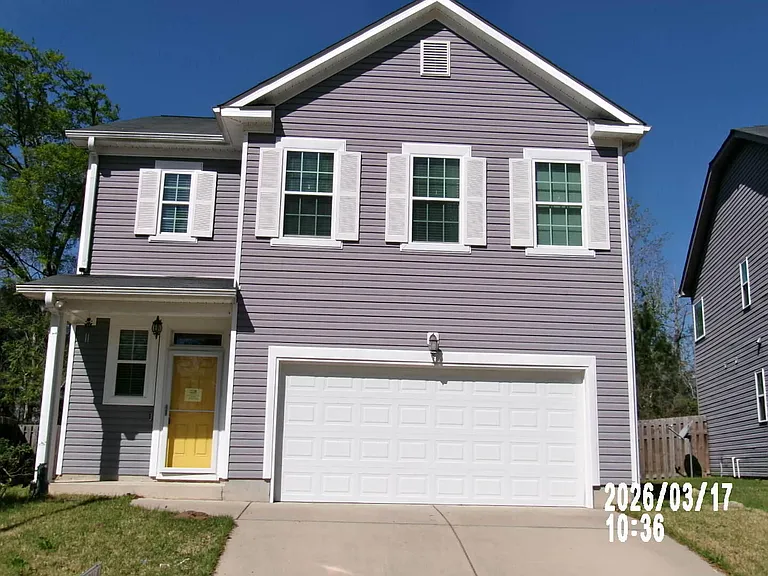
Real closing example — Georgia
No Personal Income Needed for This Rental Purchase
This example is from Grovetown, Georgia, not Cleveland. See how an investor used the property’s estimated $1,826 monthly rent to qualify for an $184,000 DSCR loan at 7.49% with no prepayment penalty—and how the deal pencils to approximately $205.83 monthly cash flow before other operating expenses.
DSCR and Investor Loan Guidance
Talk Through DSCR Loan Options With Lyndi Gajan
Real estate investors can work with Lyndi Gajan to talk through DSCR loan questions, rental income scenarios, refinance options, and investor documentation before choosing a loan path.
Lyndi Gajan NMLS ID 88249. 360 Mortgage Inc. NMLS ID 80777. Loan availability, licensing, and guidelines vary by state, property, and loan purpose.
Request your Cleveland investment financing review
Share the address, supported rent and intended use so Lyndi can review documentation and eligible options.
Frequently asked questions about Cleveland DSCR loans
Can I use rental income for a Cleveland DSCR review?
An eligible program may evaluate supported property rent. The borrower, assets, reserves, appraisal, property condition and intended use still require review.
Is a Cleveland application receipt the same as rental occupancy approval?
No. The city distinguishes the receipt from its Certificate Approving Rental Occupancy, which follows submission of required documents.
Do older Cleveland rentals need a lead-safe document?
The city’s rental-registration document list identifies a Lead Safe Certificate for rental units built before 1978. Verify the exact property’s requirements and current status.
Why review each duplex unit separately?
Lease dates, condition, utilities and vacancy can differ by unit. Combined full-occupancy rent can hide a weak ownership cash-flow scenario.
Does an LLC alone establish a business-purpose exemption?
No. The actual purpose and occupancy must match the loan file. Entity formation alone does not determine eligibility.
What Cleveland records should I send?
Provide the address, financing request, rent evidence, leases, costs, repairs, occupancy and funds, plus relevant registration, occupancy and lead-safe records.
Sources and review notes
Reviewed October 13, 2026. Population is the Census metro estimate for July 1, 2025. Numerical examples are hypothetical, not local transactions, rent estimates or current loan quotes.