

Review Hartford business-purpose rental financing with supported income and property-specific operating checks.
Review your rental scenario Call 816-792-2360
Review the Hartford building as a rental business
Hartford investment financing starts with the actual building, intended lease arrangement and cost of keeping the property rentable. A debt service coverage ratio program may use supported income to evaluate an eligible rental, but the rent-to-payment calculation cannot resolve an incomplete city licensing file or an unrealistic operating budget.
Describe the unit count, occupancy, leases, condition and cash available after closing to Lyndi. This guide addresses genuine non-owner-occupied business-purpose investment financing, not personal home financing or a house-hack where the borrower will live in a unit. Disclose any personal use or mixed purpose at the beginning. An LLC alone does not determine licensing scope or eligibility. Credit, funds, reserves, appraisal, title, insurance and lender acceptance still require review. A clear description of the actual operation lets the first conversation focus on missing evidence rather than assumptions that must later be corrected.
Use the Hartford metro count without confusing the municipalities
The Census July 2025 estimate for the Hartford–West Hartford–East Hartford metropolitan area is 1,171,426 residents. This is a regional figure, not Hartford city’s population. A metro guide can explain regional context without implying that every property uses the same municipal process or competes for the same rent.
Confirm the address and jurisdiction before applying a Hartford city requirement. West Hartford, East Hartford and other communities have their own contacts and applicable processes. Gather rental comparisons matching the subject’s bedrooms, condition, parking, included utilities and lease duration. Note observation dates and distinguish asking rent from executed leases. A single metro average should not replace an address-specific income review. A well-supported investment file explains the property’s competing housing options and makes uncertainty visible rather than treating the regional population as a guarantee of demand.
Three units is an important Hartford licensing checkpoint
Hartford’s official housing resources describe a separate rental license for each building containing at least three dwelling units. The city’s application resources identify categories for three units, four-to-nine units and larger buildings. For a triplex or fourplex, investigate the actual license status, inspection records and current application requirements early in the purchase.
Ask the seller for the current license, city correspondence and unresolved conditions. Match the unit count and address to the actual building. Determine which documents need renewal or updating after ownership changes, and who will coordinate inspections. A mortgage program’s property classification does not establish municipal operating compliance. If the acquisition includes several buildings, do not assume one license or one file resolves them all. Keep the administrative tasks alongside contractor work and financing conditions so the planned tenant-ready date has a documented basis.
The apartment-occupancy process should not be treated as interchangeable
Hartford also publishes a Certificate of Apartment Occupancy process and identifies exceptions and its relationship to rental licensing. The city’s housing page states that a valid rental license satisfies the CAO requirement. Review the applicable path for the specific building rather than assuming both documents are always required or that an old certificate resolves current licensing.
Ask the Licenses and Inspections division about the subject’s unit count, construction or reconstruction history and existing records. Obtain the seller’s documentation and identify any outstanding issue. Put the required steps in the contract and operating schedule. City compliance, independent condition inspection and lender appraisal serve different purposes. A lender may accept an appraisal while the owner still needs to address a local document or condition. The decision to purchase should acknowledge that distinction instead of treating every inspection-related document as the same approval.
Investigate older-building lead requirements through qualified professionals
Hartford’s rental-license materials include lead-risk assessment guidance for covered older buildings. Have the appropriate qualified professionals determine the documents and work required for the actual property and applicable circumstances. Do not assume new paint or an informal seller statement establishes compliance, and do not use occupancy assumptions to evade safety or fair-housing obligations.
Request existing reports, relevant repair documents and clearance information where applicable. Have professionals explain any findings, required remediation sequence and cost. Discuss conditions with the lender and insurer before relying on a closing date or budget. This guide does not determine that a particular Hartford property contains a hazard or qualifies for a waiver. The purpose is to organize a documented review that protects the operating plan from hidden work or delay. Treat the condition and compliance file as evidence rather than a marketing description.
Heating and utilities can explain the difference between gross and net income
For a Hartford multifamily building, identify the heating arrangement and whether tenants or the owner pay for heat, hot water, electricity, water and other services. Request actual bills when available and clarify meter configuration. A rent roll with high gross income may leave substantial owner-paid costs that another building assigns to tenants.
Inspect heating equipment, plumbing, electrical service, roof and drainage. Ask which systems are shared and whether any immediate work or near-term replacement is indicated. Obtain an insurance quote describing the actual building, unit count, condition and rental arrangement. Do not use the seller’s premium as the buyer’s projected cost without verification. Include necessary utilities during vacancy and repairs, not only after full tenancy begins. A realistic ownership budget should retain those expenses even if the lender’s DSCR method does not directly subtract them from qualifying rent.
Use a triplex example to distinguish coverage from ownership profit
A common residential DSCR method compares supported rent with principal, interest, taxes, insurance and applicable association charges. Ask the program for its exact calculation and accepted income evidence. For a hypothetical Hartford triplex, three units at a supported assumption of $1,400 each produce $4,200 monthly rent. With a $3,360 qualifying payment, coverage is 1.25.
These figures illustrate the method, not Hartford market rents, quoted loan terms or an approval threshold. The $840 difference comes before vacancy, management, maintenance, leasing and capital replacements. If owner-paid heat and other utilities are outside the qualifying payment, they still reduce practical cash flow. Verify taxes and insurance before relying on the ratio. Our rental-income qualification guide explains how to distinguish the seller’s rent roll, an investor projection and the income amount supported under the selected program.
Stress-test one unit vacant and a major system expense
Using the same hypothetical triplex, three vacant months for one $1,400 unit reduce annual revenue from $50,400 to $46,200. Twelve $3,360 payments total $40,320, leaving $5,880 before other costs. An illustrative eight-percent management allowance on collected rent consumes $3,696, leaving $2,184 before utilities, maintenance, leasing and replacements.
A hypothetical $5,000 system repair then requires additional owner cash. This is a downside test rather than a contractor estimate or forecast for Hartford. Obtain actual inspection findings, written repair quotes and utility records. Preserve a reserve for the subject before allocating the remaining capital to another purchase. The lender’s minimum documented reserves and the owner’s practical operating buffer answer different questions. Our reserve planning resource helps frame both without implying that a full-occupancy ratio guarantees the first year’s result.
Verify the legal unit count and actual leases
For a Hartford triplex or fourplex, reconcile city records, physical layout, seller rent roll and lease documents. An informal extra apartment or finished room does not establish an approved additional dwelling unit. Request relevant records for conversions, reconstruction or major-system changes and resolve discrepancies before a lender or insurer relies on the description.
Obtain unit-by-unit leases, receipt history, concessions, expiration dates and deposit information. Identify arrears and transaction issues for the appropriate professionals. For a vacant unit, gather defensible comparison evidence and label the rent estimate clearly. Ask how the lender will support the income. A short-stay, room-rental or furnished arrangement needs a separate discussion of income evidence, local authorization, insurance and expenses. Do not make ordinary annual-lease documentation support a different operation without explaining the change. Our multifamily resource provides broader financing questions.
A Hartford cash-out refinance should retain operating flexibility
Define the business objective of a refinance before selecting the desired proceeds. Compare the existing balance, payment, remaining term and prepayment conditions with the proposed debt and closing costs. Confirm value, ownership history, seasoning, condition and rental evidence. Document the genuine purpose of released funds rather than assuming rental collateral makes every use business purpose.
For illustration, $4,200 rent against a $3,360 payment yields 1.25. Increasing the payment to $3,700 reduces coverage to approximately 1.14 and consumes another $340 monthly, or $4,080 annually. Consider that effect alongside utility bills, upcoming turnovers and system reserves. Protect the Hartford property’s operating cash before committing proceeds to another acquisition. Our cash-out review guide helps organize the comparison around both the investment capital received and the obligations that remain after closing.
Make the first Hartford review address-specific and document-based
Send the exact address and municipality, price or estimated value, loan request, legal unit count, leases, rent evidence, intended duration, occupancy, repairs, city licensing records, taxes, insurance, owner-paid utilities and available funds. Clearly identify estimates and outstanding documents. For an LLC, organize ownership and signing authority without treating the entity as an automatic licensing exemption.
Use the Connecticut DSCR hub for scope and documentation context and our requirements guide for program preparation. Ohio metro guides provide other examples of locally tailored investor diligence without supplying Hartford rules or rent assumptions. Blue Castle’s landlord education can help organize questions for local providers; it is not a Hartford management-service offer. Loan availability and terms remain subject to property, borrower, genuine purpose, occupancy and lender review. The separate Georgia case study is a real nonlocal closing, while all numerical Hartford scenarios above are hypothetical.
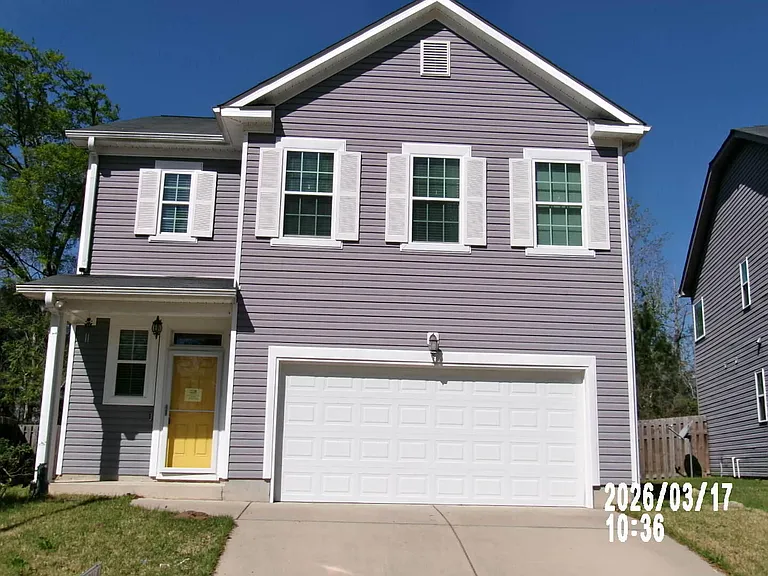
Real closing example — Georgia
No Personal Income Needed for This Rental Purchase
This example is from Grovetown, Georgia, not Hartford. See how an investor used the property’s estimated $1,826 monthly rent to qualify for an $184,000 DSCR loan at 7.49% with no prepayment penalty—and how the deal pencils to approximately $205.83 monthly cash flow before other operating expenses.

DSCR and Investor Loan Guidance
Talk Through DSCR Loan Options With Lyndi Gajan
Real estate investors can work with Lyndi Gajan to talk through DSCR loan questions, rental income scenarios, refinance options, and investor documentation before choosing a loan path.
Lyndi Gajan NMLS ID 88249. 360 Mortgage Inc. NMLS ID 80777. Loan availability, licensing, and guidelines vary by state, property, and loan purpose.
Request your Hartford investment financing review
Share the address, supported rent and intended use so Lyndi can review documentation and eligible options.
Frequently asked questions about Hartford DSCR loans
Can a Hartford rental be evaluated using property income?
An eligible DSCR program may use supported rental income, subject to borrower, assets, reserves, appraisal, condition, genuine purpose and lender review.
Which Hartford buildings have a rental-license checkpoint?
The city’s official resources describe a separate rental license for each building containing at least three dwelling units. Confirm the exact building’s requirements and status.
Are a rental license and Certificate of Apartment Occupancy interchangeable?
Review the applicable process for the actual building. Hartford states that a valid rental license satisfies its CAO requirement, and the CAO process has specified exceptions.
Can Hartford rules be applied to every address in the metro?
No. Confirm the municipality. West Hartford, East Hartford and other communities have their own applicable processes.
Does the DSCR ratio include every ownership expense?
Not necessarily. Owner-paid heating, utilities, management, vacancy, repairs and replacements can reduce practical cash flow beyond the qualifying payment.
Does an LLC automatically establish business purpose?
No. The actual use, occupancy and purpose must be documented. Personal or mixed-purpose plans need a separate review.
Sources and review notes
Reviewed October 13, 2026. Population is the Census metro estimate for July 1, 2025. Numerical examples are hypothetical, not local transactions, rent estimates or current loan quotes.