

Review Dayton business-purpose rental financing with supported income and property-specific operating checks.
Review your rental scenario Call 816-792-2360
Build the Dayton acquisition around the actual rental use
A Dayton investment can be evaluated through supported property income under an eligible debt service coverage ratio program. Before comparing loans, define the lease arrangement, legal number of units, property condition and intended occupancy. A small duplex, a single-family annual rental and a furnished house aimed at temporary stays need different evidence and operating budgets.
This guide concerns genuine business-purpose rental properties that neither the borrower nor immediate family will occupy. Disclose a different plan at the beginning, including any unit intended for relatives. The property’s residential appearance and an LLC’s name do not establish the financing scope. Credit, funds, reserves, appraisal, title and lender acceptance remain part of the review. Send Lyndi a complete address and a clear use description so the discussion starts with the actual property rather than a generic statement that every investment loan qualifies the same way.
Keep Dayton, Kettering and Beavercreek geography distinct
The Census July 2025 estimate for the Dayton–Kettering–Beavercreek metropolitan area is 826,554 residents. It describes the combined metro, not Dayton city alone. The broader name is useful because regional destinations may influence a rental search, but the address determines municipal processes, utility arrangements and relevant rental comparisons.
A property advertised as being in the Dayton area may fall within a different municipality. Confirm that boundary before applying a Dayton housing rule or interpreting a local record search. Keep comparison properties grouped by features that a tenant would actually compare: bedrooms, parking, condition, included utilities, lease duration and practical access. Do not use a single regional rent figure as proof of the subject’s income. Explain why each comparison is relevant, and identify evidence that remains preliminary rather than letting the metro label conceal important property differences.
Wright-Patterson access needs the destination and gate
Wright-Patterson Air Force Base’s official Area B resource provides gate and traffic information and identifies separate entry points. For a rental promoted around base access, investigate the actual destination and likely gate rather than measuring only distance to the edge of the installation. Gate access and roadway conditions can change, so avoid putting an unverified commute promise in your investment assumptions.
If your proposed tenants are associated with the base, ask how the property would compete for an ordinary annual tenant as well. Do not treat military proximity as a guarantee of occupancy or a lender-supported rent premium. Compare actual leases and similar housing. A furnished temporary-stay plan needs its own expense assumptions and income review. The relevant facts are the rental arrangement and supported revenue, not simply the presence of a large regional institution on a map.
Housing and inspection records belong beside contractor quotes
Dayton’s Housing and Inspections division publishes resources for housing-code, nuisance, zoning and property-condition matters. Use the city’s official contacts to investigate the subject’s records and determine which rental registration or inspection requirements apply. A seller’s statement that a house has always been rented does not establish its current compliance or permitted configuration.
Request notices, previous repair documentation and relevant permit history. Have an independent inspector assess the building, and obtain specialist quotes for findings that need further investigation. Identify any work that prevents rental occupancy or lender acceptance at closing. Match each unresolved item with a responsible person and a timetable. A municipal record search, an appraisal and a home inspection serve different purposes; none should silently substitute for the others. The financeable property and the tenant-ready property should be described consistently across all three reviews.
Evaluate the duplex unit by unit
For a Dayton duplex, confirm the legal use and provide a separate description of each unit. Identify bedrooms, bathrooms, access, utility meters, common systems and parking. Collect leases and evidence of actual rent received. A combined rent roll may make two quite different units look like a uniform investment, even when one has a near-term expiration or substantial turnover work.
For illustration, one unit might have a supported rent assumption of $1,000 and the other $1,200, for $2,200 total. These are hypothetical numbers, not local market estimates. Ask how the lender will support the income and handle a vacant unit. Model the loss of the larger unit’s rent rather than assuming the vacancy effect equals half of the total. Owner-paid heat or water should remain in the ownership budget even if the selected financing ratio does not deduct it from qualifying rent.
Coverage starts with the complete qualifying payment
Ask which rent figure and payment components the program uses. A common residential DSCR calculation includes principal, interest, property taxes, insurance and applicable association dues in the qualifying payment. Review the quote for missing tax or insurance assumptions and distinguish a preliminary estimate from documented costs.
Using hypothetical rent of $2,200 and a qualifying payment of $1,760 yields 1.25 coverage. The apparent monthly difference is $440 before management, maintenance, vacancy, leasing and replacements. If the payment rises to $1,950 after property-specific cost verification, the ratio falls to about 1.13. That is a significant reduction in the money available to absorb an unexpected repair. These calculations illustrate the method, not current Dayton financing terms. Our rent qualification resource explains why the lender’s supported income needs to match the figure used in your analysis.
A short turn can consume a full year’s margin
In the same duplex illustration, three vacant months for the hypothetical $1,200 unit reduce annual collected rent from $26,400 to $22,800. Twelve $1,760 payments total $21,120, leaving $1,680 before all other operating expenses. A $4,000 turnover project would make that year require additional owner cash. The example is a stress test, not a forecast for a Dayton neighborhood.
Budget the full turn sequence: access, inspection, permits where needed, repairs, cleaning, marketing and tenant move-in. Ask whether equipment or materials must be ordered before the contractor can finish. Hold an allowance for the additional payment months if the schedule slips. Keep those funds separate from the down payment on another purchase. Our reserve guide helps explain why the practical ownership buffer may need to exceed a lender’s documented minimum.
Inspect heating and drainage before assuming rent-ready condition
A Dayton property inspection should explain the condition of heating equipment, cooling, electrical service, plumbing, roof and drainage. Where the building has multiple units, identify which equipment is shared and who pays for its operation. Ask a qualified professional about serviceability and foreseeable replacement needs instead of relying solely on the age printed on a listing.
For a vacant property, determine whether utilities can be safely operating during inspection and what the lender will require for an appraisal. Include seasonal maintenance and necessary services in the operating forecast. A low acquisition price does not remove the cost of delivering reliable housing. If the plan depends on renovation followed by a refinance, discuss the stages separately; an expected after-repair value is not an appraisal and a future DSCR loan should not be treated as committed funding.
Furnished leasing requires a fallback annual-rental test
A furnished Dayton investment may have cleaning, utilities, internet, furnishings, management and replacement costs that a conventional annual rental avoids. Identify the actual lease duration and any municipal or association restrictions. Ask the insurer and lender whether they accept that arrangement and which revenue evidence they require.
Build the forecast annually, including vacancies between stays and periods of weaker occupancy. Do not multiply an advertised nightly price by every day of the year. Then test a fallback annual lease using supported comparable evidence. If that fallback produces materially weaker coverage, make the dependence on the furnished model explicit in your purchase decision. The base-access context does not resolve this question. Our short-term rental financing guide provides a broader checklist for separating the revenue claim from the costs and permissions needed to operate.
Review the debt left behind after cash-out
For a Dayton refinance, state the goal before choosing a loan amount. Compare the existing balance, payment, remaining term and prepayment conditions with the proposed transaction’s costs and benefits. Confirm value, ownership history, seasoning and property condition. If proceeds will fund another investment, keep a reserve for the rental being refinanced.
Using hypothetical $2,200 rent, a payment increase from $1,760 to $2,000 lowers coverage from 1.25 to 1.10. The additional $240 monthly obligation consumes $2,880 annually before other operating expenses. A larger closing check should therefore be evaluated alongside the reduced operating flexibility. Explain whether proceeds will address a repair, replace debt or fund an acquisition, and keep personal-purpose uses out of the business-purpose assumption. Our cash-out review guide helps organize the comparison.
Make the initial Dayton file complete and internally consistent
Send the exact address and municipality, price or estimated value, requested financing, rent evidence, unit details, occupancy, repairs, taxes, insurance, utilities, association charges and available cash. Include relevant leases, city correspondence and contractor quotes. Note which numbers are verified and which are estimates. For an LLC, identify ownership and signing authority without treating entity formation as an exemption.
Review the Ohio DSCR hub and program requirements resource before the conversation. Our Cincinnati guide offers another regional comparison, but its city rules should not be applied to Dayton. Blue Castle’s landlord education can help organize questions for local providers; it is not a Dayton management-service representation. Loan availability and terms depend on borrower, purpose, occupancy, property and lender review. The numerical examples here are illustrative, while the separate real case study is expressly identified as a Georgia transaction.
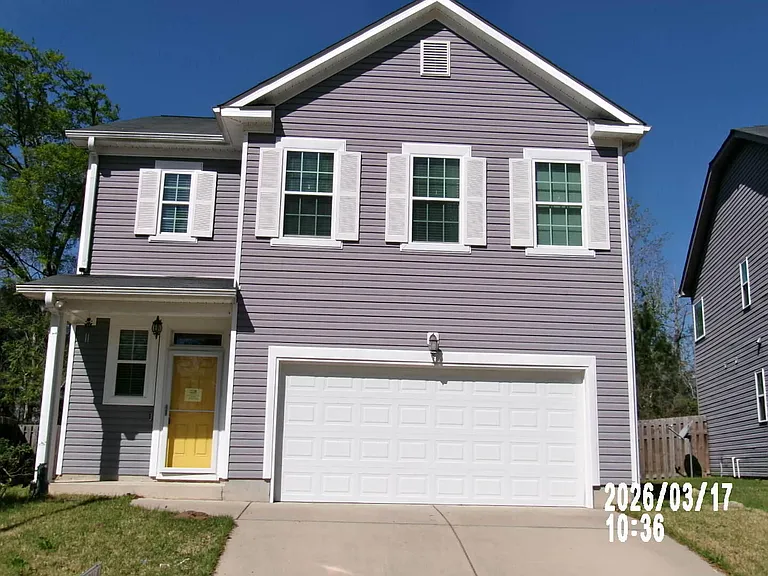
Real closing example — Georgia
No Personal Income Needed for This Rental Purchase
This example is from Grovetown, Georgia, not Dayton. See how an investor used the property’s estimated $1,826 monthly rent to qualify for an $184,000 DSCR loan at 7.49% with no prepayment penalty—and how the deal pencils to approximately $205.83 monthly cash flow before other operating expenses.

DSCR and Investor Loan Guidance
Talk Through DSCR Loan Options With Lyndi Gajan
Real estate investors can work with Lyndi Gajan to talk through DSCR loan questions, rental income scenarios, refinance options, and investor documentation before choosing a loan path.
Lyndi Gajan NMLS ID 88249. 360 Mortgage Inc. NMLS ID 80777. Loan availability, licensing, and guidelines vary by state, property, and loan purpose.
Request your Dayton investment financing review
Share the address, supported rent and intended use so Lyndi can review documentation and eligible options.
Frequently asked questions about Dayton DSCR loans
Can a Dayton rental qualify using supported property income?
An eligible DSCR program may evaluate rental income. Credit, assets, reserves, appraisal, condition and actual use still require review.
Is the metro population the same as Dayton city population?
No. The 826,554 estimate covers the Dayton–Kettering–Beavercreek metro as of July 1, 2025.
Does distance to Wright-Patterson establish a commute or rent premium?
No. Confirm the destination, relevant gate and practical route. Base proximity does not establish tenant demand or qualifying rent.
Can I use Dayton city rules for every Dayton-area address?
No. Confirm the property’s municipality and the applicable registration, inspection and operating processes.
What if the borrower or a relative lives in a duplex unit?
Disclose the plan for separate review. This guide excludes borrower and immediate-family occupancy under the Ohio business-purpose rental scope.
Do the numerical examples represent Dayton closings?
No. They are hypothetical calculations. The separate real closing example is identified as a Georgia transaction.
Sources and review notes
Reviewed October 13, 2026. Population is the Census metro estimate for July 1, 2025. Numerical examples are hypothetical, not local transactions, rent estimates or current loan quotes.