

Review Youngstown–Warren business-purpose rental financing with supported income and property-specific operating checks.
Review your rental scenario Call 816-792-2360
Separate a Youngstown rental from a vacant-property project
Youngstown–Warren investors should identify whether the acquisition is an operating rental, a temporarily vacant unit or a building needing substantial work. Those descriptions can produce different municipal tasks, insurance questions, lender conditions and cash requirements. A seller’s projected income should not make a vacant property look like a stabilized investment before the work and operating path are understood.
An eligible debt service coverage ratio program may use supported property income, while credit, funds, reserves, appraisal, title and condition still require review. This guide is limited to genuine business-purpose rental property with no occupancy by the borrower or immediate family. Disclose any different plan, including housing for a relative, before reviewing options with Lyndi. An LLC name does not resolve occupancy or exemption. Begin with the exact address and real condition so the financing discussion matches the property rather than an aspirational future operation.
Use the current metro boundary and estimate
The Census July 2025 estimate for the Youngstown–Warren metropolitan area is 423,678 residents. This is a metro total, not the population of either city alone. Use the current Census geography rather than importing an older differently named regional figure into the guide or underwriting analysis.
The metro scale does not establish achievable rent at an individual address. Build separate comparison sets for houses, duplexes and other small rental buildings. Record condition, bedrooms, parking, included utilities, lease duration and observation dates. Confirm the municipality for each property, because Youngstown’s city registration process should not be assumed to govern an address in Warren or another jurisdiction. A meaningful comparison explains the features competing tenants would evaluate and separates asking rent from verified leases. Broad regional history is not a substitute for current property-level evidence.
Rental and vacant-property registration require different questions
Youngstown’s official registration page states that rental properties and vacant properties must be registered annually under separate ordinance provisions. The page also describes a special cash-bond requirement for vacant properties subject to foreclosure actions. Do not apply that foreclosure-specific item automatically to every vacant rental or treat rental registration as the only possible process.
Ask the city about the exact address, occupancy and ownership circumstances. Obtain the seller’s registration documents, notices and outstanding requirements. If a vacancy is expected during repairs, investigate how the building should be classified and what steps apply before tenancy begins. Put the answers in the acquisition schedule and budget. Financing approval does not determine municipal classification. A written record of the city’s relevant process is more useful than a generic seller statement that the property has always been considered a rental.
Code-enforcement status can change the amount of cash needed
The city’s Property Code Enforcement and Demolition resource describes inspections, notices and potential consequences for unresolved violations. For a Youngstown building, investigate the actual records and current status before assuming a low purchase price reflects only cosmetic needs. Verify any seller statement about orders, required work or approved use.
Have qualified inspectors evaluate the property and obtain written scopes for confirmed findings. Separate urgent repairs, work required before occupancy and later improvements. If an unresolved condition could affect lender acceptance or insurance, disclose it before relying on a standard DSCR acquisition structure. Do not infer a demolition status or safety problem from appearance alone; use the records and professional findings. A clear issue list should identify the responsible contractor, estimated cost, timing and evidence needed to establish completion. Those details make the budget and loan discussion internally consistent.
A low entry price still needs a rent-ready timeline
For a vacant Youngstown–Warren investment, map possession, utility activation, inspection, contractor access, permitting where applicable, repairs, cleaning and marketing. Identify tasks that depend on earlier work or specialist availability. Ask the lender what property condition is required at closing and whether the proposed repair plan fits the selected program.
A projected after-repair value does not establish today’s appraisal, and a future refinance is not committed funding. Keep acquisition, renovation and stabilization decisions separate. If a different financing path is needed for a non-rentable property, review that path before assuming a DSCR loan will fund the purchase. Our fix-and-rent guide helps structure those questions. Preserve cash for the period without rent as well as the visible work; a modest purchase price does not eliminate continuing tax, insurance, utility and payment obligations.
Verify the legal layout before relying on a rent roll
For a duplex or converted rental building, confirm permitted unit count, access, utility meters and common systems. An informal apartment or a separate entrance does not establish a recognized additional unit. Request records for previous conversions and major-system work. Align the building description used in the contract, insurance request, appraisal and loan file.
Review leases, collection evidence, concessions, expiration dates and deposits for an occupied acquisition. Identify utilities and services paid by the owner. For a vacant unit, gather defensible rental comparisons and label the estimate clearly. Ask how the lender will determine supported income. A seller pro forma that assumes every unit is occupied at a new higher rent may not describe the current operation or the program’s accepted evidence. Our rent qualification guide explains the documentation distinction.
Use a coverage illustration without turning it into a profit claim
Ask for the exact DSCR method, including the income used and complete qualifying payment. A common residential approach compares supported rent with principal, interest, taxes, insurance and applicable association charges. Verify omitted payment components before using the ratio to set a desired loan amount.
For a hypothetical Youngstown–Warren house, $1,300 supported monthly rent divided by a $1,040 payment equals 1.25. The $260 difference is before vacancy, management, maintenance, leasing and replacements. These figures are illustrative rather than local rent estimates, advertised terms or approval thresholds. If verified costs increase the payment to $1,160, coverage falls to approximately 1.12. A small change can materially affect the owner’s practical margin. Review the requirements guide while confirming borrower, assets, property condition and other underwriting considerations beyond the ratio.
Stress-test the first year of a vacant acquisition
In the same hypothetical example, three months without $1,300 rent leave nine collected months, or $11,700 of revenue. Twelve $1,040 payments total $12,480. The rental is already short $780 before management, maintenance, leasing or capital improvements. If repairs also require a hypothetical $6,000, the owner needs significantly more cash than a full-occupancy spreadsheet suggests.
This is a downside test, not a prediction or a Youngstown contractor quote. Replace the assumptions with actual inspection findings, contractor scopes and a realistic tenant-ready schedule. Keep a reserve for delays or concealed conditions. Do not assign every dollar remaining after the down payment to another acquisition. Our reserve planning resource helps distinguish lender-documented reserves from the practical buffer an owner needs when a property is not producing rent at possession.
Insurance and utilities should reflect vacant and occupied stages
Tell the insurer whether the property will be vacant during work and describe the intended rental operation after completion. Ask appropriate professionals which coverage and conditions fit each stage. The seller’s policy or premium may be unsuitable for the buyer’s ownership, repair scope or occupancy. Obtain written quotes before relying on a financing payment.
Budget necessary heating, water, electricity and other services during repairs, then identify who will pay each expense under the lease. Confirm parcel tax information and seek local guidance on the post-purchase estimate. If an entity will borrow and own the building, align the title and insurance documents required by the lender and insurer. Keep those costs visible even when a financing calculation does not deduct every operating expense from rent. A documented staged budget is more reliable than one number used for both renovation vacancy and stabilized tenancy.
Refinance only after the new obligation has been evaluated
A Youngstown–Warren refinance should solve a defined business need. Compare the existing balance, payment, remaining term and prepayment conditions with the proposed debt, closing costs and proceeds. Confirm appraisal, ownership history, seasoning, leases and condition before treating anticipated cash as available for another property.
With hypothetical supported rent of $1,300, increasing a payment from $1,040 to $1,200 reduces coverage from 1.25 to roughly 1.08. The extra $160 monthly obligation removes $1,920 of annual margin before operating expenses. Consider whether the use of released capital justifies that ongoing effect and whether reserves remain adequate for the subject property. Cash received at closing does not eliminate the need to maintain the rental afterward. Our cash-out review resource helps explain both the capital received and the responsibility retained.
Bring the city status and actual business plan to Lyndi
Provide the exact address and municipality, purchase price or value, loan request, rent evidence, intended lease term, unit count, occupancy, tax information, insurance quotes, utilities, repairs and funds available. Include relevant registration and code-enforcement records. Describe pending documents and known uncertainties rather than treating every estimate as verified. For an LLC, identify ownership and signing authority without assuming entity formation establishes exemption.
Use our Ohio DSCR hub for state context. Canton–Massillon and Akron guides offer regional comparisons with distinct local processes. Blue Castle’s landlord education can help organize questions for local service providers without representing local management services. Loan availability and terms depend on actual purpose, occupancy, borrower, property and lender review. The numerical scenarios here are hypothetical, while the separate case-study card below is expressly identified as a real Georgia closing.
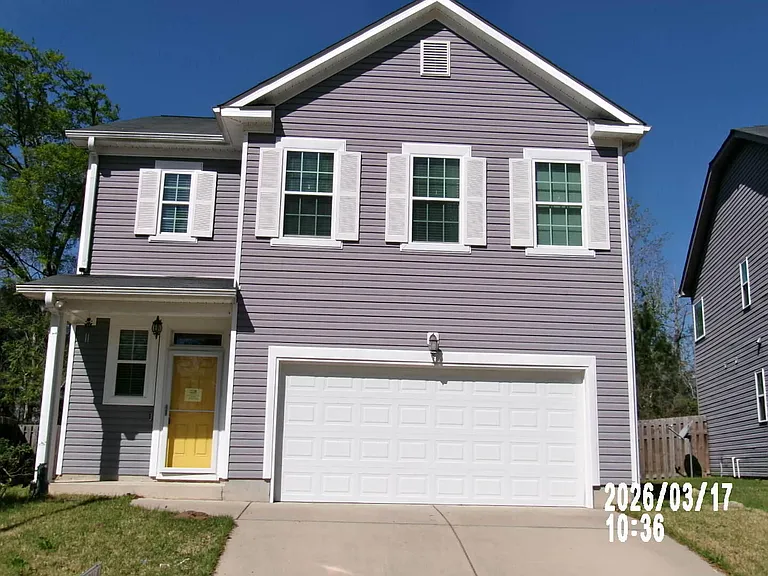
Real closing example — Georgia
No Personal Income Needed for This Rental Purchase
This example is from Grovetown, Georgia, not Youngstown–Warren. See how an investor used the property’s estimated $1,826 monthly rent to qualify for an $184,000 DSCR loan at 7.49% with no prepayment penalty—and how the deal pencils to approximately $205.83 monthly cash flow before other operating expenses.

DSCR and Investor Loan Guidance
Talk Through DSCR Loan Options With Lyndi Gajan
Real estate investors can work with Lyndi Gajan to talk through DSCR loan questions, rental income scenarios, refinance options, and investor documentation before choosing a loan path.
Lyndi Gajan NMLS ID 88249. 360 Mortgage Inc. NMLS ID 80777. Loan availability, licensing, and guidelines vary by state, property, and loan purpose.
Request your Youngstown–Warren investment financing review
Share the address, supported rent and intended use so Lyndi can review documentation and eligible options.
Frequently asked questions about Youngstown–Warren DSCR loans
Why distinguish an operating rental from a vacant Youngstown building?
Municipal registration, insurance, condition, financing and the period without rent can differ. Describe the actual property and repair plan.
Does Youngstown require rental and vacant-property registration?
The city’s official page describes annual registration under separate rental and vacant-property provisions. Verify the exact property’s applicable process.
Does every vacant property require the foreclosure-related cash bond?
Do not assume that. The city’s page identifies the bond in connection with vacant properties subject to foreclosure actions. Confirm the actual circumstances.
Is an expected after-repair value a current appraisal?
No. Verify current value, condition and financing requirements. A hoped-for future refinance is not committed funding.
Does the 423,678 population figure describe Youngstown city?
No. It is the Census Youngstown–Warren metro estimate as of July 1, 2025.
Are these examples real Youngstown or Warren transactions?
No. The numerical scenarios are hypothetical. The real case-study card is expressly identified as a Georgia closing.
Sources and review notes
Reviewed October 13, 2026. Population is the Census metro estimate for July 1, 2025. Numerical examples are hypothetical, not local transactions, rent estimates or current loan quotes.