

Review Columbus business-purpose rental financing with supported income and property-specific operating checks.
Review your rental scenario Call 816-792-2360
Choose the Columbus investment strategy before choosing the loan
A Columbus rental purchase can involve a single-family annual lease, a duplex, a student-oriented house or a furnished rental. Each arrangement produces a different documentation file and operating budget. Decide which use is intended before comparing financing. A debt service coverage ratio program may use supported rental income, but an attractive listing does not establish the income a lender will accept.
Start with the property address, permitted unit count, lease arrangement, condition and cash available after closing. Tell Lyndi whether you are buying a occupied rental, converting a vacant house or refinancing an existing investment. The distinction matters because a lease, a market-rent opinion and a short-stay projection are different evidence. This guide is limited to genuinely business-purpose properties that neither the borrower nor immediate family will occupy. If your plans include a family member living in a unit, disclose that immediately and request a different review.
Read the metro figure as context, not a rental forecast
The Census Bureau’s July 2025 estimate for the Columbus metropolitan area is 2,242,028 residents. That figure covers the metro and should not be described as Columbus city’s population. It also does not tell you how quickly a particular house will lease or whether a proposed monthly rent is realistic. Use the scale of the region to organize a search, then narrow the underwriting to the subject’s actual competitive area.
Create separate comparison sets for houses and small multifamily properties. Record bedrooms, bathrooms, parking, utilities, condition, lease duration and the date each competing rental was observed. An asking rent is not necessarily a completed lease. If you cannot establish recent rental terms, label the figure as an estimate and keep a lower-income scenario in your budget. Comparing Columbus with our Cleveland guide can help explain different ownership checks, but the two metros should not share interchangeable rent assumptions.
The April 2026 rental registry is a purchase diligence item
Columbus legislation 0923-2026, with final action recorded April 23, 2026, enacted Chapter 4515 to create a residential rental registry. The adopted text addresses registration, owner information, building conditions and conditional status. Investors should review the city’s current implementation, application process and property-specific status rather than relying on a seller’s older description of what registration required.
Ask the seller for notices, registration documents and unresolved orders. Arrange time to investigate the records before the inspection contingency ends. A purchase price discount may be less valuable than it appears if unresolved conditions postpone rental operations. Build a written plan identifying the work, responsible contractor, cost allowance and anticipated completion sequence. A lender’s approval does not clear municipal issues. The registry is an operating requirement to investigate alongside the financing, not a substitute for an independent property inspection.
Separate campus access from assumptions about student leasing
Ohio State identifies its main campus as being in Columbus while also describing a statewide presence that includes regional campuses. For a rental promoted around university access, confirm the specific campus and destination instead of treating every Ohio State address as equivalent. Check the practical route, parking and transportation options that a tenant would use. Do not advertise a particular commute time without verifying it.
A student-oriented business plan also needs clarity about the lease. A whole-house lease and separate room rentals can have different occupancy and lender requirements. Explain the intended arrangement before relying on a DSCR quote. Forecast turnover, leasing time and any owner-paid utilities, and consider how the property would perform with a conventional annual tenant if the original audience does not materialize. Campus proximity is useful geographic context; it is not proof of rental demand, supported rent or a lender’s willingness to accept the proposed income method.
Compare the full payment with supported rent
For residential DSCR financing, a lender commonly compares qualifying monthly rent with principal, interest, property taxes, insurance and applicable association charges. Ask for the exact calculation used by the program. A payment estimate that includes only principal and interest can materially overstate coverage, particularly if insurance, association dues or a revised property-tax estimate is missing.
Consider a hypothetical Columbus rental with $2,400 of supported monthly rent and a $1,920 qualifying payment. Dividing rent by payment gives 1.25. These figures are a financing illustration, not a current Columbus rent estimate, loan quote or required approval threshold. The $480 monthly difference remains before vacancy, management, maintenance, leasing and future replacements. Review our rent qualification guide so the income in your spreadsheet can be reconciled with the lender’s evidence and calculation.
Stress-test a vacant month and a higher ownership payment
In the same hypothetical purchase, twelve months of scheduled rent produces $28,800. One vacant month reduces collected revenue to $26,400, while twelve $1,920 payments total $23,040. That leaves $3,360 before operating expenses. At an illustrative management cost of eight percent of collected rent, $2,112 is consumed, leaving $1,248 before maintenance, leasing and capital reserves. A nominally comfortable financing ratio can therefore leave little investment cash flow.
Now increase the monthly qualifying payment by $200 because the verified tax and insurance costs are higher than the preliminary estimate. Coverage falls to about 1.13, and annual payments increase by $2,400. Run both tests before deciding whether the price and loan structure work. A larger down payment may lower the payment but reduce repair liquidity. Compare money tied up at closing with cash left for ownership rather than optimizing the ratio in isolation.
Treat renovation-to-rent as a timing problem as well as a budget
For a vacant Columbus house, map the sequence from possession to tenant move-in. Inspection, contractor scheduling, permits where applicable, repair work, cleaning and marketing do not necessarily happen at once. Identify any work that prevents legal or practical occupancy. Ask the lender whether the chosen program requires the property to be rentable at closing and how the appraisal will address unfinished work.
Keep repair cash separate from ordinary reserves. A $10,000 estimate for visible work does not cover every possible concealed defect or every month without rent. Obtain written scopes, clarify who supplies materials and include a reasonable contingency based on the actual inspection findings. If the acquisition is intended for a later refinance, avoid assuming that the future appraisal will equal an aspirational after-repair value. Our BRRRR financing guide helps organize the separate acquisition, repair and refinance stages.
Use the lease and utility structure to explain the economics
For an occupied investment, reconcile the lease with the rent roll and recent collection evidence. Identify concessions, arrears, expiration dates and the security-deposit transfer. Ask which party pays water, sewer, trash, heating and other utilities. A lease advertised at a higher rent may also leave the owner responsible for costs that a lower-priced comparable assigns to the tenant.
For a duplex, examine each unit independently. Confirm legal use, bedroom configuration, access, meters and common equipment. Model one unit vacant while the other remains occupied. A combined rent figure can hide the property’s dependence on one larger unit or an unusual tenancy. Discuss any room-rental, short-stay or furnished arrangement directly with the lender and verify local authorization separately. Do not make a standard annual-lease budget support a different operation without adjusting the evidence and expenses.
A Columbus refinance should protect the property left behind
A refinance can replace debt, adjust the payment or release investment capital. Compare the existing balance, payment, term and any prepayment provision with the complete proposed transaction. The amount received at closing should not be considered a gain without accounting for the higher balance, closing costs and ongoing payment it may create.
For illustration, supported rent of $2,400 against a $1,920 payment produces 1.25 coverage. A cash-out structure that increases the payment to $2,150 reduces coverage to approximately 1.12. The additional $230 monthly obligation removes $2,760 of annual margin before other expenses. Confirm appraisal, seasoning, ownership history and intended proceeds before relying on the available cash. Protect reserves for the subject rental even if the refinance is designed to help acquire another property. Read our investor cash-out guide for the broader planning questions.
Bring evidence that lets the first review move forward
Send the Columbus address, contract price or estimated value, requested financing, rent evidence, lease duration, tax estimate, insurance quote, dues, occupancy, repair scope and available funds. Mark each figure as documented or preliminary. For a refinance, include the current loan details and purpose of any cash released. If an entity will hold title, organize ownership and signing-authority records.
An LLC does not by itself establish a business-purpose exemption or remove underwriting. The real occupancy and use must agree with the application and operation. Lender availability, property acceptance and transaction terms remain subject to review. Use the Ohio DSCR hub for the state framework and our requirements guide for documentation. Blue Castle’s landlord education can help structure operational questions for local service providers; it does not represent a Columbus management-service offer.
Make the contract timetable match your diligence
Ask your real-estate representative and closing team how much time the contract provides for reviewing city records, inspection findings, financing conditions and title. Identify which missing document can prevent a reliable decision rather than simply collecting a large file. If a registration question, repair quote or lease discrepancy remains unresolved, make that uncertainty visible in the financing discussion. A clear deadline and responsible person for each outstanding item helps keep a Columbus purchase from relying on last-minute assumptions.
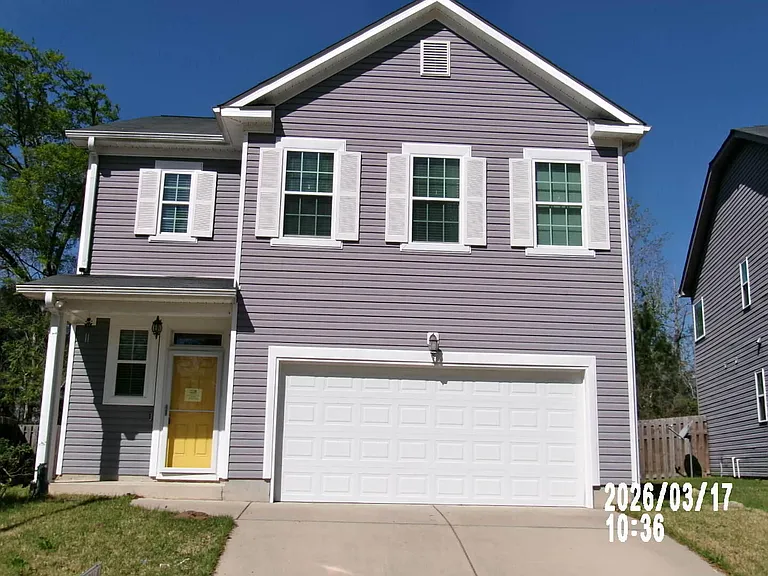
Real closing example — Georgia
No Personal Income Needed for This Rental Purchase
This example is from Grovetown, Georgia, not Columbus. See how an investor used the property’s estimated $1,826 monthly rent to qualify for an $184,000 DSCR loan at 7.49% with no prepayment penalty—and how the deal pencils to approximately $205.83 monthly cash flow before other operating expenses.

DSCR and Investor Loan Guidance
Talk Through DSCR Loan Options With Lyndi Gajan
Real estate investors can work with Lyndi Gajan to talk through DSCR loan questions, rental income scenarios, refinance options, and investor documentation before choosing a loan path.
Lyndi Gajan NMLS ID 88249. 360 Mortgage Inc. NMLS ID 80777. Loan availability, licensing, and guidelines vary by state, property, and loan purpose.
Request your Columbus investment financing review
Share the address, supported rent and intended use so Lyndi can review documentation and eligible options.
Frequently asked questions about Columbus DSCR loans
Can a Columbus rental qualify using property income?
An eligible DSCR program may use supported property rent. Credit, funds, reserves, appraisal, condition and actual occupancy still require lender review.
Is 2,242,028 the population of Columbus city?
No. It is the Census estimate for the Columbus metropolitan area as of July 1, 2025.
Did Columbus adopt a residential rental registry in 2026?
The city’s legislative record shows that ordinance 0923-2026 enacted Chapter 4515 with final action on April 23, 2026. Verify current implementation and the subject’s status with the city.
Does being near Ohio State establish qualifying student rent?
No. Confirm the campus, lease arrangement, competing rentals and lender-accepted income evidence.
Can the borrower or immediate family live in the rental under this guide?
No. This guide addresses genuine business-purpose Ohio rentals with no borrower or immediate-family occupancy. Disclose a different occupancy plan for separate review.
Does a 1.25 ratio guarantee positive cash flow?
No. Vacancy, management, maintenance, leasing and capital replacements can consume the margin remaining after the qualifying payment.
Sources and review notes
Reviewed October 13, 2026. Population is the Census metro estimate for July 1, 2025. Numerical examples are hypothetical, not local transactions, rent estimates or current loan quotes.