
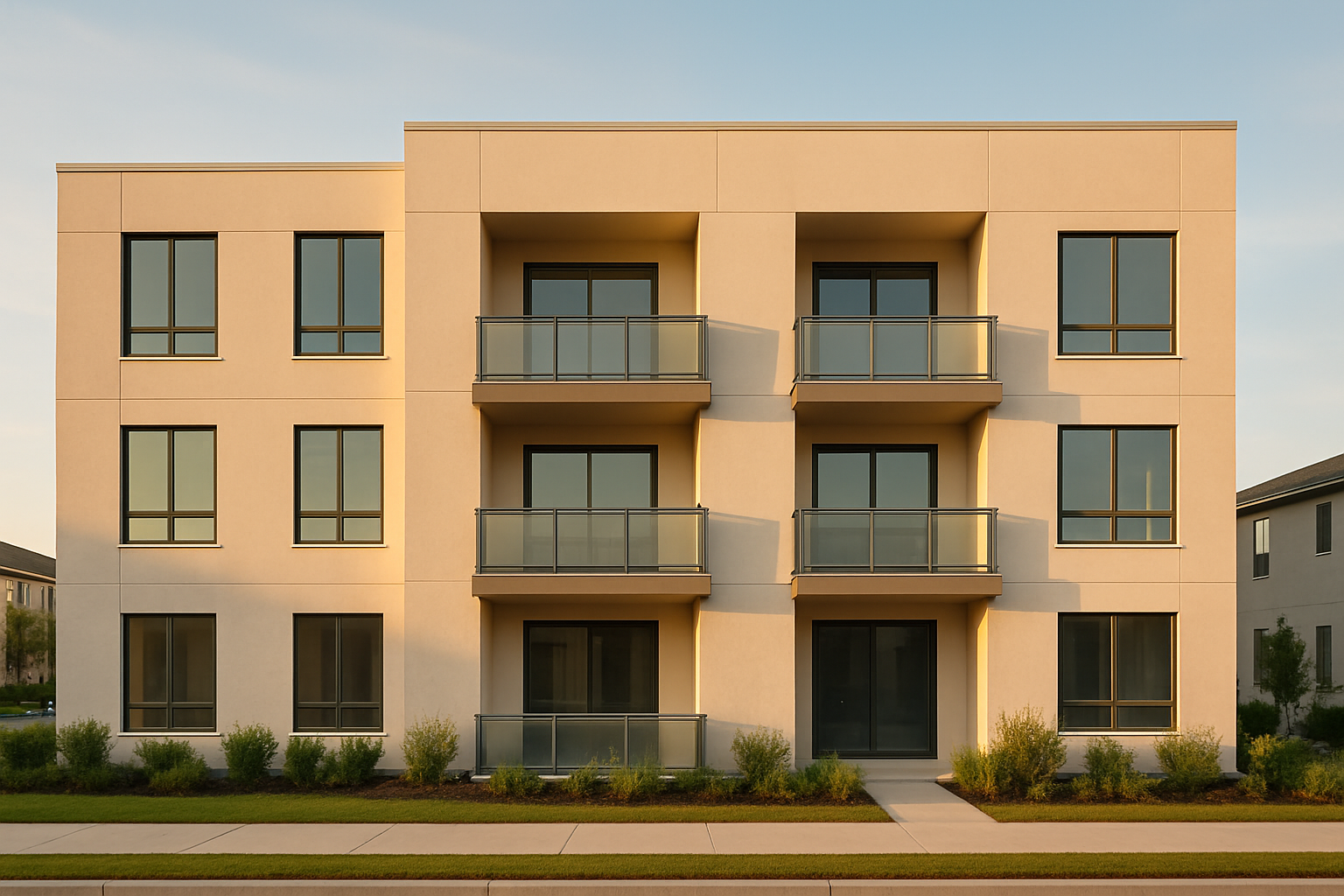
What Is a DSCR Loan?
A DSCR (Debt Service Coverage Ratio) loan is an investor mortgage that qualifies primarily on the income generated by the property. Instead of relying mainly on personal tax returns or pay stubs, lenders focus on whether the rental income can cover the monthly housing expense attached to the property.
These loans are especially popular with investors who are self employed, own multiple properties, or want to scale without traditional income documentation constraints.
If you want to build the concept from the ground up, the best supporting pages are What Is DSCR, How DSCR Loans Work, How to Calculate DSCR, and What Is a Good DSCR Ratio?.
Investors also commonly compare DSCR loans with conventional investor loans and portfolio loans before deciding which structure best fits their strategy.
How DSCR Loans Work
DSCR is a ratio that compares a property’s rental income to its monthly housing expense.
- Rental income: Usually based on current leases, market rent, or appraisal supported rent analysis
- Debt service: Principal, interest, taxes, insurance, and HOA if applicable
- DSCR ratio: Income ÷ housing expense
A higher DSCR indicates stronger cash flow support. Minimum ratios vary by lender, property type, and overall risk profile.
If you want the step by step math, review How to Calculate DSCR. If you want to know whether your result is strong, weak, or borderline, review What Is a Good DSCR Ratio?. If you want to pressure test a real scenario, use the DSCR Calculator.
Lenders may also evaluate how rent is supported on paper. That is why investors should understand how rent is used for qualification and when a Form 1007 rent schedule becomes important.
Borrowers who are attracted to DSCR because of the lighter documentation path should also review no income verification, no tax return DSCR options, LLC borrower scenarios, self employed investor guidance, and foreign national investor options.
Typical DSCR Loan Requirements
Exact guidelines vary by lender, but DSCR loans generally focus on property performance and borrower profile rather than personal income documentation.
- Non owner occupied investment property
- Minimum down payment, often higher than owner occupied financing
- Acceptable credit profile
- Rental income sufficient to meet program guidelines
- Cash reserves after closing
For a deeper look at underwriting expectations, review DSCR Loan Requirements, DSCR Loan Rates, Down Payment Requirements, Credit Score Requirements, LTV Limits, and Reserve Requirements.
If the deal is borderline, you may also want to review what some lenders may allow in low DSCR situations or where options sometimes exist for lower credit score borrowers.
Eligible Property Types
- Single family rental homes
- Small multi unit properties
- Condos and townhomes, depending on program guidelines
- Short term and long term rentals, depending on lender rules
DSCR loans can be used across a wide range of investment property categories. If you want a deeper property specific breakdown, review rental properties, single family investments, multifamily properties, condos, short term rentals, Airbnb properties, and vacation rentals.
The newer strategy and property type pages also go deeper into specific asset classes and investor use cases:
- Duplex financing
- Triplex financing
- Fourplex financing
- Small multifamily financing
- Apartment building financing
- Mixed use property financing
- Commercial rental property financing
- Condo rental financing
For short term rental investors, it also makes sense to review Short Term Rental Financing and supporting insurance pages such as Short Term Rental Insurance Guide, Airbnb Insurance Explained, and Vacation Rental Insurance.
Benefits of DSCR Loans
- No traditional income verification in many cases
- Scalable financing for growing portfolios
- Flexible structures for experienced investors
- Works well for self employed borrowers
- Useful for buy and hold, BRRRR, and refinance strategies
These benefits are part of why DSCR loans are so often used for scaling a rental portfolio, buying multiple assets over time, and expanding beyond the normal limits of conventional financing. Investors often also ask how many properties you can buy with DSCR style financing as their portfolio grows.
Many BRRRR investors refinance after stabilization to improve cash flow or pull equity for the next deal. If that is your strategy, review BRRRR strategy financing, fix and rent strategy, turnkey rental property financing, using DSCR loans to scale rentals, and scaling real estate investments.
Strong DSCR also does not automatically mean strong true profitability. Smart investors pair loan analysis with deal analysis using How to Analyze a Rental Property Deal, How to Calculate Rental Cash Flow, and DSCR vs Cash Flow.
Can You Refinance an Investment Property with a DSCR Loan?
Yes. DSCR loans can be used not only for purchasing a rental property, but also for refinancing an existing investment property. For many investors, this becomes relevant after rents have increased, the property has stabilized, or equity has built up enough to support a better long term strategy.
In a refinance scenario, the lender still focuses heavily on property cash flow rather than personal income. That can make DSCR refinancing attractive for investors who want to improve monthly cash flow, restructure debt, or pull equity for another acquisition without relying on traditional income documentation.
If you want a direct investor specific breakdown, review Refinancing Rental Properties and Cash Out Refinance for Investors. If you want the shorter cluster version, also link through to cash out refinance.
In general, refinance options usually fall into two categories. A rate and term refinance is often used to lower the payment, change the loan term, or replace existing financing with a more efficient structure. A cash out refinance for investment property is more commonly used when an investor wants to access equity for renovations, reserves, or the next purchase.
Who DSCR Loans Are Best For
- Buy and hold rental property investors
- Investors with multiple properties
- Self employed borrowers with complex income
- Investors scaling beyond conventional loan limits
- Borrowers focused on property cash flow rather than W2 income
They are especially useful for investors who think like operators and want to evaluate the full picture. That means financing, deal math, property risk, and management all working together.
For a deeper educational walkthrough by borrower profile, review first time investors, DSCR loans for new investors, DSCR loans for experienced investors, DSCR loans for passive income, self employed investors, LLC borrowers, and foreign national investors.
Investors often also want to know how these programs compare with traditional documentation paths. That is why pages like no income verification and no tax returns are useful supporting pages in this cluster.
DSCR Calculator and Analysis Tools
If you are actively comparing rental scenarios, start with the DSCR Calculator. It gives you a fast estimate of whether the property’s income supports the projected debt obligation.
Then pair that with:
- How to Calculate DSCR
- What Is a Good DSCR Ratio?
- How Rent Is Used for Qualification
- Form 1007 Rent Schedule Explained
- How to Analyze a Rental Property Deal
- How to Calculate Rental Cash Flow
- DSCR vs Cash Flow
Investors should also include insurance and risk costs in their analysis, especially if the property type or market creates more exposure. Relevant pages include Rental Property Insurance Cost, What Affects Landlord Insurance Cost, How to Lower Landlord Insurance Cost, and Common Insurance Mistakes Real Estate Investors Make.
DSCR Loan Programs by State
Explore our DSCR loan pages by state to compare investor-friendly markets, rental demand, and location-specific financing opportunities. These pages connect the main DSCR hub to state and city-level real estate investment content.
Sunbelt and Southeast Markets
- Florida DSCR Loans
- Texas DSCR Loans
- Georgia DSCR Loans
- North Carolina DSCR Loans
- South Carolina DSCR Loans
- Tennessee DSCR Loans
- Alabama DSCR Loans
- Mississippi DSCR Loans
- Arkansas DSCR Loans
- Louisiana DSCR Loans
- Kentucky DSCR Loans
- West Virginia DSCR Loans
Midwest and Central Markets
Mountain West and Western Markets
Each state page links deeper into city-level DSCR loan pages, rental property financing strategies, and market-specific investor guidance.
DSCR Loan FAQs
Do DSCR loans require tax returns?
Many DSCR programs do not require personal tax returns, focusing instead on property income and overall borrower profile. For a deeper look, review no tax returns and no income verification.
What DSCR ratio do I need?
Minimum ratios vary by lender. Some programs allow lower ratios with compensating factors. For a more detailed breakdown of ratio ranges and what lenders often look for, visit What Is a Good DSCR Ratio? and low DSCR options.
Can I use DSCR loans for short term rentals?
Some programs allow short term rentals, depending on documentation, property type, and market guidelines. Start with short term rentals, Airbnb properties, and vacation rentals if that is your focus.
How do lenders determine rent for DSCR qualification?
Lenders may use lease income, market rent analysis, or appraisal based rent support depending on the scenario. Review How Rent Is Used for Qualification and Form 1007 Rent Schedule Explained.
Are DSCR loans good for first time investors?
Sometimes yes, depending on the property, reserves, and overall profile. Start with first time investors and DSCR loans for new investors.
How many properties can you buy with DSCR loans?
That depends on lender guidelines, liquidity, reserves, and how each property performs. For a deeper look, review how many properties you can buy and scaling a rental portfolio.
Get Started with a DSCR Loan
Share your property details and investment goals, and we’ll help confirm DSCR eligibility, ratio strength, financing options, and possible refinance paths if the property is already in your portfolio.
Disclosure: This page provides general information and is not a commitment to lend. DSCR loan programs, rates, guidelines, and requirements vary by lender and are subject to change. Qualification depends on underwriting and complete documentation review.
NMLS: 80777
Licensed mortgage broker in Missouri, Kansas, and Louisiana.
Recent Comments