
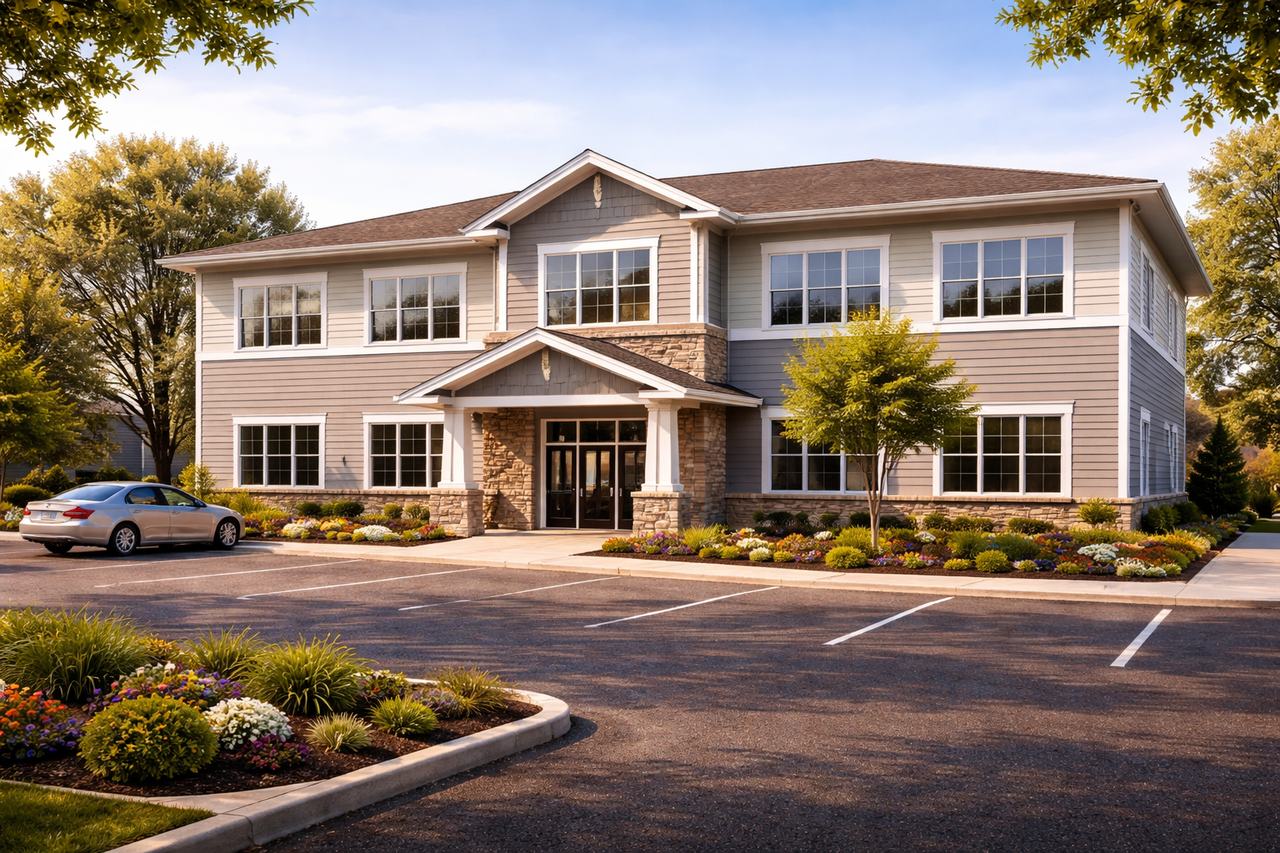
Commercial Rental Property Financing
Commercial rental property financing applies to income-producing real estate beyond standard residential loans. That includes office buildings, retail centers, mixed-use assets, warehouses, and apartment buildings with five or more units.
Unlike traditional mortgages, these loans are driven by property performance. Lenders focus on income, tenant stability, lease structure, and overall deal strength rather than just borrower income.
If you’re comparing adjacent strategies, see apartment building financing, mixed-use property financing, and small multifamily financing.
Commercial rental property can dramatically accelerate portfolio growth because each acquisition carries more income potential. But it also increases complexity. Lease quality, expenses, tenant stability, and capital requirements all matter more at this level.
Why investors move into commercial property
- More income per acquisition
- Ability to scale faster than residential investing
- Value creation through operations and leasing
- Diversification across tenant types
- Potential for longer lease stability
Main financing structures
Purchase financing
Used to acquire stabilized or value-add commercial assets. Structure depends on income strength and tenant quality.
Refinancing
Improves loan terms, reduces payments, or stabilizes long-term hold financing after property improvements.
Cash-out refinance
Unlocks equity created through appreciation or improved operations to fund additional investments.
Bridge financing
Short-term loans used when the property is not yet stabilized or needs repositioning before permanent financing.
Illustrative commercial rental scenario
A small commercial rental may require a different underwriting program than a residential one-to-four-unit DSCR loan. An investor can still compare $4,000 eligible income with $3,200 debt service for a simple 1.25 ratio, then confirm the actual lender’s property and lease rules.
Illustration only; current eligibility and terms vary. Review a specific property with Lyndi Gajan.
How underwriting changes at the commercial level
- Focus shifts to net operating income
- Debt coverage becomes critical
- Tenant quality and lease terms matter more
- Expense accuracy is heavily scrutinized
- Management and execution risk increase
Reality check
Commercial properties amplify both good and bad decisions. Strong deals scale wealth. Weak deals scale problems.
Key factors lenders evaluate
Income strength
Reliable rent roll, tenant diversity, and lease stability drive loan quality.
Expenses
Taxes, insurance, maintenance, and capital needs must be realistic.
Occupancy
Stable occupancy improves financing options and pricing.
Sponsor strength
Experience, liquidity, and reserves still matter significantly.
Where this fits in your portfolio
Commercial rental property is typically the transition from “investor” to “operator.” At this level, properties behave like businesses. Financing must align with the business plan, not just the purchase.
Talk through your commercial financing strategy
We’ll help you structure the right loan based on the property, income, and your long-term scaling plan.
Related pages
Licensed mortgage broker in Missouri, Kansas, and Louisiana.

DSCR and Investor Loan Guidance
Talk Through DSCR Loan Options With Lyndi Gajan
Real estate investors can work with Lyndi Gajan to talk through DSCR loan questions, rental income scenarios, refinance options, and investor documentation before choosing a loan path.
Lyndi Gajan NMLS ID 88249. 360 Mortgage Inc. NMLS ID 80777. Loan availability, licensing, and guidelines vary by state, property, and loan purpose.
Direct answer
What should owners know about commercial rental property financing?
Commercial Rental Property Financing is mainly about matching the borrower, property, loan purpose and timing to the right mortgage path. Eligibility and pricing can depend on credit profile, income documentation, debt-to-income ratio, property type, occupancy, loan amount, equity or down payment, and current program rules.
Key points before you decide
- Start with the goal: purchase, lower payment, shorter term, cash out, streamline refinance, or investor financing.
- Review the borrower profile: credit, income, debts, assets, property use and any timeline constraints.
- Compare the loan option against total monthly payment, cash to close, mortgage insurance, closing costs and long-term plans.
Frequently asked questions
Who is Commercial Rental Property Financing best for?
Commercial Rental Property Financing may fit borrowers whose goals, documentation and property details line up with the program requirements. A mortgage review is the fastest way to compare options without relying on generic assumptions.
What documents should I prepare?
Most borrowers should be ready to discuss income, assets, debts, credit history, property details and the purpose of the loan. Exact documentation depends on the program and underwriting review.
What is the next step?
The next step is to talk with 360 Mortgage so the team can review your situation, explain available options and outline the application path.