
DSCR Loans in Beaumont–Port Arthur, TX

Plan a Southeast Texas rental with supported income, property-specific insurance quotes and a realistic operating budget.
Review your Beaumont investment with Lyndi
Finance the Beaumont rental you actually intend to operate
A Beaumont investment should begin with a clear rental plan and an address-specific budget. DSCR financing may allow an eligible investor to qualify using supported property income instead of a conventional personal-income calculation, but it still requires underwriting. Credit, closing funds, reserves, appraisal, condition, ownership and the proposed rental arrangement remain important. A city’s name or an LLC designation does not replace that review.
For Southeast Texas, insurance and repair assumptions deserve attention before the contract becomes dependent on financing. Obtain realistic estimates, disclose the actual occupancy and identify work needed to make the property rentable. The goal is a loan that supports the business you intend to operate, along with enough cash to handle ownership costs after closing. Our DSCR financing explanation describes the general process.
Beaumont–Port Arthur metro context and property comparisons
FRED reports the Census Beaumont–Port Arthur metro population estimate as 399,310 for July 2025. That figure covers the metropolitan area, not just Beaumont and not a ready-made tenant pool for a particular home. Lamar University is located in Beaumont, offering another location to consider when researching a university-oriented rental. Neither metro size nor a campus establishes the property’s achievable income.
Separate comparable rentals by actual location and use. A home chosen for access to Lamar may have different competing properties and lease patterns from a rental selected for another commute. Check drive times, parking, bedroom and bathroom layout, condition and who pays utilities. An advertised furnished rate should not be substituted for an annual unfurnished lease without accounting for the difference.
Obtain evidence for the scenario you submit. Existing signed leases, a local rental analysis and the lender’s appraisal process can be more useful than a handful of unrelated asking rents. Identify concessions and the date of each comparison. If the planned rent assumes repairs or renovations, document the costs and timeline instead of presenting the improved property as its current condition.
Flood review belongs in the purchase analysis
Beaumont’s public map collection includes floodplain and zoning information. Use the city tools and FEMA’s Map Service Center as starting points for an address-specific review, then ask the lender and insurance agent which documents they need. A general statement about the neighborhood cannot establish a parcel’s risk, insurance obligation or insurability.
Review the property’s history and available disclosures with appropriate professionals. Ask about prior water entry, drainage, repairs, permits and any documents relevant to the structure. A map category does not replace an inspection or describe every possible loss. If there is uncertainty, resolve it before relying on an operating budget that assumes no additional cost.
The National Flood Insurance Program explains that most homeowners insurance does not cover flood damage. For a rental, ask the insurer exactly what the proposed policies cover and what needs separate coverage. Confirm premiums, deductibles, limits and effective dates for the intended use. Do not assume that a property outside a lender’s mandatory insurance category has no financial exposure.
Quote wind, property and liability coverage separately where needed
Request a written insurance proposal using the property address, roof details, condition, occupancy and rental term. Ask whether wind-related coverage is included, excluded or supplied through a separate arrangement. Clarify deductibles and whether a deductible is a percentage of insured value. A low annual premium can still leave a substantial amount payable after a loss.
Disclose any furnished or short-stay operation. A policy suited to an ordinary annual lease may not fit a different rental business. Ask about liability, furnishings and loss-related provisions rather than infer coverage from a policy label. Confirm the facts with a qualified insurance professional before treating an estimate as a firm expense.
Provide the resulting costs to the loan team. Some charges may affect the lender’s payment calculation, while other costs still belong in the investor’s operating budget. The distinction does not make an expense disappear. If the quote changes materially before closing, rerun both the loan ratio and cash-flow analysis.
Illustrative purchase: the insurance estimate can change the deal
Suppose a hypothetical Beaumont rental has supported rent of $1,800 and a proposed monthly payment including taxes and insurance of $1,440. The simple DSCR is 1.25. These numbers are for explanation and are not local market rent estimates, an interest-rate offer or approval terms. Confirm how the lender calculates the ratio and which costs it includes.
If the final insurance arrangements increase the relevant monthly payment by $150 to $1,590, the ratio becomes approximately 1.13. The margin before operating costs falls from $360 to $210. That change can matter even if the purchase price and principal balance remain the same. Obtain coverage estimates early enough to make an informed financing and contract decision.
Now add illustrative monthly allowances of $90 for vacancy, $144 for management, $100 for maintenance and $100 for capital replacements. Those costs total $434. Against the original $360 margin, the investor would have a $74 shortfall before any other expense; against the higher payment, the shortfall would be $224. Use our DSCR calculator for the ratio and an independent worksheet for net cash flow.
Repair costs and rent-ready condition
Inspect the home for structural, plumbing, electrical, roof and mechanical issues suited to its age and condition. Where water damage or prior repairs are apparent, ask qualified professionals to identify what needs further investigation. A clean interior photograph is not proof of completed, permitted or durable work. Obtain written scopes and quotes for material issues.
Clarify whether the lender accepts the current condition. A stabilized rental loan should not be assumed to fund a major rehabilitation or solve an insurance problem automatically. Ask what repairs must happen before closing, how they will be documented and whether a different financing path is needed. Align the loan request with the property as it exists.
Build carrying costs into the rent-ready timeline. Loan payments, taxes, insurance, utilities and maintenance may continue while the home produces no rent. If the budget only works when a tenant moves in immediately, it may lack sufficient room for ordinary delays. Keep reserves available after the down payment and repair checks clear.
Cash to close, taxes and reserves
At an illustrative $240,000 purchase price, a 25% down payment is $60,000. The actual program may have a different requirement. Closing costs, prepaid items, repairs and reserves increase the amount needed. Obtain the selected program’s figures before treating this example as a funding plan.
Estimate property taxes based on the intended ownership and rental use. A seller’s exemptions and historical bill may not describe your future costs. Identify what is known, what is estimated and which local source can confirm the information. Update the operating worksheet when the lender’s tax and insurance estimates become available.
Maintain reserves for vacancy, routine maintenance, larger replacements and applicable deductibles. Funds reserved for another purchase should not also be counted as the sole cushion for this property. Organize evidence of available funds and their source early. Our DSCR requirements guide helps prepare the initial discussion.
Annual leases, campus-oriented rentals and furnished stays
For an annual lease, review the agreement, rent collection history, deposits, utilities and renewal terms. If acquiring an occupied property, understand what transfers with ownership and any outstanding obligations. A higher future asking rent is a projection, not income already received. Separate the current facts from the investment changes you hope to make.
For a property chosen with Lamar University access in mind, compare the actual commute and competing housing, then budget lease timing and turnover. Do not assume that every student-oriented arrangement is accepted by every DSCR program. Disclose the intended lease structure and ask how income will be evaluated.
For furnished or short stays, research the rules of the authority responsible for the address, association restrictions, taxes and insurance independently of loan approval. This guide does not establish permission to operate such a rental. Include utilities, furnishings, cleaning and service costs, and test an annual-lease fallback. Our short-term rental financing guide organizes the additional loan questions.
Refinance and cash-out with a defined purpose
A refinance needs a clear objective and a complete comparison of existing and proposed terms. Review payment, loan amount, closing costs, term and any prepayment penalty. Releasing equity can help fund a planned investment, but it also changes the obligations of the rental providing the collateral.
For illustration, rent of $2,000 divided by a $1,600 payment produces a 1.25 ratio. If cash-out increases the payment to $1,800, the ratio becomes approximately 1.11 and the margin before operating expenses drops by $200 monthly. The cash received should be assessed alongside that ongoing cost, rather than treated as a separate benefit.
Confirm value, seasoning, ownership, condition and supported income before assuming proceeds are available. Keep funds for the subject property’s own insurance and repairs after allocating cash to another project. Discuss the proposed use of proceeds with the loan team so the transaction can be evaluated on its actual facts.
LLC ownership and your Beaumont financing review
Some DSCR programs accept eligible LLC borrowers with formation records, signing authority, ownership information and guarantees as required. Entity ownership does not eliminate credit, asset or property review. It also does not independently establish a licensing exemption or change a home used personally into a business-purpose investment.
This page concerns genuinely non-owner-occupied business-purpose rentals. Disclose personal or mixed use before discussing programs. Texas residential mortgage law turns in part on the purpose of the transaction; the DSCR label should not be used to bypass that review. Our LLC financing guide covers useful ownership questions.
Send Lyndi the address, price or value, loan amount, lease or rent evidence, intended use, taxes, insurance proposals, association dues, repairs, occupancy and available funds. Bring your operating budget as well. Explore the Texas DSCR hub and Houston investor guide for related resources, and review Blue Castle Management’s leasing education for practical operating questions.
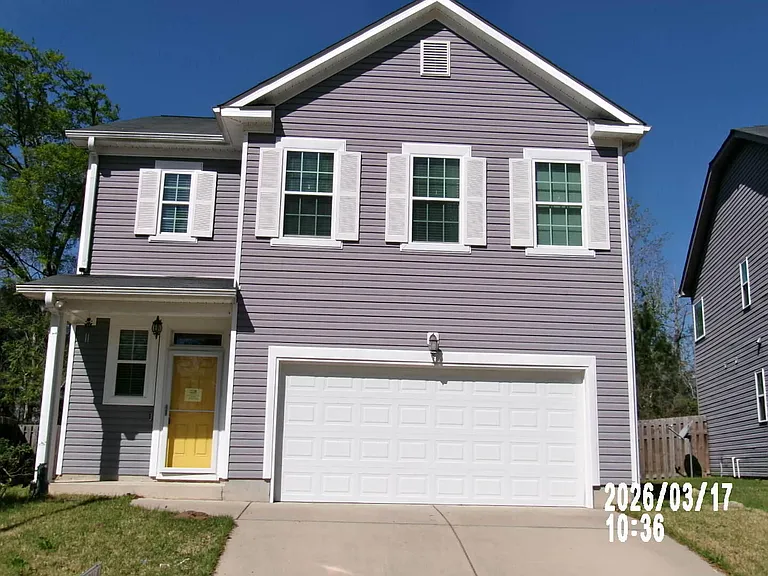
Real closing example — Georgia
No Personal Income Needed for This Rental Purchase
This example is from Grovetown, Georgia, not Beaumont or Port Arthur. See how an investor used the property’s estimated $1,826 monthly rent to qualify for an $184,000 DSCR loan at 7.49% with no prepayment penalty—and how the deal pencils to approximately $205.83 monthly cash flow before other operating expenses.
View the Georgia DSCR purchase case study
DSCR and Investor Loan Guidance
Talk Through DSCR Loan Options With Lyndi Gajan
Real estate investors can work with Lyndi Gajan to talk through DSCR loan questions, rental income scenarios, refinance options, and investor documentation before choosing a loan path.
Lyndi Gajan NMLS ID 88249. 360 Mortgage Inc. NMLS ID 80777. Loan availability, licensing, and guidelines vary by state, property, and loan purpose.
Request your Beaumont–Port Arthur financing review
Share the address, rental plan and available property numbers so Lyndi can discuss eligible financing and documentation.
Frequently asked questions about Beaumont–Port Arthur DSCR loans
Can I use DSCR financing for a Beaumont rental held in an LLC?
Some programs accept eligible LLC borrowers with required entity records, signing authority and guarantees. Lender requirements and the actual investment use still apply.
Does proximity to Lamar University establish qualifying rent?
No. Supported rent depends on the property’s location, condition, lease structure and lender documentation requirements. Campus access does not guarantee income.
Is flood damage automatically covered by property insurance?
Do not assume it is. The National Flood Insurance Program says most homeowners policies do not cover flood damage. Confirm the coverage appropriate for the rental with an insurance professional.
Can insurance costs change the DSCR calculation?
Yes. Costs included in the lender’s required payment can change the ratio. Expenses outside that calculation still belong in the investor’s operating budget.
Does a 1.25 DSCR guarantee positive net cash flow?
No. Vacancy, management, maintenance, capital reserves and other ownership costs can eliminate the margin after debt payment.
What should I provide for a Beaumont–Port Arthur loan review?
Send the address, price or value, loan amount, supported rent, rental use, taxes, insurance quotes, dues, repairs, occupancy, available funds and ownership structure.
Sources and review notes
Local facts checked October 8, 2026. Examples are hypothetical and are not advertised rent, coverage or loan terms.
Comparing another Gulf Coast investment? The Corpus Christi DSCR guide reviews coastal coverage, association costs and that city’s current short-term rental considerations. Confirm the rules and budget for each actual address.