
DSCR Loans in Corpus Christi, TX

Evaluate supported rent, property costs and a genuine business-purpose financing plan.
Review your rental investment with Lyndi
Corpus Christi DSCR loans: underwrite the rental business first
A Corpus Christi rental needs a supported income plan and a complete ownership budget. Eligible debt service coverage ratio programs may assess the property’s rental income instead of using a conventional personal-income calculation. They still evaluate the property, borrower, funds and transaction. The business plan should be clear before an investor compares terms.
Start by identifying the intended rental duration, current occupancy, condition and any personal use. A mainland annual rental and a furnished coastal property can require very different expense assumptions. This guide concerns genuine non-owner-occupied business-purpose investment financing. Our DSCR loan overview explains the general framework; the actual address and program determine the review.
The Corpus Christi metro meets the size criterion
The 2024 American Community Survey profile reports 448,853 residents in the Corpus Christi metropolitan area. That regional population exceeds 250,000. It is not the city population or evidence that every rental will achieve a particular rent, occupancy or return. Use local comparisons that fit the property you intend to buy.
Build a comparison set around rental use, condition, location, parking and included services. Do not combine a furnished short-stay listing with an unfurnished annual lease as if the income were interchangeable. If a listing describes itself as coastal, determine what that location means for access, insurance and maintenance at the actual address. A marketing label is not an operating budget.
Decide between annual leasing and a short-stay plan
For an annual rental, establish the supported monthly rent and the responsibilities assigned to the owner and tenant. For furnished stays, itemize utilities, supplies, cleaning, booking charges and turnover work. The gross-income premium needs to cover the additional costs and vacancy risk. Ask which income evidence the lender accepts.
Get the planned rental duration into the financing discussion early. Approval of a loan does not authorize a rental use or confirm that an association permits it. Collect governing documents and identify the applicable jurisdiction. If the property is outside Corpus Christi city limits, obtain the requirements of the authority responsible for that address instead of copying the city’s process.
Recent Corpus Christi STR changes affect acquisition decisions
The city’s August 26, 2026 announcement reports an immediate moratorium on new Type 1 STR permits through November 17, 2026. It also directs application of the existing 15% Type 2 density limit in single-family residential areas to new applications and renewals. Type 1 and Type 2 involve different occupancy arrangements; do not treat those categories as interchangeable.
Before relying on short-stay revenue, ask Development Services to confirm current zoning, permit availability and renewal requirements for the specific property. Do not assume a seller’s permit guarantees your future operation. Disclose the actual occupancy plan to the lender; describing a property as business purpose does not make personal use irrelevant.
Registration and hotel tax are separate operating tasks
The city’s STR guidance describes a registration permit for properly zoned rentals within city limits and links to its parcel and zoning map. It also identifies an application contact available around the clock. Prepare the required operating information and confirm current fees directly; older fee figures on a webpage should not be treated as a current quote.
Corpus Christi’s hotel occupancy tax guidance calls for property managers to register and remit separate forms for each rental property. Include reporting and bookkeeping in your service plan. Tax compliance does not itself establish zoning permission, insurance acceptance or financing eligibility. Use our short-term rental financing guide to organize the separate loan questions.
Coastal coverage: obtain quotes and construction records
Get property-specific insurance quotes before finalizing the expected payment. Ask which policies address wind, hail, flood, liability and the intended rental arrangement. Understand deductibles, exclusions, replacement terms and any required work. A seller’s premium may reflect a different occupancy, coverage structure or condition from your proposed investment.
The Texas Department of Insurance explains windstorm inspection and certification requirements affecting eligibility for TWIA coverage. Its resources include certificate searches. Ask a qualified insurance professional to evaluate the records applicable to the home and any additions or roof work. Do not assume every coastal property needs the same policy or that a certificate alone guarantees an acceptable quote.
An illustrative insurance increase can change the ratio
Suppose supported annual-lease rent is $2,400 monthly and a proposed payment including principal, interest, taxes and insurance is $1,920. The simple DSCR is 1.25. These are hypothetical calculations, not Corpus Christi market rents, interest-rate quotes or guaranteed approval terms. The lender sets the accepted calculation and evidence.
If revised insurance costs increase that payment by $180 to $2,100, the simple ratio falls to about 1.14. The pre-expense monthly margin declines from $480 to $300. That change can affect both financing options and ownership cash flow. Rerun the scenario when a quote or tax estimate changes instead of leaving the old payment in the purchase analysis.
Even the original $480 margin can be thin. Illustrative allowances of $120 for vacancy, $192 for management, $120 for maintenance and $150 for replacements total $582 monthly. The result would be negative $102 before other costs. Use our DSCR calculator alongside a separate operating worksheet.
Condition review should include coastal exposure
Have qualified professionals inspect the roof, exterior, cooling system, drainage, plumbing and electrical equipment as appropriate. Ask about previous water entry, repairs and documentation. Budget based on observed condition and written scopes. A recently painted exterior is not evidence that underlying problems have been resolved.
For a property exposed to coastal conditions, ask inspectors and contractors about the materials and maintenance required at that location. Include recurring service and replacement allowances in the operating plan. Establish who handles urgent issues when you are away. Do not assume a standard rental loan will fund substantial rehabilitation or accept unfinished work; resolve the lender’s condition requirements before relying on projected rent.
Condominium dues and assessments can outweigh rent differences
If the investment is a condominium or belongs to an association, review current dues, budgets, assessment notices and rental restrictions. Understand what the association maintains and insures and what remains your responsibility. A dues figure from an older listing may not describe the cost you will inherit at closing.
Read documents governing lease duration and occupancy along with any applicable city requirements. Obtain the lender’s project review criteria early. An otherwise attractive unit may have a different financing path from a detached rental house. Keep any special assessment separate from recurring dues and decide how it will be funded without depleting the property’s operating reserve.
Cash needed at closing and after the first vacancy
A hypothetical $320,000 acquisition with a 25% down payment requires $80,000 for the down payment. That percentage is an example, not a universal program rule. Closing charges, prepaid items, insurance, furnishings, repairs and reserves increase the total. Request options using your actual funds and transaction rather than a generic advertised down payment.
Keep a reserve for an interruption in rent and for deductibles or unexpected repairs. If another investment also depends on that cash, allocate it explicitly rather than counting it twice. Use our DSCR requirements guide to organize asset records and ask which reserves the selected lender requires. Your own operating cushion may need to be larger.
Stress test a full year and an annual-lease fallback
Short-stay projections should show monthly receipts, booked nights and service costs, including periods when the property generates little income. Request reliable property-level records where available. Do not multiply one attractive month’s gross receipts by twelve and treat the result as a stabilized annual business.
For illustration, eleven collected months of $2,400 annual-lease rent equal $26,400. Twelve $1,920 payments total $23,040, leaving $3,360 before operations, or $280 averaged monthly. That is substantially below the fully occupied monthly margin. It is an investor stress test, not the lender’s required DSCR method.
Build an annual-lease fallback using comparable properties if the preferred rental arrangement becomes unavailable or uneconomical. Keep the same proposed debt payment, then adjust utilities, management and furnishing expenses for the alternative. Verify that the fallback itself is permitted and realistically marketable. If neither scenario supports the carrying costs, changing the financing alone may not resolve the investment problem.
Purchase and refinance requests need different records
An occupied purchase should include leases, collections, concessions, deposits and renewal dates. For a refinance, add the existing balance, payment and any prepayment provisions. A cash-out request also needs a defined use of proceeds and a comparison of the higher debt obligation with the benefit of the new project.
For illustration, rent of $2,600 and a $2,080 payment yield 1.25. Increasing the payment to $2,300 reduces the simple ratio to about 1.13 and removes $220 from monthly margin before operations. Preserve funds for the original rental instead of assigning all released equity to the next purchase. Compare closing costs and the full repayment period as well as the immediate cash received.
Business purpose, LLC records and the review package
Texas statutes define the regulated residential mortgage loan by its primarily personal, family or household purpose, and the regulator’s FAQ distinguishes genuine rental acquisitions from personal residences. Our review here is confined to business-purpose investment scenarios. Owner occupancy or personal use must be disclosed; an LLC does not turn a personal-purpose transaction into an eligible investment loan.
Some programs accept eligible entities with ownership records, signing authority and guarantees. See our LLC borrower guide. Send Lyndi the address, rental plan, supported income, price or value, loan request, expenses, condition, funds and unresolved permit or coverage questions. A clear package helps identify the program and the records still needed.
Compare markets without importing their assumptions
Visit the Texas DSCR hub for the broader framework and the Beaumont–Port Arthur guide for a separate Gulf Coast market. Each property’s rental evidence and cost structure should stand on its own. Do not transfer an insurance premium, city permit rule or rent estimate from another metro.
For a practical leasing checklist, explore Blue Castle Management’s tenant and leasing education. That resource supports operating preparation and does not imply local Corpus Christi management service. Financing, permitted use and day-to-day operations should all fit the same investment plan before you depend on the property’s expected income.
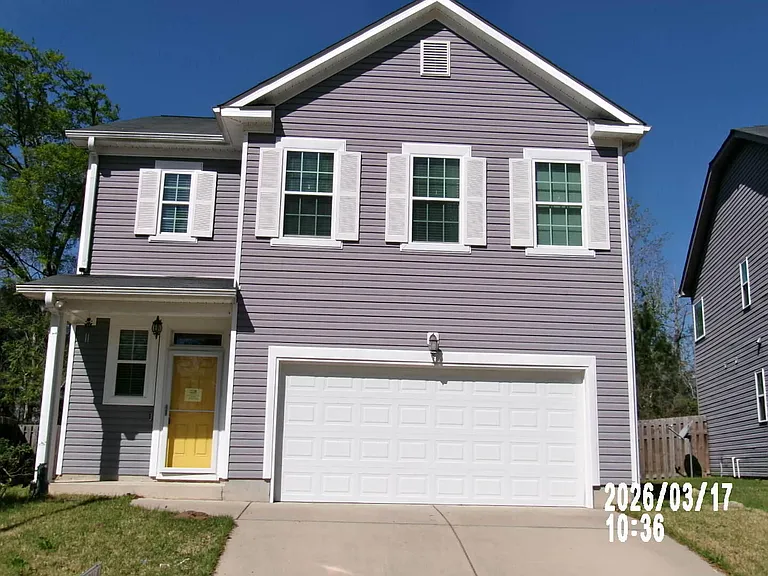
Real closing example — Georgia
No Personal Income Needed for This Rental Purchase
This example is from Grovetown, Georgia, not Corpus Christi. See how an investor used the property’s estimated $1,826 monthly rent to qualify for an $184,000 DSCR loan at 7.49% with no prepayment penalty—and how the deal pencils to approximately $205.83 monthly cash flow before other operating expenses.

DSCR and Investor Loan Guidance
Talk Through DSCR Loan Options With Lyndi Gajan
Real estate investors can work with Lyndi Gajan to talk through DSCR loan questions, rental income scenarios, refinance options, and investor documentation before choosing a loan path.
Lyndi Gajan NMLS ID 88249. 360 Mortgage Inc. NMLS ID 80777. Loan availability, licensing, and guidelines vary by state, property, and loan purpose.
Request your Corpus Christi financing review
Share the address, supported income and rental plan for an eligible investment-program review.
Frequently asked questions about Corpus Christi DSCR loans
Can I assume a Corpus Christi STR permit will be available?
No. Confirm current zoning, permit availability, density restrictions and renewal requirements with the city for the actual address.
Does loan approval authorize a short-term rental?
No. City requirements, association documents, insurance and lender rules must each be satisfied for the proposed use.
Why review windstorm records before buying?
Construction records and current insurance quotes can affect coverage options and the ownership budget. Obtain property-specific professional review.
Can higher insurance costs reduce the DSCR?
Yes. If insurance is part of the lender payment calculation, a higher premium increases the denominator and can reduce the ratio.
Does an LLC remove all licensing or occupancy questions?
No. Entity ownership does not change the actual purpose or use of the property. Disclose occupancy and provide required records.
What does Lyndi need for a Corpus Christi DSCR review?
Provide the address, value or price, loan request, supported rent, rental duration, occupancy, taxes, insurance, dues, repairs and available funds.
Sources and review notes
Local facts checked October 8, 2026. Financial examples are hypothetical, not market-rent estimates or quoted loan terms.