
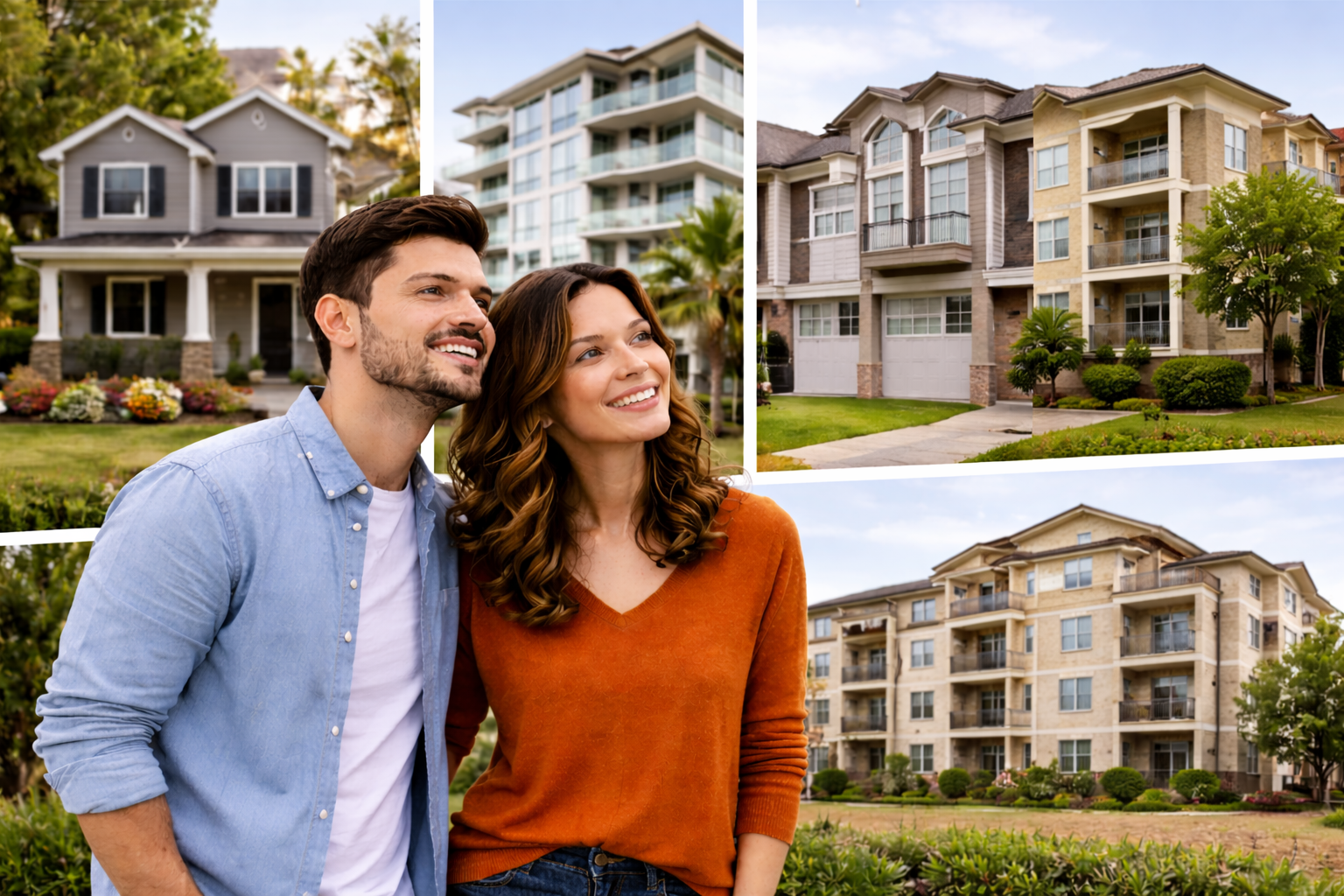
With an FHA loan, not every property is treated the same. Borrowers may qualify personally, but the home itself also has to fit FHA rules.
That means FHA approval is not just about credit, income, and down payment. The property type matters too.
Why Property Type Matters on an FHA Loan
FHA is designed primarily for owner occupied housing. Because of that, the program allows several practical property types, but each comes with rules tied to occupancy, condition, and overall eligibility.
A buyer may be fully qualified for FHA and still run into problems if the property itself does not fit the program.
This page should strongly interlink with:
Single Family Homes
Single family homes are the most common FHA approved property type. For most borrowers, this is the cleanest and simplest fit for the program.
The home still has to meet FHA appraisal and property condition requirements, but from a property type standpoint, standard single family homes are usually the easiest path.
Condos
Condos can qualify for FHA financing, but they often come with an added layer of complexity. The unit may be acceptable, but the condominium project itself may also need to satisfy FHA requirements.
This is why condo transactions can feel less straightforward than detached homes. Buyers should verify eligibility early rather than assuming every condo will work with FHA.
Two Unit, Three Unit, and Four Unit Properties
FHA can also be used for owner occupied properties with up to four units. This is one of the most powerful parts of the program because it allows buyers to live in one unit and potentially rent out the others.
However, the owner occupancy requirement matters. FHA is not intended for a purely non owner occupied investment purchase.
This page should naturally connect to:
Loan limits vary by property size, so multi unit buyers need to evaluate both qualification and the local FHA loan cap for the property type they want.
Manufactured Homes
Some manufactured homes can qualify for FHA financing, but they tend to have more specific requirements tied to foundation, permanence, condition, and overall eligibility.
This means buyers should not assume all manufactured homes will fit FHA. They should be screened carefully before going too far into the process.
Townhomes and Attached Homes
Townhomes and other attached residences may also work with FHA if they meet the relevant program rules and property standards. In some cases, the key question is less about the shape of the home and more about whether the ownership structure, project status, and condition align with FHA requirements.
What Property Types Usually Create More FHA Friction?
Some properties are harder to finance with FHA because they are more likely to fail condition standards or create eligibility questions.
- Fixer uppers with visible deferred maintenance
- Condos with project approval issues
- Manufactured homes with eligibility problems
- Properties with unusual condition or occupancy concerns
In many cases, the issue is not the category label alone. It is whether the specific property meets FHA standards and fits the intended use.
Owner Occupancy Matters
FHA is built around primary residence financing. That means the borrower generally needs to occupy the property as their home.
This is especially important with multi unit properties. FHA can be an excellent path for buying a duplex, triplex, or fourplex, but the borrower usually cannot treat it as a fully non owner occupied investment purchase from day one.
Property Type Does Not Override Property Condition
A home can be an allowed property type and still fail FHA due to condition issues. This is where many buyers get confused.
For example, a single family home may be a valid FHA property type, but if the roof, electrical, structure, or safety items do not meet FHA standards, the loan can still hit a wall.
This is why this page should also support:
Property Type and Affordability
The type of property you choose can also affect affordability. Condos may have HOA dues. Multi unit properties may have higher loan limits and different payment structures. Manufactured homes may involve additional scrutiny. All of that can influence what is actually realistic for the buyer.
This page should therefore connect naturally to:
A property may be technically allowed, but still not be the best practical fit once payment, condition, HOA dues, and repair exposure are factored in.
How Credit Challenges Change the Property Decision
Borrowers using FHA because of lower credit or prior financial setbacks should be especially careful with property selection. When the approval path is already tighter, choosing a property with fewer condition or eligibility questions usually makes the deal smoother.
Relevant supporting pages include:
What If the Borrower Has Derogatory Credit?
Borrowers with recent late payments, collections, charge offs, or limited credit depth may already be relying on FHA because it is the most workable path. In those situations, choosing a simpler property type can reduce risk and friction in the transaction.
- FHA With Late Payments
- FHA With Collections
- FHA With Charge Offs
- No Credit Score FHA Loan
- Non Traditional Credit FHA
- Alternative Tradelines
What If You Are Buying After Bankruptcy or Foreclosure?
For borrowers returning to homeownership after bankruptcy, foreclosure, short sale, deed in lieu, or eviction, FHA may be the easiest path back in. But that does not mean every property choice is equally wise. In many cases, the best strategy is a clean, straightforward property with fewer appraisal and condition risks.
Supporting pages include:
- FHA After Bankruptcy
- FHA After Foreclosure
- FHA After Short Sale
- FHA After Deed in Lieu
- FHA After Eviction
- FHA Waiting Periods After Credit Events
Best Way to Think About FHA Approved Property Types
The smartest way to think about FHA property types is this: first confirm the property category is generally allowed, then confirm the actual property meets FHA condition, occupancy, and eligibility rules.
- FHA can finance several property types
- Owner occupancy usually matters
- Condition still matters even if the property type is allowed
- Simpler properties usually create smoother FHA transactions
Strategy Insight
Bottom Line
FHA approved property types usually include single family homes, certain condos, some manufactured homes, and owner occupied properties with up to four units. But approval still depends on occupancy, property condition, and overall FHA eligibility.
Talk with a mortgage professional to review whether a specific property type is likely to work with FHA financing before you get too far into the process.
Recent Comments