
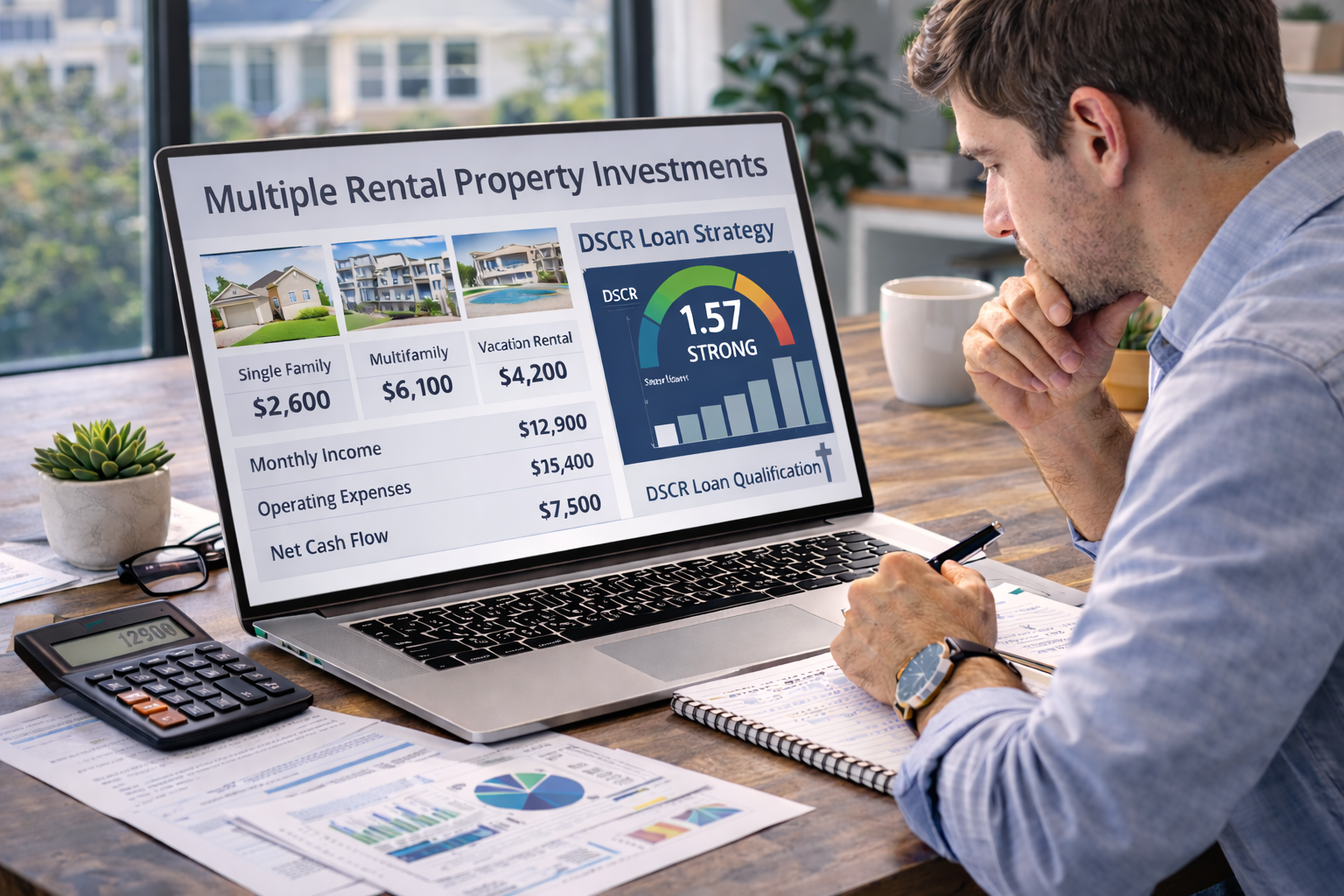
How Many Rental Properties Can You Buy With DSCR Loans?
One of the biggest advantages of DSCR loans is that they allow real estate investors to continue purchasing rental properties without running into the limitations often associated with conventional mortgage programs.
Many investors eventually ask the same question: How many rental properties can you buy using DSCR loans?
The short answer is that DSCR loans typically allow investors to scale well beyond the limits of traditional mortgage programs because qualification is based primarily on the income generated by each property rather than personal income.
If you are new to this financing model, you may want to start with our guides on what DSCR means and how DSCR loans work.
Traditional mortgage programs often limit the number of financed properties a borrower can hold. DSCR loans shift the focus toward whether each individual property supports its own debt payment. That change in underwriting philosophy is what allows many investors to scale larger portfolios.
Conventional Loan Limits vs DSCR Loans
Conventional financing generally places limits on the number of financed properties an investor can have at one time. Once that limit is reached, qualifying for additional loans becomes more difficult or impossible without using different financing structures.
DSCR loans are designed differently. Because they focus primarily on property level income instead of personal debt to income ratios, they are often used by investors who want to continue expanding their portfolios.
That does not mean there are no limits at all, but the constraints are usually different.
- Portfolio exposure limits with individual lenders
- Loan to value limits
- Debt service coverage ratio requirements
- Borrower credit profile
- Liquidity and reserve requirements
For more detail, review:
What Actually Limits Portfolio Growth?
In practice, the number of properties an investor can buy with DSCR loans is usually limited by financial strategy rather than a hard cap on property count.
The real constraints tend to be:
- Available capital for down payments
- Cash reserves
- Property performance
- Credit profile
- Lender exposure limits
A lender may limit how much total exposure they want with a single borrower. When that happens, investors often work with multiple lenders or stagger loan originations over time.
Professional investors rarely think about scaling one property at a time forever. Instead they think in terms of portfolio systems. Each property becomes a small income producing asset that contributes to the overall financial engine of the portfolio.
The Role of DSCR in Portfolio Expansion
DSCR underwriting evaluates whether the income generated by a property is sufficient to support the debt used to acquire it.
If the property’s rental income comfortably covers the debt payment, it may qualify under DSCR guidelines even if the borrower already owns multiple other rental properties.
Supporting resources:
Typical Growth Paths for Investors Using DSCR Loans
Different investors grow their portfolios in different ways. Some build slowly over many years while others move faster depending on available capital and opportunity.
A few common portfolio growth patterns include:
- Buying one rental property every year
- Buying several properties during favorable market periods
- Using cash out refinancing to fund additional purchases
- Reinvesting rental income into future acquisitions
These strategies are often connected with the refinance and portfolio scaling strategies discussed here:
- Scaling a rental portfolio
- DSCR cash out refinance
- Building a rental portfolio
- How many rentals do you need to retire
The number of properties you own is less important than the quality of those properties. A small portfolio of strong performing rentals can often outperform a larger portfolio of weak assets.
How Property Type Affects Portfolio Scaling
Different property types can affect how quickly an investor scales their portfolio and how easily each property qualifies under DSCR guidelines.
Common DSCR eligible investment property types include:
- Single family rental properties
- Small multifamily properties
- Condo rental investments
- Airbnb properties
- Vacation rentals
Each property type has different income patterns, expenses, and lender preferences, which can influence long term portfolio strategy.
The Importance of Cash Flow When Scaling
Portfolio growth should never come at the expense of financial stability. One of the biggest mistakes investors make when scaling quickly is relying on extremely thin margins.
Even if a property qualifies under DSCR guidelines, investors should still evaluate the property’s real cash flow after all expenses.
Helpful resources:
- Rental property cash flow
- How to calculate rental cash flow
- What is a good rental property cash flow
- Rental property expenses list
- Risk analysis for rental properties
Scaling a rental portfolio is rarely about speed alone. The best investors balance growth with stability by maintaining strong reserves, conservative assumptions, and disciplined property selection.
Do You Need an LLC to Own Multiple Rental Properties?
Many investors eventually consider holding rental properties in a limited liability company. DSCR lenders often allow loans to be made directly to an LLC depending on the program guidelines.
You can learn more about that structure here:
However, the choice between personal ownership and an LLC structure involves legal, tax, and operational considerations that vary by investor.
Owning rental property involves more than securing financing. Investors must also manage leasing, tenant screening, maintenance, and vacancy risk. For practical landlord guides and rental property management insights, visit Blue Castle Management.
How Experienced Investors Continue Growing
Experienced investors often combine multiple strategies to continue growing their portfolios while managing risk.
Those strategies may include:
- Reinvesting rental income
- Using equity through refinance strategies
- Buying properties below market value
- Improving rents through renovation or repositioning
- Diversifying property types or markets
Over time, these small decisions can compound into a substantial portfolio.
- DSCR loans generally allow investors to exceed the property limits found in conventional loan programs
- The true limit is often capital, reserves, and lender exposure rather than property count
- Each property should stand on its own financially
- Strong underwriting and disciplined growth are essential for long term portfolio success
Talk With a DSCR Loan Specialist About Building Your Portfolio
If you are planning to scale a rental property portfolio, DSCR loans may provide a financing structure that allows you to continue acquiring income producing properties without the limitations of traditional underwriting.
We work with real estate investors to structure financing strategies for purchases, refinancing, and long term portfolio growth.
Talk With an Investor Loan Specialist
Recent Comments