
DSCR Loans for First Time Real Estate Investors
Many new investors assume they need years of landlord experience or a long real estate track record before they can qualify for an investment property loan. In reality, some DSCR loans can be a good fit for first time real estate investors, especially when the property’s rental income is strong enough to support the debt payment.
Unlike traditional mortgage programs that focus heavily on personal income and tax returns, DSCR loans are built around the performance of the investment property itself. That makes them attractive to new investors who want a simpler financing path into rental property ownership.
If you are new to this type of loan, start with our guides on what DSCR means and how DSCR loans work.
A first investment property does not need to be perfect to be successful, but it should be understandable. New investors usually do better with straightforward properties, conservative assumptions, and stable rental demand than with highly aggressive deals.
Can a First Time Investor Get a DSCR Loan?
Yes, in some cases a first time investor can qualify for a DSCR loan. The exact answer depends on the lender, the property type, the borrower’s credit profile, the down payment, available reserves, and the strength of the property’s projected rental income.
Some programs are more open to first time investors than others. Others may impose tighter requirements if the borrower has never owned investment real estate before.
That is why new investors should pay close attention to:
- Credit score requirements
- Down payment expectations
- Reserve requirements
- Minimum DSCR standards
- Eligible property types
These supporting pages will help:
- DSCR loan requirements
- Credit score requirements
- Down payment requirements
- LTV limits
- Reserve requirements
Why DSCR Loans Appeal to New Investors
For many first time investors, DSCR financing feels more aligned with the actual investment than a conventional loan. Instead of centering the entire approval around personal employment income, DSCR loans focus on whether the property can carry itself.
That can be appealing for borrowers who:
- Are self employed
- Have complex tax returns
- Want to build a rental portfolio over time
- Prefer an investment focused underwriting model
- Do not want qualification based solely on personal debt to income ratios
Related pages:
- No income verification investor loans
- DSCR loans with no tax returns
- DSCR loans for self employed investors
- DSCR loans for LLC borrowers
For a first deal, simplicity usually wins. A clean single family rental in a stable market is often a better learning property than a more exciting deal with complex renovation needs, unstable rent assumptions, or short term rental dependence.
How DSCR Is Calculated for a First Investment Property
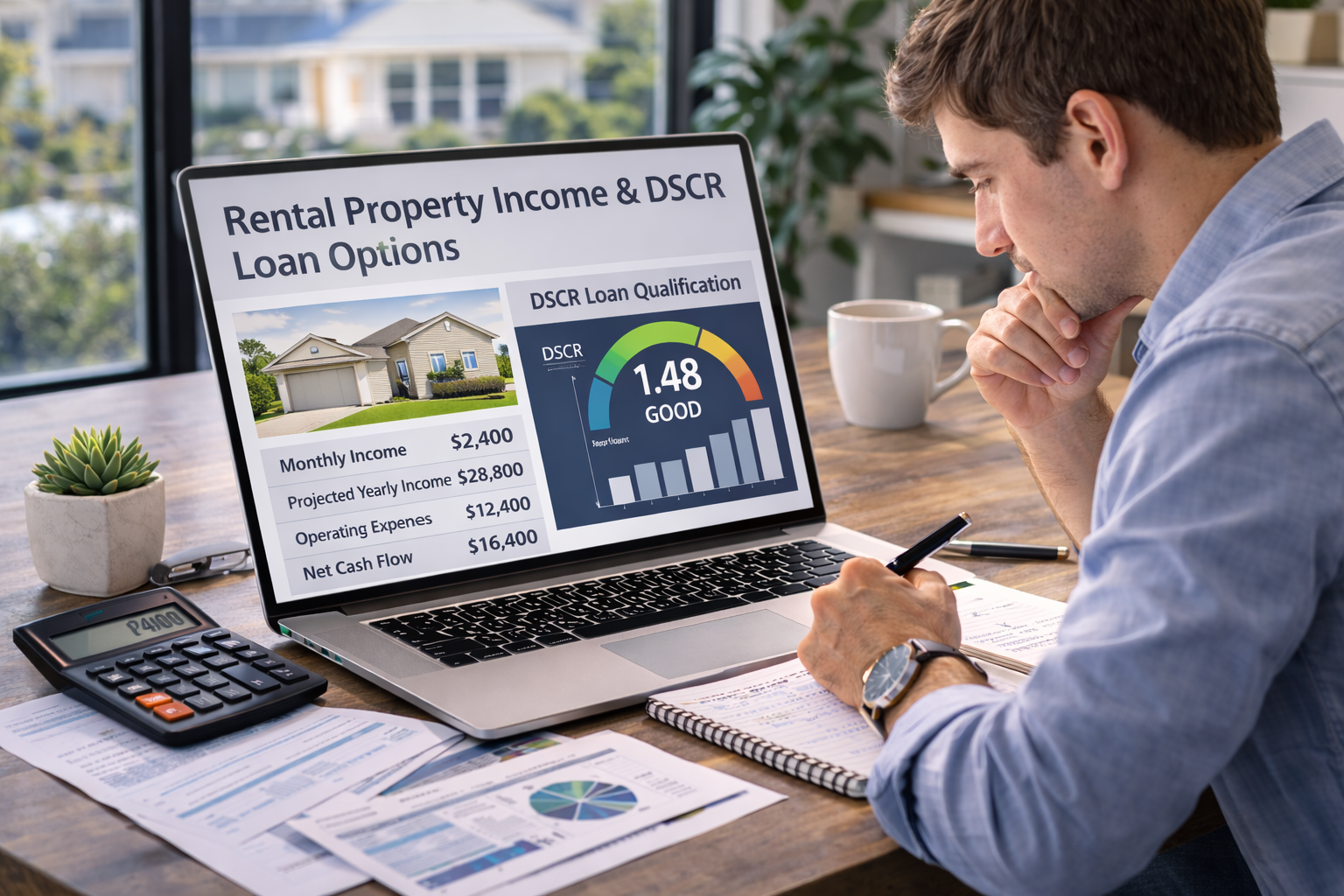
The Debt Service Coverage Ratio measures whether the rental income from the property is sufficient to cover the monthly debt obligation.
If the property generates enough income relative to the payment, the deal may qualify. A stronger ratio generally creates more comfortable underwriting.
For a deeper breakdown, see:
Best Property Types for First Time Investors Using DSCR Loans
Not every property type is equally beginner friendly. The best first investment property is usually one that is easier to understand, easier to finance, and easier to manage.
Many first time investors start with:
More advanced property types can be profitable, but they may bring more complexity:
A first investment property should teach you the business, not overwhelm you. Management complexity, renovation surprises, and unstable revenue are more dangerous when you do not yet have a system for handling them.
What First Time Investors Often Get Wrong
New investors sometimes focus too much on getting approved and not enough on whether the property is actually a strong long term deal.
A property can qualify for a DSCR loan and still be a poor investment if the numbers are too thin or the assumptions are too optimistic.
Common mistakes include:
- Underestimating repairs and maintenance
- Ignoring vacancy risk
- Using unrealistic rent projections
- Buying in weak rental markets
- Failing to keep enough reserves after closing
These pages can help new investors underwrite more carefully:
- Rental property cash flow
- How to calculate rental cash flow
- Rental property expenses list
- Risk analysis for rental properties
- Rental property break even analysis
As rental portfolios grow, strong operational systems become essential. Investors looking for guidance on tenant screening, leasing strategies, property management, and landlord best practices can explore the educational resources available at Blue Castle Management.
How Much Money Does a First Time Investor Need?
The exact amount depends on the purchase price, required down payment, closing costs, reserve requirements, and the investor’s own risk tolerance. In practice, many first time investors underestimate how much liquidity they should preserve after closing.
You usually need to plan for:
- Down payment
- Closing costs
- Required reserves
- Initial repair or setup costs
- Extra cushion for vacancy or unexpected repairs
This is why first time investors should not just ask whether they can close. They should ask whether they can still operate safely after the loan closes.
A safer first deal is often one where you could still handle a vacancy, a repair bill, or a slower leasing period without financial strain. The goal is not just getting into the game. The goal is staying in the game.
Can a First Time Investor Build a Portfolio With DSCR Loans?
Yes. Many investors use their first property as the foundation for a larger long term portfolio. DSCR financing can support that growth because it is based on property income, which can make it easier to repeat the process across multiple acquisitions.
If your long term goal is portfolio growth, these pages will help:
- Scaling a rental portfolio
- How many properties can you buy
- DSCR cash out refinance
- Building a rental property portfolio
- How many rentals do you need to retire
DSCR Loans vs Conventional Financing for New Investors
Conventional financing may still work well for some new investors, especially depending on the borrower’s income profile and long term goals. But DSCR loans can be more attractive for those who want an investment property loan built around rent rather than personal tax return strength.
Comparison pages that may help:
- Some first time investors can qualify for DSCR loans
- Qualification depends on the property, credit profile, down payment, reserves, and lender guidelines
- The best first deal is usually understandable and conservatively underwritten
- Getting approved matters less than buying a property that can actually perform well
Talk With a DSCR Loan Specialist About Your First Investment Property
If you are buying your first rental property, a DSCR loan may allow you to qualify based on the property’s income rather than personal tax returns.
We help first time and experienced investors evaluate financing options for rental property purchases, refinancing, and long term portfolio growth.
Talk With an Investor Loan Specialist
Recent Comments