
How Long Does It Take to Close a Mortgage?
One of the most common questions homebuyers ask is how long it takes to close a mortgage. The answer depends on several factors, including the type of loan, the complexity of the borrower’s finances, and how quickly documents and conditions are handled.
This guide explains typical mortgage closing timelines, what affects them, and how to avoid unnecessary delays once you are under contract. If you want a simple walk through of what happens on signing day, see what to expect at closing.
Many mortgage closings fall within a common range, but timelines vary based on loan type, documentation, and property details. Starting early and staying organized helps keep things moving.
Average Mortgage Closing Timeline
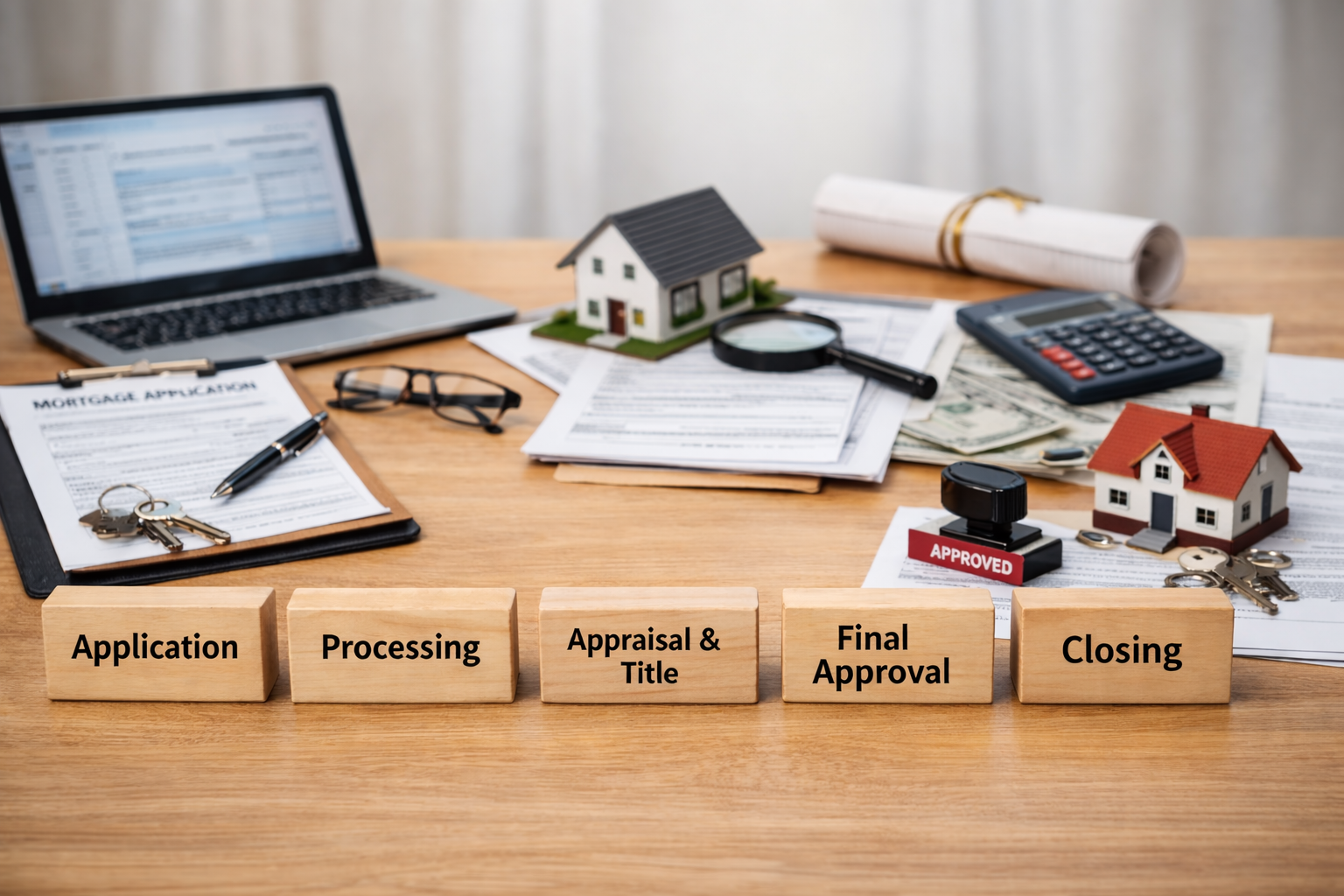
While every transaction is different, most mortgage closings follow a similar sequence of steps. Once you are under contract, the process typically includes underwriting, appraisal, title work, final approval, and closing.
- Initial processing: document review and file setup
- Underwriting review: income, assets, credit, and program guidelines
- Appraisal and title: property valuation and ownership verification
- Final approval: conditions cleared and documents prepared
- Closing: signing and funding
Files that are well prepared at the start generally move more smoothly than those requiring extensive follow up or clarification.
As you get closer to signing, you will receive the final numbers and terms in a standardized document called the Closing Disclosure. If you want to know what it is and what to check, read Closing Disclosure explained.
What Affects How Long It Takes to Close a Mortgage
Several factors can influence how quickly a mortgage closes. Some are within your control, while others depend on third parties.
- Borrower profile: W2 income vs self employed income, number of assets, and credit complexity
- Loan program: conventional, government backed, or specialty programs
- Property type: single family, condo, multi unit, or unique properties
- Documentation quality: clean statements and prompt responses reduce delays
- Third party timing: appraisals, title work, and insurance coordination
Many delays happen not because of the loan itself, but because documents arrive late or require clarification.
Timeline Differences by Loan Type
Different loan programs follow different rules, which can impact review time.
- Conventional loans: often move efficiently when documentation is straightforward
- Government backed loans: may require additional verification steps
- Self employed or complex income: additional review may extend timelines
- Multi unit or investment properties: appraisal and underwriting can take longer
Choosing the right loan program early helps prevent mid process changes that can slow things down.
Common Reasons Mortgage Closings Are Delayed
Most closing delays are avoidable with preparation and communication. Common issues include:
- Missing or outdated documents
- Large unexplained deposits or transfers
- Changes to employment or income during the process
- Property issues discovered during appraisal or inspection
- Late insurance or title coordination
Understanding these risks early helps you avoid surprises after you are under contract.
If you want a plain English overview of what actually happens at the end, including what you sign and what funds when, see what to expect at closing.
How to Help Your Mortgage Close Faster
While no one can guarantee a specific closing date, there are proven ways to reduce friction.
- Get pre approved before house hunting
- Submit documents quickly and completely
- Avoid major financial changes during the process
- Respond promptly to lender requests
- Work with professionals who communicate clearly
If you are still deciding whether to start, reviewing mortgage pre approval basics can help you prepare.
One of the fastest ways to prevent last minute surprises is to understand the Closing Disclosure before you are at the table. If you are unsure what should match or what can change, read Closing Disclosure explained.
How Long Does It Take to Close a Mortgage by State?
While the overall mortgage process follows the same steps nationwide, closing timelines can vary by state due to local practices, title requirements, attorney involvement, and market conditions.
Choose your state below for a more location specific breakdown.
- Florida mortgage closing timeline
- Missouri mortgage closing timeline (coming soon)
- Kansas mortgage closing timeline (coming soon)
- Louisiana mortgage closing timeline (coming soon)
Mortgage Closing Timeline FAQs
Does pre approval make closing faster?
Pre approval does not shorten every step, but it reduces surprises and helps underwriting move more smoothly.
Can closings happen faster than average?
Some files move quickly when documentation is clean and all parties are responsive. Others take longer due to complexity.
Is closing speed guaranteed?
No. Mortgage timelines depend on many variables, including third parties. Clear communication and preparation help reduce risk but cannot eliminate it.
What should I review right before closing?
Your Closing Disclosure shows your final terms and cash to close. If you want to know what is normal and what deserves a question, read Closing Disclosure explained. For the signing day sequence, see what to expect at closing.
Next Steps
If you are preparing to buy, the best next step is a strong pre approval so you can move forward confidently once you find the right property.
If you are close to signing and want to feel ready, review what to expect at closing and confirm the final numbers using Closing Disclosure explained.
Related Mortgage Guides
This page is for educational purposes only and is not a commitment to lend.
NMLS: 80777
Licensed mortgage broker in Missouri, Kansas, and Louisiana.
Recent Comments