
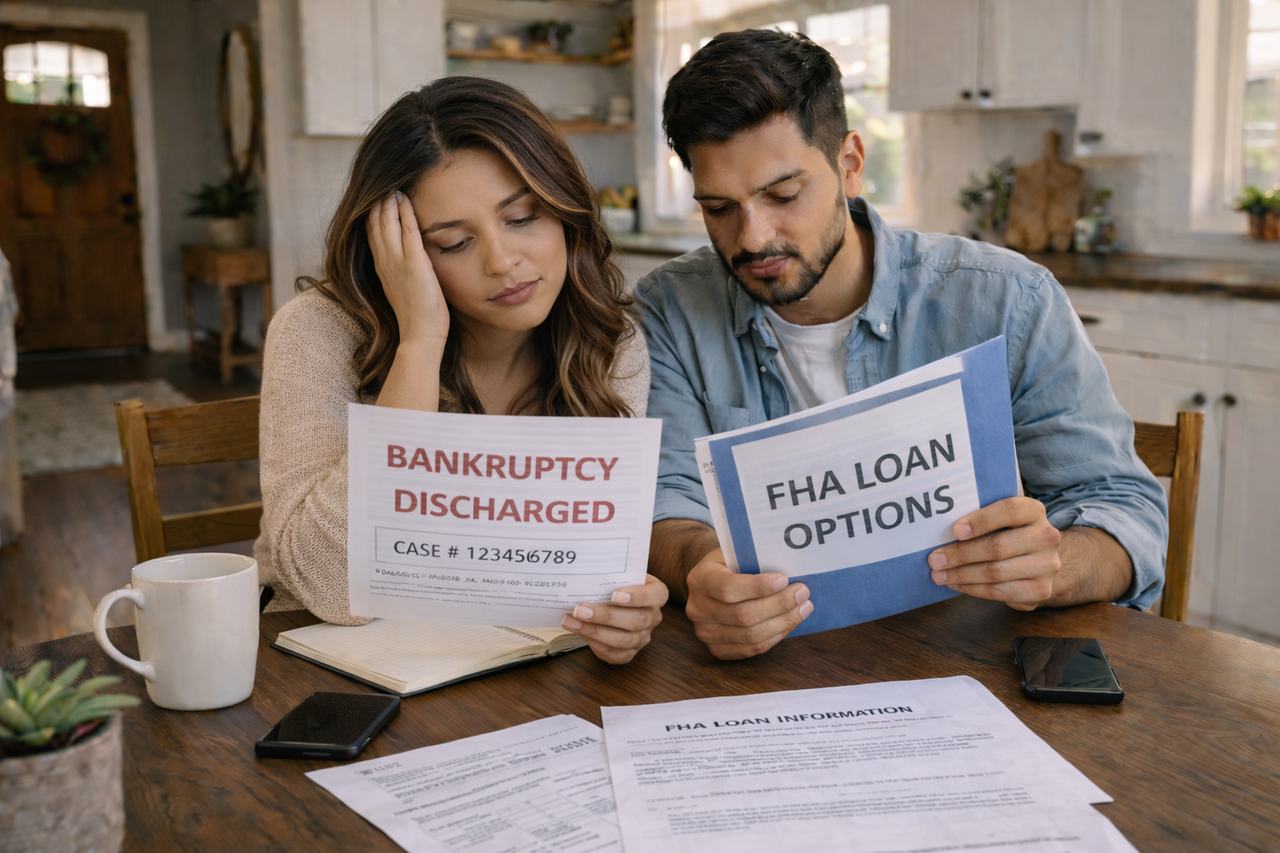
Yes, in many cases you can get an FHA loan after bankruptcy. A bankruptcy does not automatically end your path to homeownership. But it does change how the file will be viewed, and it usually means timing, recovery, and recent payment behavior matter much more.
This guide explains how FHA works after bankruptcy, what kinds of waiting period issues borrowers should understand, and why the real approval question is not just whether the bankruptcy happened, but whether the file now shows enough stability to support a mortgage.
Quick Answer
- Yes, FHA can still be possible after bankruptcy
- Bankruptcy does not automatically mean permanent disqualification
- Waiting periods, re-established credit, and recent payment behavior matter
- The stronger your recovery looks now, the better your FHA approval path becomes
That last point is the key. Underwriters are usually trying to determine whether the bankruptcy was a past event that the borrower has recovered from, or whether the file still shows ongoing financial instability.
For the broader qualification picture, start with FHA Loan Requirements.
Can You Really Get an FHA Loan After Bankruptcy?
Yes. FHA is one of the more flexible mortgage paths for borrowers who have gone through serious prior credit events. That is one reason FHA often becomes the first realistic mortgage option for borrowers rebuilding after financial hardship.
But “possible” does not mean automatic. The file still has to show that the borrower has regained enough financial stability to support approval.
What Underwriters Usually Care About Most
- how long ago the bankruptcy occurred
- whether the borrower has re-established stable credit behavior
- whether income and employment are now stable
- whether the rest of the file looks manageable and well structured
Why Bankruptcy Does Not Always Kill an FHA File
Bankruptcy is serious, but FHA is built to serve borrowers who may not fit the cleanest conventional credit profile. A prior bankruptcy can often be overcome if the borrower has had time to recover and the current file looks stronger.
In other words, the bankruptcy matters, but it is not always the whole story.
Important Reality
A bankruptcy in your past does not automatically block FHA approval. What matters more is whether your financial behavior since the bankruptcy shows real recovery and stability.
What Matters Most After Bankruptcy?
Borrowers often focus only on whether the bankruptcy is old enough. But underwriters are usually looking at more than the calendar.
Key issues usually include:
- whether the waiting period has been satisfied
- whether recent payment history is now clean
- whether the borrower’s credit profile has stabilized
- whether income and employment are consistent
- whether debt ratio and cash to close are still reasonable
That is why two borrowers with the same bankruptcy date can still get very different outcomes.
If you are unsure whether your current payment fits your budget, a tool like How Much Monthly Payment Is Safe for Me? can help you set a more realistic target before applying.
How Bankruptcy Fits Into the Rest of FHA Approval
A bankruptcy is one credit event inside a larger loan file. It usually matters more when the rest of the file is also weak. It usually matters less when the borrower has rebuilt effectively and the rest of the application now looks strong.
That means bankruptcy becomes harder when it is paired with:
- recent late payments
- collections or charge offs still causing current stress
- high debt ratio
- limited reserves
- unstable employment or income
Related pages:
What Helps an FHA File After Bankruptcy?
The more the file shows that the borrower has regained control, the more realistic the FHA path becomes.
Strength Factors That Can Help
- clean recent payment history
- re-established credit that is being managed responsibly
- stable employment and documentable income
- manageable debt ratio
- documented funds for closing
- some reserve strength after closing
- a realistic target payment rather than an aggressive one
The stronger those factors are, the less the bankruptcy becomes the defining feature of the file.
If you are still deciding how much home to target after rebuilding, How Much House Can I Really Afford? can help you compare a safer payment range with what a lender may technically approve.
What Usually Makes Bankruptcy Harder to Overcome?
Bankruptcy becomes a much bigger problem when the borrower has not really recovered yet, even if enough time has technically passed.
Common Trouble Signs
- recent late payments after the bankruptcy
- new derogatory credit issues since the bankruptcy
- tight or elevated debt ratio
- little cash available for closing
- unstable employment or reduced income
- a file that still looks financially stretched overall
At that point, the bankruptcy is no longer just a past event. It starts to look like part of an ongoing instability pattern, which is much harder to underwrite.
Should You Wait Longer Even If FHA May Be Possible Now?
Sometimes, yes. Not every technically possible FHA file is the best file to push forward immediately.
If the bankruptcy is far enough in the past but the rest of the file still looks weak, a short period of stronger payment history, lower debt, or improved reserves may materially improve the approval picture. In other cases, the borrower is already stable enough and should not wait unnecessarily.
The right answer depends on whether the file has truly recovered, not just whether a certain date has passed.
Related page: How to Rebuild Credit for an FHA Loan
Can You Get an FHA Loan After Chapter 7 or Chapter 13?
Borrowers often ask this question in exact bankruptcy chapter terms. The practical answer is that FHA can sometimes still work after bankruptcy, but the waiting period, case status, and overall recovery picture matter.
This page is intentionally the broad bankruptcy overview page in your cluster. It should stay focused on the larger approval concept rather than turning into a technical chapter by chapter legal page.
If you later want to build separate subpages for Chapter 7 and Chapter 13, that could be a smart expansion. But this page should remain the main umbrella page for bankruptcy and FHA.
Common Questions About FHA After Bankruptcy
- Can I get an FHA loan after Chapter 7? Possibly, if enough time has passed and your credit, income, and payment history have stabilized.
- Can I get an FHA loan after Chapter 13? Sometimes, depending on case status, payment history, and lender and underwriting requirements.
- Does bankruptcy permanently disqualify me from FHA? No. In many cases, borrowers can qualify again after recovery and the required waiting period.
- What matters most after bankruptcy? Time since the event, clean recent credit, stable income, manageable debt, and sufficient funds to close.
How Bankruptcy Connects to FHA Manual Underwriting
Some post-bankruptcy files move more toward a manual or more carefully supported underwriting path, especially when the borrower also has low credit, tight ratios, or other layered risk factors.
That does not mean the file is dead. It means the story, documentation, and compensating factors matter more.
Related page: FHA Manual Underwriting
Can You Still Qualify for FHA After Bankruptcy With Low Credit?
Possibly, yes. But that is where borrower strategy matters. A borrower who has weak credit after bankruptcy may still have a path if recent behavior is clean and the rest of the file is stable enough. A different borrower may need more time to rebuild before approval becomes realistic.
This is why post-bankruptcy FHA approval should be evaluated through the whole file, not through one event or one score alone.
Related pages:
How This Page Fits Inside the FHA Credit Events Cluster
This page should stay clearly positioned as the bankruptcy overview page inside the larger credit events branch.
- FHA After Foreclosure addresses foreclosure specifically
- FHA After Short Sale addresses short sale specifically
- FHA After Deed in Lieu addresses deed in lieu specifically
- This page focuses specifically on FHA approval after bankruptcy
Want to Know If Your Bankruptcy Still Affects FHA Approval?
The smartest next step is not guessing based on a general rule or one date. It is reviewing your bankruptcy timeline, current credit profile, income, debt ratio, and funds for closing to see whether FHA is realistic now or whether a short recovery period would improve the file materially.
Get an FHA Review Based on Your Full Post Bankruptcy File
If you had a bankruptcy and want to know whether FHA is still possible, the next step is a real review of your recovery timeline, current credit, income, and overall loan structure.
Start Your FHA Pre Approval ReviewRelated FHA Credit Event Pages
- FHA After Foreclosure
- FHA After Short Sale
- FHA After Deed in Lieu
- FHA Manual Underwriting
- How to Qualify for FHA With Low Credit
- How to Rebuild Credit for an FHA Loan
Bottom Line
Yes, you can often still get an FHA loan after bankruptcy.
But bankruptcy is not judged in isolation. Waiting periods, recovery, recent payment behavior, and the strength of the rest of the file all matter.
The real question is not just whether the bankruptcy happened. The real question is whether your full FHA file now shows enough stability to support approval.
Return to hub: FHA Loans
Frequently asked questions
Who is Can You Get an FHA Loan After Bankruptcy? best for?
Can You Get an FHA Loan After Bankruptcy? may fit borrowers whose goals, documentation and property details line up with the program requirements. A mortgage review is the fastest way to compare options without relying on generic assumptions.
What documents should I prepare?
Most borrowers should be ready to discuss income, assets, debts, credit history, property details and the purpose of the loan. Exact documentation depends on the program and underwriting review.
What is the next step?
The next step is to talk with 360 Mortgage so the team can review your situation, explain available options and outline the application path.