
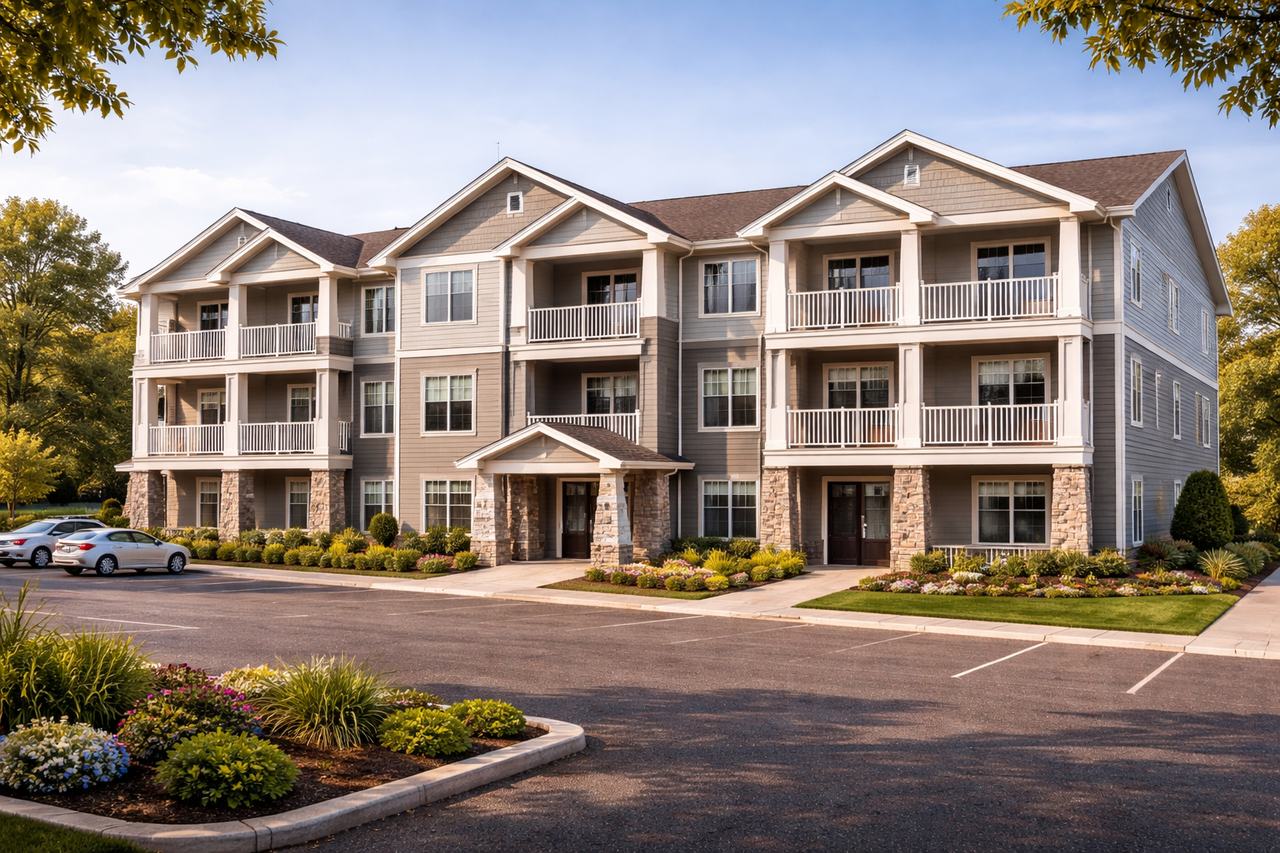
Apartment Building Financing for Real Estate Investors
Apartment building financing is a different conversation than financing a duplex, triplex, or fourplex. Once you move into true apartment property, the deal becomes more commercial in nature. Lenders usually focus more on net operating income, debt coverage, property condition, rent roll quality, reserves, and the overall strength of the business plan behind the asset.
At 360 Mortgage, we help investors think through apartment building financing from a practical standpoint. Some borrowers are buying their first small apartment building as a step up from small multifamily. Others are refinancing a stabilized asset, pulling cash out to scale, or comparing longer-term hold financing against bridge or repositioning options. The loan structure should match the actual strategy, not just the property type.
If you are still comparing smaller residential multifamily assets, also review small multifamily financing, duplex financing, triplex financing, and fourplex financing. Apartment building financing is usually the next rung up from that ladder.
For many investors, apartment buildings become attractive because they offer more units, more operational leverage, and a clearer path to scale. But they also demand stronger underwriting discipline. A weak apartment deal can create much bigger problems than a weak single-family deal. The upside is larger, but so is the importance of getting the financing and assumptions right.
Why investors move into apartment buildings
- More doors per acquisition
- Better scaling efficiency than one-property-at-a-time investing
- Income is spread across more tenants instead of relying on one or two units
- Operational improvements can create significant value
- Stabilized properties may offer attractive long-term cash flow
- Refinance and reposition strategies can become more powerful at this level
What counts as an apartment building?
In practical lending terms, apartment building financing usually refers to properties with five or more units. That matters because once a property crosses that threshold, it typically moves out of standard residential financing and into commercial-style underwriting. The lender is no longer just looking at borrower income and a few comparable rents. They are evaluating the property more like an income-producing business.
Main apartment building financing paths
Purchase financing
This is the most common starting point. The investor is acquiring an apartment building for long-term hold, light repositioning, or value-add improvement. Terms depend heavily on occupancy, condition, unit count, and the financial strength of the asset.
Rate and term refinance
A refinance can reduce debt cost, improve monthly cash flow, or move a property into a more stable long-term loan structure after stabilization or improvements.
Cash-out refinance
If the building has appreciated or operations have improved, a cash-out refinance can unlock equity for the next acquisition, renovation, or portfolio restructuring move.
Bridge or transitional financing
Some apartment deals need short-term financing first, especially if occupancy is low, units need renovation, or the property is not yet ready for permanent financing.
How apartment building financing differs from small multifamily financing
Once you move into apartment buildings, lenders often focus more on the property’s income and business fundamentals than on traditional consumer mortgage-style qualification. That usually means closer attention to:
- Net operating income
- Debt service coverage
- Rent roll stability
- Trailing financial performance
- Occupancy history
- Property management strength
- Capital expenditure needs
Important distinction
Apartment building financing is not just “a bigger DSCR loan.” Some concepts overlap, especially around property income and coverage ratios, but apartment financing often involves a more commercial underwriting lens. The quality of operations, expenses, management, and property condition matter more as unit count rises.
Key factors lenders usually evaluate
Income strength
Lenders want to see whether the building’s income reliably supports the proposed debt. That includes rent levels, vacancies, bad debt, concessions, and operating history.
Expense realism
Apartment deals can look better on paper than they perform in reality. Underwriting usually scrutinizes taxes, insurance, repairs, maintenance, utilities, payroll, turnover, and management expenses.
Condition and deferred maintenance
Roofs, plumbing, electrical systems, HVAC, common areas, paving, and unit interiors all matter. Deferred maintenance can change both loanability and true investment value very quickly.
Borrower and sponsor strength
Experience, liquidity, reserves, credit profile, and management plan still matter. Even strong properties usually require a credible operator behind them.
Apartment financing for first-time apartment investors
Some borrowers moving into apartment buildings are not true beginners. They may already own single-family rentals or small multifamily properties and are simply stepping into a more operationally complex asset. In that case, the biggest mistake is usually underestimating the management and capital side of the property. Apartment buildings can be great investments, but the margin for sloppy underwriting gets thinner as the deal size rises.
If you are moving up from smaller rentals, it can help to review scaling real estate investments, rental portfolio financing, and using rental financing to scale rentals.
Apartment financing for experienced investors
Experienced investors usually evaluate apartment deals based on more than just cap rate headlines or rent upside. They are looking at realistic renovation scope, true expense drag, management execution, tenant profile, location durability, and refinance timing. Financing should support that business plan rather than constrain it. That may mean choosing between permanent financing and a bridge strategy depending on whether the property is already stabilized.
How apartment financing fits into a broader portfolio strategy
Apartment buildings often become the point where a rental portfolio starts behaving more like a business platform than a collection of isolated properties. More units can create stronger cash flow, better overhead absorption, and more opportunity to professionalize operations. But it also means management systems, tenant screening standards, reserve planning, and insurance structure matter more than ever.
For landlord-side operating resources, Blue Castle Management provides additional guidance such as What Does One Bad Tenant Really Cost?, How Much Risk Can I Afford as a Landlord?, and Should I Sell or Keep My Rental Property?.
Insurance considerations for apartment buildings
Insurance becomes even more important at the apartment level because liability, property damage, loss of rents, and operational exposure all scale up with the asset. The cost structure and coverage design can materially affect real cash flow. For Missouri and Kansas investors, Henson Agency provides related guidance on landlord insurance and rental property insurance.
Common apartment building financing scenarios
- Buying a first 5+ unit property after smaller rental experience
- Acquiring a stabilized apartment asset for long-term hold
- Refinancing after renovation and lease-up
- Pulling equity out to fund another acquisition
- Using short-term bridge financing before permanent debt
- Comparing apartment financing with small multifamily financing
Is apartment building financing a good scaling move?
Sometimes yes, sometimes no. Apartment buildings can accelerate wealth building much faster than smaller properties when the numbers are real, the operations are manageable, and the financing is aligned with the plan. But bigger does not automatically mean better. A badly underwritten apartment deal can consume capital, management attention, and time far faster than a weak duplex ever could. Scale only helps when the deal quality is there.
Talk through your apartment building financing options
If you are evaluating an apartment building purchase, refinance, or value-add strategy, we can help you think through which financing structure best fits the property, your business plan, and your broader portfolio goals.
Related pages
Licensed mortgage broker in Missouri, Kansas, and Louisiana.

DSCR and Investor Loan Guidance
Talk Through DSCR Loan Options With Lyndi Gajan
Real estate investors can work with Lyndi Gajan to talk through DSCR loan questions, rental income scenarios, refinance options, and investor documentation before choosing a loan path.
Lyndi Gajan NMLS ID 88249. 360 Mortgage Inc. NMLS ID 80777. Loan availability, licensing, and guidelines vary by state, property, and loan purpose.
Frequently asked questions
Who is Apartment Building Financing for Real Estate Investors best for?
Apartment Building Financing for Real Estate Investors may fit borrowers whose goals, documentation and property details line up with the program requirements. A mortgage review is the fastest way to compare options without relying on generic assumptions.
What documents should I prepare?
Most borrowers should be ready to discuss income, assets, debts, credit history, property details and the purpose of the loan. Exact documentation depends on the program and underwriting review.
What is the next step?
The next step is to talk with 360 Mortgage so the team can review your situation, explain available options and outline the application path.