
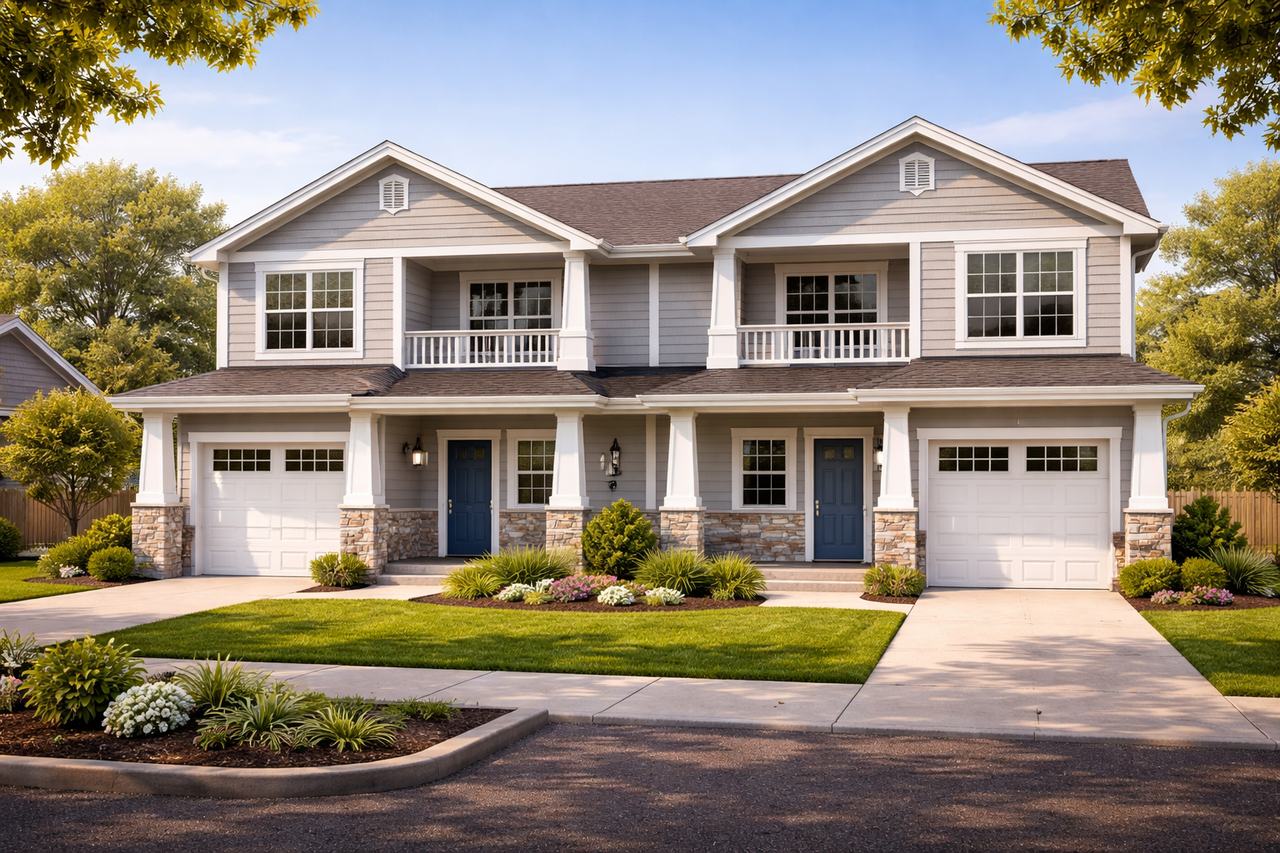
Duplex Financing Options for Investors, House Hackers, and Rental Property Growth
Duplex financing can help you buy your first 2-unit property, refinance for better cash flow, or tap equity to fund the next deal. On this page, you will see the main loan paths for owner-occupied and non-owner-occupied duplexes, when a DSCR loan may make sense, and what lenders typically look at before approving the loan. If you are comparing strategies, this guide is designed to help you quickly understand which financing structure best fits your property, your income profile, and your long-term investing plan.
At 360 Mortgage, we help investors think through duplex financing from a practical standpoint. Some duplex purchases fit best with conventional or FHA financing. Others are a better match for DSCR loans, especially when the focus is rental cash flow rather than personal income documentation. The goal is not just getting a loan approved. It is using the right financing structure for the property and your next move.
If you are still deciding whether now is the right time to buy, or what payment range makes sense, you may also find our Should I Buy a Home Now or Wait? and How Much Monthly Payment Is Safe for Me? tools helpful. If you are comparing duplex options, also review our pages on house hack investment loans, long-term rental financing, and rental portfolio financing.
Why investors and house hackers like duplexes
A duplex sits in a sweet spot for many investors. It is often more affordable than larger multifamily property, but it can produce stronger rent efficiency than a single-family home. For newer investors, it can be a manageable way to learn landlording. For experienced investors, duplexes can help scale unit count without immediately jumping into larger commercial-style assets.
- Two income streams instead of one
- Often better cash flow potential than comparable single-family rentals
- Strong fit for house hacking if one unit is owner occupied
- Can be easier to maintain and finance than larger apartment properties
- Useful for both long-term hold strategy and refinance strategy later
Main duplex financing options
There is no single duplex loan program that fits every borrower. The right structure depends on occupancy, loan size, property condition, and how aggressively you want to grow.
Owner-occupied duplex financing
If you plan to live in one unit, you may have access to lower-down-payment options such as conventional or FHA financing. That can make duplex house hacking one of the best entry points into real estate investing. Lower down payment does not always mean best long-term fit, but it can improve early leverage.
Investor duplex financing
If the property will be fully non-owner occupied, the financing usually shifts into investor loan territory. This is where DSCR loans become especially useful. Instead of leaning heavily on personal tax returns and employment income, the loan can focus more on property cash flow and rent support.
Rate-and-term refinance
If you already own the duplex, a refinance may help reduce payment, improve monthly cash flow, or move you out of a shorter-term or less favorable loan. This can be useful after stabilization or after a rehab is complete and rents are in place.
Cash-out refinance
A duplex with built-up equity can become a source of capital for your next purchase, renovation, or debt restructuring. If that is your goal, review our page on cash-out refinance for investors.
Not sure which path fits your situation?
If you are weighing owner-occupied versus investor financing, or trying to decide how much property makes sense, our How Much House Can I Really Afford? tool can help you pressure-test the numbers before you apply.
When a DSCR loan may make sense for a duplex
A DSCR loan can be a strong fit when the property’s rental income is the main driver of the deal. This is especially attractive for self-employed borrowers, experienced investors with multiple properties, or anyone whose tax returns do not fully reflect real cash flow strength.
For duplex financing, DSCR loans often make sense when:
- You want to qualify based more on property income than personal income
- You already have several financed properties
- You prefer simpler documentation than a full conventional underwriting package
- You are scaling strategically and want financing built around rental property acquisition
- You want to keep moving without your personal DTI becoming the bottleneck
Important distinction
Not every duplex automatically qualifies the same way. Lender rules can vary based on whether the property is owner occupied or non-owner occupied, whether rents are documented or projected, and whether the property is stabilized. Duplex financing is not just about the number of units. It is about the actual deal structure.
What lenders look at on a duplex loan
Property cash flow
For DSCR financing, expected or actual rent matters. Lenders will usually compare rental income against the proposed housing expense to see whether the numbers support the loan.
Down payment or equity
Investment duplex financing usually requires more borrower skin in the game than an owner-occupied loan. Stronger equity can improve pricing and loan options.
Property condition
A move-in-ready duplex is easier to finance than a heavily distressed one. If the property needs major work, short-term bridge or rehab financing may need to come first before permanent financing later.
Reserves and overall profile
Even when the property qualifies well, lenders still want to see financial strength. Liquidity, experience, and overall portfolio profile can all affect final approval and terms.
Duplex financing for newer investors
If you are newer to investing, duplexes are often one of the best starting points. They can give you a more forgiving learning curve than a scattered rental portfolio, especially if you start with a property in decent condition and a realistic reserve cushion. A duplex can also help you understand turnover, maintenance, tenant communication, and rent dynamics without immediately taking on a large multifamily asset.
If your strategy is to start small and grow carefully, you may also want to read DSCR loans for new investors and using DSCR loans to scale rentals.
Duplex financing for experienced investors
Experienced investors often use duplexes differently. Instead of seeing them as starter properties, they may see them as efficient additions to a broader portfolio. A duplex can fill a pricing gap, increase unit density in a target market, or offer a clean refinance opportunity after rehab and lease-up. When you are buying multiple rentals over time, being able to use financing that aligns with rental income instead of personal DTI can become increasingly important.
For that side of the strategy, review DSCR loans for experienced investors and scaling real estate investments.
How duplex financing fits into a bigger rental strategy
A duplex is rarely just a one-property decision. It usually connects to a broader plan. You may be trying to replace active income with rentals. You may be building toward a 10-property portfolio. You may be looking for a better entry point than single-family rentals in a tight market. Financing should support that bigger picture.
That is why many investors also evaluate the downstream property-management side of the deal. If you are thinking through operating costs, tenant risk, or rental viability, Blue Castle Management has additional landlord-focused resources such as What Does One Bad Tenant Really Cost? and Should I Sell or Keep My Rental Property?.
Insurance matters on duplex investments too
Financing is only one part of the equation. Insurance structure can affect both risk and real-world cash flow. That is especially true with duplexes, where liability, dwelling coverage, vacancy periods, and landlord exposure need to be thought through correctly. For investors in Missouri or Kansas, Henson Agency offers related guidance at landlord insurance and rental property insurance.
Common duplex financing scenarios we help think through
- Buying a duplex as your first rental property
- House hacking a 2-unit property while living in one side
- Refinancing a duplex after increasing rents
- Pulling equity from one duplex to buy another
- Comparing DSCR financing versus conventional investor financing
- Structuring duplex loans as part of a broader portfolio growth plan
Should you use duplex financing to scale?
Sometimes yes. Sometimes no. Duplexes can be a very effective way to scale because they increase door count faster than single-family homes without forcing you into much larger acquisitions right away. But they still need to pencil. Rents, taxes, insurance, maintenance expectations, and financing terms all matter. Good leverage on a mediocre property is still a mediocre investment. The financing should serve the asset, not rescue it.
Quick answers about duplex financing
Can you buy a duplex with a low down payment?
Yes, if you will live in one unit, you may qualify for lower-down-payment options such as FHA or conventional financing. If the duplex will be fully investment property, down payment requirements are usually higher.
Are DSCR loans available for duplexes?
Often, yes. DSCR loans can be a strong fit for non-owner-occupied duplexes when rental income supports the payment and the property meets lender guidelines.
What is the main difference between owner-occupied and investor duplex financing?
The biggest differences are usually down payment, pricing, documentation, and occupancy rules. Owner-occupied financing may offer more flexible entry options, while investor financing is built around rental-property risk and cash flow.
Can you refinance a duplex to pull out cash?
Yes, if you have enough equity and the loan structure fits the property and your goals. A cash-out refinance can be used for renovations, reserves, debt consolidation, or the next investment purchase.
Talk through your duplex financing options
If you are looking at a duplex purchase, refinance, or investor cash-out strategy, we can help you think through the available paths and which type of loan best matches the deal. That includes DSCR-style options for non-owner-occupied rentals as well as practical guidance on how duplex financing fits into a broader investment plan.
Want a clearer next step before you apply?
If you are still comparing scenarios, visit our mortgage decision tools for practical calculators and guides that can help you evaluate timing, affordability, and financing fit before moving forward.
Related pages
Licensed mortgage broker in Missouri, Kansas, and Louisiana.

DSCR and Investor Loan Guidance
Talk Through DSCR Loan Options With Lyndi Gajan
Real estate investors can work with Lyndi Gajan to talk through DSCR loan questions, rental income scenarios, refinance options, and investor documentation before choosing a loan path.
Lyndi Gajan NMLS ID 88249. 360 Mortgage Inc. NMLS ID 80777. Loan availability, licensing, and guidelines vary by state, property, and loan purpose.
Frequently asked questions
Who is Duplex Financing for Real Estate Investors best for?
Duplex Financing for Real Estate Investors may fit borrowers whose goals, documentation and property details line up with the program requirements. A mortgage review is the fastest way to compare options without relying on generic assumptions.
What documents should I prepare?
Most borrowers should be ready to discuss income, assets, debts, credit history, property details and the purpose of the loan. Exact documentation depends on the program and underwriting review.
What is the next step?
The next step is to talk with 360 Mortgage so the team can review your situation, explain available options and outline the application path.