
DSCR Loans in McAllen–Edinburg–Mission, TX

Review Rio Grande Valley rental financing with address-specific rent evidence, realistic expenses and a clear operating plan.
Review your Valley investment with Lyndi
A DSCR loan review for the McAllen–Edinburg–Mission metro
The Rio Grande Valley covers several distinct property markets. When reviewing a rental in McAllen, Edinburg or Mission, begin with the address and the proposed business rather than a regional average. DSCR programs can evaluate supported rental income against a required payment, but the property, borrower and transaction still need to satisfy the lender’s rules. A large metropolitan population is context, not a loan approval.
Bring a complete scenario to Lyndi: acquisition or refinance, the actual rental term, present occupancy, supported rent and the funds available. If the home will be furnished, rented by the room or used for short stays, say so before comparing programs. Our DSCR financing guide explains why the rental structure and documentation matter.
Three city names require an address-specific comparison
The Census estimate reported through FRED places the McAllen–Edinburg–Mission metro at 921,549 residents in July 2025. That figure describes the metro and should not be represented as McAllen’s city population or a prediction of rental demand. Analyze competing leases for the actual neighborhood and property rather than apply one assumed rent across the region.
UTRGV lists an Edinburg campus on West University Drive and a separate Brownsville campus. If your investment thesis includes university access, confirm which campus and destinations the proposed tenants need. A Valley address does not automatically mean a convenient commute to every institutional location. Record the drive and transportation options instead of relying on a general university reference.
Identify the governing jurisdiction before checking use restrictions. McAllen, Mission and Edinburg are separate cities. The rules or forms of one should not be treated as another’s approval process. Match the parcel, city limits, zoning and association documents to the proposed rental term.
Make the rent evidence comparable
Create a short record for each rental comparison: location, bedrooms, bathrooms, size, condition, parking, lease term, furnishings and utilities. Mark whether the number is an asking price or a signed lease. A newer unit with included services may not support the same rent for an older home without those features. Evidence should explain differences rather than hide them in an average.
For an occupied purchase, start with the current agreement and collection history. Review concessions, arrears, security deposits, renewal dates and maintenance promises. The income actually supported at acquisition may differ from a planned rent increase. Keep the current lease and the proposed future strategy as separate items in the financing discussion.
Ask how the lender uses the appraisal and rental schedule. Do not assume that the highest advertised comparable will control underwriting. If the investment depends on a rent level that has little evidence, resolve the uncertainty before committing to a price and loan amount.
Illustrative acquisition with a management-cost test
Suppose a hypothetical Valley rental supports $1,650 monthly rent, while principal, interest, taxes and insurance total $1,320 monthly. The simple DSCR is 1.25. These figures are illustrative and are not McAllen market-rent data, current loan pricing or approval terms. Confirm the actual program method and which charges it includes.
The $330 difference between rent and payment comes before operating costs. If illustrative allowances are $82.50 for vacancy, $132 for management, $90 for routine maintenance and $90 for capital replacements, they total $394.50. The resulting monthly cash flow is negative $64.50 before any additional expense. A rental can meet a ratio target while failing the investor’s cash-flow objective.
If you plan to manage personally, identify the tasks and expenses you will absorb rather than remove every management-related cost from the budget. Showings, screening, bookkeeping, repairs and emergency coordination still take resources. Model both your intended arrangement and a paid-management fallback. Use our DSCR calculator for the ratio and a separate worksheet for operations.
Closing funds and reserves for an out-of-area owner
A hypothetical $210,000 property with a 25% down payment requires $52,500 for the down payment alone. That percentage is an example, not a promise about program availability. Add closing costs, prepaid items, repairs and required reserves. An actual financing discussion can establish the available loan-to-value options and documentation.
An owner who lives elsewhere should also budget the practical cost of operating remotely. Obtain local service quotes, determine who can inspect the home after a repair, and confirm how keys and emergency calls are handled. A low purchase price does not eliminate the need for a reliable operating arrangement.
Maintain cash after closing for vacancies and replacements. Do not count the same reserve as fully available for several properties at once. Organize account statements and the source of transferred funds so the lender can evaluate what is eligible. Our requirements guide offers an initial checklist.
Heat, systems and condition affect the operating plan
Inspect the cooling system, electrical and plumbing components, roof and other features appropriate to the home’s age and condition. Ask qualified professionals about service history and likely repair needs. A property that looks ready in photographs may still require work before it can be insured, financed or leased.
Determine whether appliances and systems match the intended tenant use and whether the owner pays utilities. Utility inclusion can change the economics of a furnished or shorter-term lease. Estimate it from relevant bills and service information where possible instead of burying it in a generic allowance.
Clarify the lender’s condition requirements before treating a DSCR loan as rehabilitation financing. Substantial work, incomplete construction or an uninhabitable home may need another approach. Tie projected rent to a funded repair scope and timeline, and include carrying costs during the period without tenants.
Property taxes and insurance should be quoted for rental use
A seller’s tax bill can help start research but may reflect exemptions or circumstances that will not fit your ownership. Verify the assessment and estimate the obligation for the rental plan. Identify unconfirmed items so the loan team and your operating worksheet are not relying on an understated payment.
Get an insurance proposal using the actual address, condition, lease term and occupancy. Ask about wind, flood, deductibles, liability and exclusions where relevant. Do not assume that the seller’s policy will be available to you on the same terms. Confirm both the cost and when coverage can take effect.
If the property has association dues, obtain the documents and any rental restrictions or known assessments. Include required charges in the financing discussion and other expenses in the investment budget. Underwriting acceptance does not override a rule governing the use of the property.
McAllen short-stay operations: permit and local contact
McAllen’s published short-term rental application requests property information and a local emergency contact. It directs an application for each rental unit and references applicable hotel taxes and monthly reports, including months without rentals. Verify the current process and obligations with the city’s Health and Code Enforcement and Finance departments before relying on a short-stay plan.
An out-of-area owner should account for the actual service arrangement needed to meet local obligations. Confirm who can respond, the cost of that service and how it fits with a manager’s contract. Treat compliance and guest operations as part of the business budget rather than an administrative detail after closing.
For Mission or Edinburg, obtain guidance applicable to that city’s address instead of copying McAllen’s forms. Separately verify association rules, insurance and lender acceptance. Our short-term rental financing resource organizes loan questions but does not authorize any local rental use.
Furnished income and an annual-lease fallback
Compare short-stay or furnished revenue with the costs required to earn it. Include furniture, utilities, internet, cleaning, booking charges, management and replacement reserves. A higher advertised monthly rate is not automatically a better net result. Ask which income records or projections the lender can use.
Test an annual-lease fallback with relevant local comparisons. If the short-stay plan changes, will the rent support the payment and costs without forcing you to sell? Do not present this fallback as certainty; it is a way to understand the consequences of changing the business model.
Avoid mixing personal occupancy with a financing request presented as exclusively investment use. Disclose how the home will actually be used, including occasional personal stays if planned. The program and licensing scope need to match the facts.
Refinance and LLC review for a Valley portfolio
A refinance should be tied to a defined objective. Compare the new payment, term, amount, costs and prepayment provisions with the existing loan. If cash-out proceeds will fund another acquisition, preserve reserves for the property supporting the new debt rather than allocate every dollar elsewhere.
For illustration, supported rent of $1,900 and a $1,520 payment produce a 1.25 ratio. A $1,700 payment after cash-out lowers the ratio to approximately 1.12 and removes $180 of monthly margin before operating expenses. Review the use of the cash alongside that continuing obligation.
Eligible LLC programs may require formation records, authority to sign, ownership details and guarantees. Entity ownership does not automatically establish a licensing exemption or change personal use into a business-purpose transaction. Review our LLC guide, then provide Lyndi with the address, rent evidence, taxes, insurance, repairs, available funds and vesting plan. The Texas hub and Laredo guide offer related resources; Blue Castle Management’s leasing education can support your operating checklist.
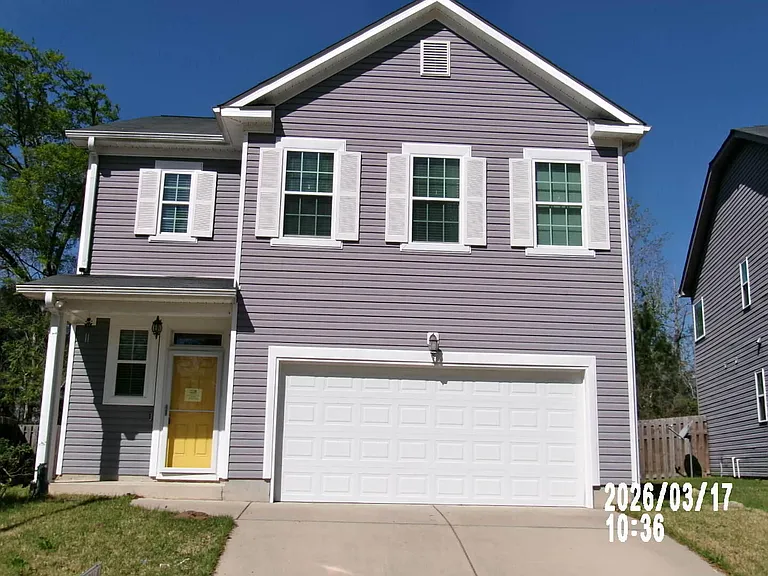
Real closing example — Georgia
No Personal Income Needed for This Rental Purchase
This example is from Grovetown, Georgia, not McAllen, Edinburg or Mission. See how an investor used the property’s estimated $1,826 monthly rent to qualify for an $184,000 DSCR loan at 7.49% with no prepayment penalty—and how the deal pencils to approximately $205.83 monthly cash flow before other operating expenses.
View the Georgia DSCR purchase case study
DSCR and Investor Loan Guidance
Talk Through DSCR Loan Options With Lyndi Gajan
Real estate investors can work with Lyndi Gajan to talk through DSCR loan questions, rental income scenarios, refinance options, and investor documentation before choosing a loan path.
Lyndi Gajan NMLS ID 88249. 360 Mortgage Inc. NMLS ID 80777. Loan availability, licensing, and guidelines vary by state, property, and loan purpose.
Request your McAllen–Edinburg–Mission financing review
Share the property address and rental strategy so Lyndi can review eligible options and required records.
Frequently asked questions about McAllen–Edinburg–Mission DSCR loans
Does the metro population equal the city of McAllen population?
No. The McAllen–Edinburg–Mission figure describes the metropolitan area. Analyze rent and expenses for the actual property location.
Can I apply McAllen short-stay rules to a Mission or Edinburg property?
No. Confirm the governing jurisdiction and its address-specific requirements, along with association rules, insurance and lender acceptance.
Does McAllen have a short-term rental application?
The city publishes an application requesting rental-unit details and a local emergency contact. Verify the current process and tax obligations directly with the city.
Does 1.25 DSCR mean the owner has positive monthly cash flow?
No. Vacancy, management, maintenance, capital replacements and other operating costs can consume the margin after the debt payment.
Can an LLC hold a DSCR-financed Valley rental?
Some programs accept eligible LLC borrowers with required records and guarantees. An LLC alone does not establish loan eligibility or a licensing exemption.
What helps start a McAllen–Edinburg–Mission loan review?
Provide the address, price or value, loan request, supported rent, lease term, taxes, insurance, dues, repairs, occupancy, available funds and ownership structure.
Sources and review notes
Local facts checked October 8, 2026. Examples are hypothetical and are not advertised rental income or loan terms.
Comparing nearby Valley metros? Our Brownsville–Harlingen DSCR guide covers its own university location, rental budget and local short-stay requirements.