
DSCR Loans in College Station–Bryan, TX

Review financing for a College Station or Bryan investment with supported rent, a clear lease structure and an annual operating budget.
Review your rental scenario with Lyndi
DSCR financing for a College Station–Bryan rental
Investors often look at College Station because of Texas A&M, but a recognizable institution does not replace a property-level financing review. A DSCR loan generally compares supported rent with the required debt payment under the selected program. Credit, funds, reserves, appraisal, condition and the intended rental arrangement remain part of underwriting. A strong campus connection in a listing description does not establish the amount of income a lender will accept.
This guide covers genuinely non-owner-occupied business-purpose rentals. Start with the address and the planned lease structure, then compare financing options. A whole-home lease, separate bedroom leases and furnished short stays may produce different documentation and operating requirements. Tell the loan team which arrangement you actually intend rather than submit a whole-home assumption and change the business plan after closing. Our DSCR explanation describes the general process.
One metro does not mean one set of local rules
FRED reports the Census College Station–Bryan metro estimate as 287,476 residents for July 2025. That is the metropolitan total, not the population of either city and not an estimate of renters competing for one home. Texas A&M identifies its main campus as College Station. These facts provide context; neither establishes occupancy, rents or appreciation for an investment.
Confirm whether the property is in College Station, Bryan or another jurisdiction before checking rental rules. A mailing address and a familiar neighborhood name should not substitute for parcel and city-limit information. College Station guidance should not automatically be applied to a Bryan property. Review zoning, occupancy limits, parking and any applicable rental registration with the authority responsible for the actual address.
Compare competing homes that match the intended rental use. A furnished event rental and an unfurnished student lease should not be blended into one income estimate. Record bedroom count, bathrooms, parking, condition, lease duration, utilities and distance to the destinations tenants need. Asking rents provide research leads, while signed lease evidence and the lender’s appraisal process determine what is supportable.
Student lease timing deserves an annual budget
For a student-oriented rental, the calendar can matter as much as the monthly advertised rent. Review when leases begin and end, whether the owner receives twelve months of payments, and how much time is available for repairs between occupants. A gap between groups may create both a vacancy cost and a compressed maintenance schedule. Ask a local leasing professional how the proposed home fits the actual leasing cycle.
Build a month-by-month worksheet rather than multiply a peak monthly number by twelve without qualification. Identify the expected lease term, leasing expense, renewal assumptions and the cash needed for cleaning, painting and replacements. Even where the contract runs a full year, budget the cost of making the home ready for the next group. The operating plan should remain workable if a renewal does not happen.
An investor who lives elsewhere also needs a realistic service arrangement. Confirm who handles showings, move-in documentation, repair coordination and emergency calls. Compare written quotes and services instead of assuming every management percentage includes the same work. A higher gross rent can disappear quickly if the business needs more hands-on attention than the budget allows.
Whole-home and bedroom leases need different evidence
A house leased to one group under one agreement differs from a property with separate room leases. Clarify the contractual arrangement, responsibility for shared spaces, utility billing and collection process. Ask the lender whether the chosen program accepts the intended structure and how it treats the income. Do not assume that adding separate bedroom asking rents produces the rent figure an appraiser will use.
Check the number of people permitted to occupy the address under applicable rules and documents. Bedroom count alone does not answer that question. Also review parking capacity, restrictions, association rules and any limits on the proposed use. If the investment relies on a particular arrangement, confirm it before negotiating around its projected income.
For an occupied acquisition, obtain the existing agreements and payment history. Record deposits, arrears, renewal dates, concessions and repairs promised to occupants. A plan to change lease structure later is a future business decision, not current supported income. Present the actual lease and separately identify any proposed change so the financing review remains clear.
Illustrative annual-rental purchase
Suppose a hypothetical home supports $2,400 monthly rent and has a proposed $1,920 payment including principal, interest, taxes and insurance. The simple ratio is 1.25. These numbers explain the calculation; they are not College Station market rent estimates, a quoted interest rate or a loan approval. The lender may include other charges or apply a different income method.
The $480 difference between rent and payment is not the owner’s final profit. Illustrative allowances of $120 for vacancy, $192 for management, $120 for maintenance and $120 for capital replacements total $552. That leaves a $72 monthly shortfall before additional costs. An apparent qualifying ratio can coexist with negative operating cash flow, which is why an investor needs both calculations.
Now model only eleven months of rent at $2,400. Annual receipts are $26,400 rather than $28,800, an average of $2,200 per month. Against a $1,920 payment, that average represents approximately 1.15 before operating expenses. This is an investor stress test, not a substitute for the lender’s required calculation. Use our DSCR calculator and keep a separate annual budget.
Down payment and turnover reserves
On an illustrative $300,000 purchase, a 25% down payment would be $75,000. The actual program may offer a different loan-to-value option. Closing costs, prepaid taxes and insurance, initial repairs and reserves would increase the total cash needed. Determine the funds required before committing every available dollar to the down payment.
Student-oriented leasing can concentrate turnover costs into a narrow period. Set aside money for painting, cleaning, appliances and larger replacements based on the home’s condition and the expected use. A reserve should be available when the work is needed, rather than depend on rent that has not yet been collected. Track operating reserves separately from funds intended for another acquisition.
Ask the lender which accounts and funds qualify for its requirements. Entity accounts, transferred funds and sale proceeds may require supporting records. Organize the source of funds, ownership and access early. Our DSCR requirements guide provides a starting checklist; the selected program’s conditions control the actual transaction.
Taxes, insurance and association costs
Estimate property taxes for your intended ownership and rental use, not just the seller’s previous circumstances. A historical bill may reflect exemptions that do not fit an investment property. Verify the applicable assessment information and ask the appropriate local office how to estimate the tax obligation. Label unconfirmed estimates clearly in the purchase worksheet.
Get an insurance quote that describes the rental arrangement honestly. Tell the insurer about occupancy, separate room leases if planned, short stays, furnishings and any owner-paid amenities. Confirm deductibles, liability coverage, roof-related conditions and exclusions. The current owner’s premium is not a reliable substitute for a quote suited to your business.
Association dues and rules also matter. Obtain the governing documents, rental limitations and any known assessment information. A program that accepts the property’s income does not override association restrictions. Include recurring dues in the payment review where required and include additional ownership costs in your operating budget.
Short stays require a separate College Station review
College Station defines short-term rentals as residential units rented for fewer than thirty consecutive days. Its city guidance requires a permit, annual renewal and hotel occupancy tax compliance. It also describes guest information and life-safety obligations. Verify current requirements for the address and proposed operation directly with the city; the process is separate from lender acceptance.
Do not treat event-weekend pricing as average monthly income. Model booked nights, seasonal variation, cleaning, management, platform charges, utilities, furnishings and reserves. Ask the lender which evidence it accepts for an eligible short-stay property. A rental projection should show its assumptions and costs rather than present the busiest weekend as normal performance.
If the short-stay plan does not work, evaluate an annual rental fallback before purchase. Compare its supported income with the same debt payment and ownership costs. For a Bryan address, obtain Bryan-specific guidance instead of assuming the College Station permit process applies. Our short-term rental financing guide helps organize the loan questions.
Refinancing and LLC ownership
A refinance should serve a defined purpose, such as changing payment structure or releasing equity for a planned use. Compare the new payment, term, closing costs and any prepayment penalty with the existing loan. Include the effect on operating cash flow. Cash received at closing is not free capital if it increases the rental’s monthly obligations for years.
For example, supported rent of $2,500 against a $2,000 payment gives a 1.25 ratio. Increasing the payment to $2,200 through a cash-out transaction reduces the ratio to approximately 1.14 and removes $200 of monthly margin before operating costs. These are hypothetical figures. Discuss value, seasoning and documentation before relying on a specific cash-out amount.
Some programs accept eligible LLC borrowers with entity records, signing authority and guarantees as required. An LLC does not turn a personal residence into a business-purpose rental or independently establish a licensing exemption. Disclose actual use, including any personal occupancy, at the beginning. Review our LLC borrower guide and coordinate vesting before closing.
Prepare your College Station–Bryan scenario
Send the address, price or value, desired loan amount, existing lease or rent evidence, intended lease structure, taxes, insurance, association dues, repair needs and occupancy. Include available closing funds, reserves and ownership details. Identify whether the figures are documented, quoted or preliminary so Lyndi can focus the review on the missing pieces.
Investors comparing other university-area markets can read the Waco DSCR guide. The Texas DSCR hub connects the state resources. For leasing operations and rental budgeting, review Blue Castle Management’s educational resources alongside advice and quotes from local providers.
The next useful step is a discussion of the actual property and rental business. Bring both the proposed loan payment and the annual operating worksheet. That helps distinguish an underwriting question from an investment that needs different terms, more reserves or a revised purchase price.
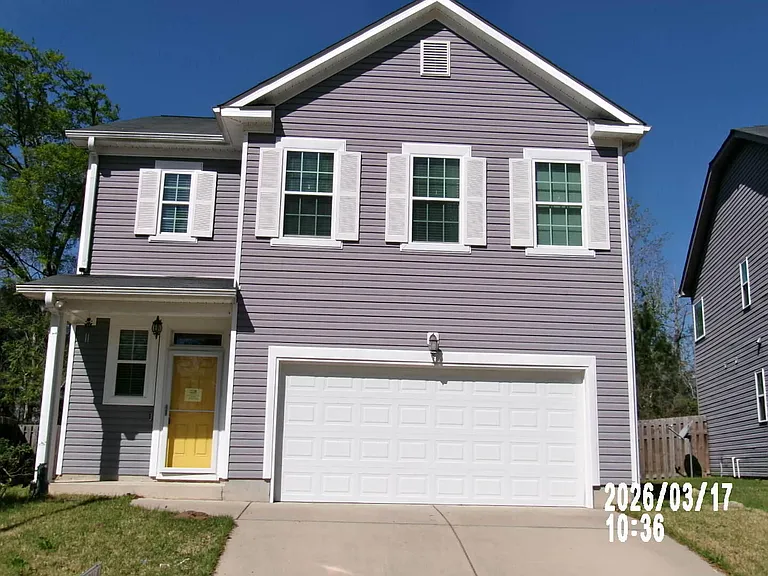
Real closing example — Georgia
No Personal Income Needed for This Rental Purchase
This example is from Grovetown, Georgia, not College Station or Bryan. See how an investor used the property’s estimated $1,826 monthly rent to qualify for an $184,000 DSCR loan at 7.49% with no prepayment penalty—and how the deal pencils to approximately $205.83 monthly cash flow before other operating expenses.

DSCR and Investor Loan Guidance
Talk Through DSCR Loan Options With Lyndi Gajan
Real estate investors can work with Lyndi Gajan to talk through DSCR loan questions, rental income scenarios, refinance options, and investor documentation before choosing a loan path.
Lyndi Gajan NMLS ID 88249. 360 Mortgage Inc. NMLS ID 80777. Loan availability, licensing, and guidelines vary by state, property, and loan purpose.
Request your College Station–Bryan financing review
Share the investment address and lease plan so Lyndi can review eligible programs and documentation.
Frequently asked questions about College Station–Bryan DSCR loans
Can a DSCR loan finance a College Station student rental?
Some programs may accept eligible rental properties, but the lease structure, supported income, condition and borrower must meet lender requirements. Disclose separate bedroom leases if planned.
Does proximity to the university guarantee rent or occupancy?
No. Compare the actual address, lease duration, condition, parking and competing rentals. Campus proximity does not establish the income a lender will accept.
Does College Station require a short-term rental permit?
City guidance requires a permit and annual renewal for residential units rented for fewer than thirty consecutive days. Verify current address-specific requirements and tax obligations.
Are College Station rules automatically the same in Bryan?
No. Confirm the jurisdiction and obtain guidance for the actual property address rather than applying another city’s permit process.
Is a 1.25 DSCR the same as positive cash flow?
No. Vacancy, management, maintenance, turnover and capital reserves can reduce or eliminate the margin remaining after the loan payment.
What should I send for a College Station–Bryan DSCR review?
Send the address, price or value, loan request, rent evidence, lease structure, taxes, insurance, dues, repairs, occupancy, closing funds and entity information.
Sources and review notes
Local facts checked October 8, 2026. All financing and expense examples are hypothetical and are not local rent estimates or advertised loan terms.