

DSCR Loans in Killeen–Temple, TX for Rental Investors
Compare local rental plans, supported property income and a realistic expense budget before choosing your investment loan.
Review your investor scenario with LyndiQuick answer: A Killeen–Temple DSCR loan evaluates an eligible rental property using supported income and lender guidelines. Build a separate operating budget and confirm the actual business-purpose use before applying.
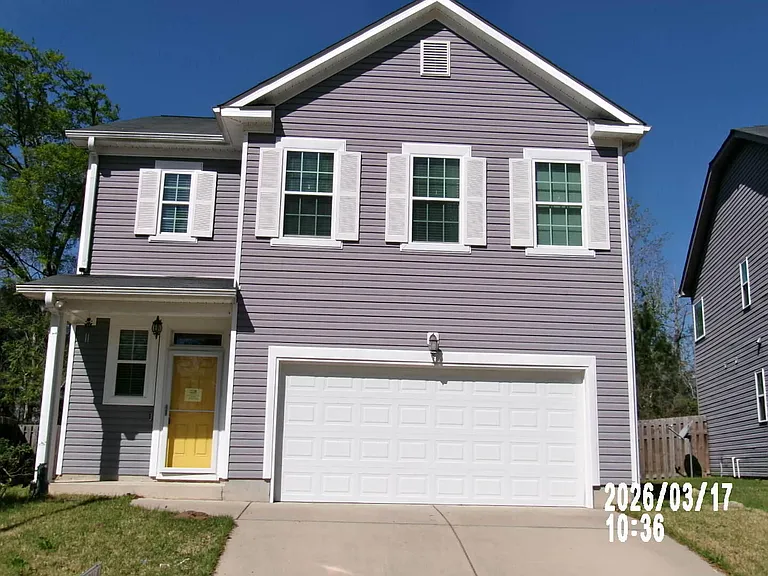
Real closing example — Georgia
No Personal Income Needed for This Rental Purchase
This example is from Grovetown, Georgia, not Killeen or Temple. See how an investor used the property’s estimated $1,826 monthly rent to qualify for an $184,000 DSCR loan at 7.49% with no prepayment penalty—and how the deal pencils to approximately $205.83 monthly cash flow before other operating expenses.
View the Georgia DSCR purchase case studyDSCR financing for Killeen–Temple rental investors
A debt service coverage ratio loan focuses on supported property income and the proposed housing payment rather than qualifying solely through a personal employment-income calculation. For many one-to-four-unit rental programs, the ratio is monthly qualifying rent divided by principal, interest, property taxes, insurance and applicable association dues. The lender determines the accepted income evidence, payment calculation and minimum ratio. Commercial multifamily programs can use a different method based on net operating income and annual debt service.
A business-purpose DSCR loan may help an investor evaluate a rental purchase, refinance an existing investment mortgage or access eligible equity. It still involves credit, assets, appraisal, title, insurance and property-condition review. It is not an owner-occupied home loan, and owning the property through an LLC does not automatically establish business purpose. Start with our DSCR loan explanation and qualification guide before choosing a loan structure.
One metro, several property markets
The Killeen–Temple metropolitan area had an estimated 511,497 residents in July 2025, according to U.S. Census Bureau data published through FRED. That regional count meets our geographic research threshold, but it does not establish achievable rent for any particular house. Killeen, Temple, Harker Heights, Copperas Cove and Belton should not be treated as interchangeable rental locations.
Start with the address and the people who might reasonably choose the property. Compare access to work, ordinary travel times, nearby competing rentals, bedroom configuration, parking and the cost of maintaining the house. Use recent comparable leases or other lender-accepted evidence rather than applying a metro-wide average to every neighborhood. A low purchase price can be outweighed by a large repair budget, and an attractive house can produce weak returns if its financing payment is too high.
Separate the property analysis from a broad growth story. Population is useful context; the rent evidence, expenses, condition and purchase terms are what make an individual investment work.
Fort Hood: evaluate access and turnover instead of assuming demand
The Army describes Fort Hood as a Central Texas installation between Killeen and Copperas Cove. It is a relevant geographic anchor when comparing nearby rental properties. It is not a guarantee of occupancy, rent growth or tenant quality. Compare the actual route from the house to the relevant workplace or installation entrance rather than relying on straight-line distance.
If the proposed rental is intended to serve people moving into or out of the area for work, investigate lease timing and the practical cost of turnover. An investor should ask a local manager about ordinary leasing lead times, make-ready work, competing inventory and how early departures are handled. Any military-related lease provisions should be reviewed with appropriate legal guidance rather than assumed away in the budget.
For underwriting, distinguish a signed lease from an advertised rent or a projected furnished-rental rate. Explain the intended use early so the lender can determine whether the lease structure and income evidence fit its program. Avoid underwriting a house on the expectation that a particular employer or institution will always supply the next renter.
Temple healthcare locations and furnished-rental plans
Baylor Scott & White Medical Center–Temple is located on South 31st Street in Temple. Its presence gives investors a specific location to investigate when evaluating access to healthcare facilities. The existence of a medical center does not establish demand for a particular furnished property, and a traveling-professional rental plan needs evidence beyond a nearby hospital.
Compare a conventional year-long lease with the actual furnished strategy you intend to operate. Furnishings, utilities, internet, cleaning, replacement linens, platform charges and vacancy between stays can reduce the apparent advantage of a higher monthly rate. Ask whether the lender will accept the proposed income documentation and rental term. A furnished listing is not automatically a short-term rental, and a short-term rental is not automatically eligible for every DSCR program.
Treat Killeen and Temple as separate address-level analyses within the same metro. A lease-up assumption developed around an installation commute may not be appropriate for a property marketed around a Temple medical facility. Use local comparable properties and realistic operating costs for each plan.
Illustrative purchase: a qualifying ratio can hide a thin margin
Consider a hypothetical investment house with $2,000 in supported monthly rent and a $1,600 full housing payment. The simplified residential DSCR is 1.25. These amounts are examples, not a quoted rate, local rent estimate or actual loan approval. They illustrate the calculation, not the terms a lender will offer.
The $400 difference between rent and payment is not automatically profit. Suppose the owner allows $100 for vacancy, $120 for management and $180 for maintenance and future capital replacements. Those illustrative allowances use the entire $400. A property can meet a lender ratio while leaving no projected operating cushion. Actual management fees, repair needs and vacancy should be estimated from the chosen property and service arrangements.
Stress-test the same house with $1,850 rent and a $1,650 housing payment. DSCR is about 1.12, while the same $400 operating allowance produces a $200 monthly deficit. Compare a lower loan amount, a different price or a different property before assuming that reaching a qualifying ratio is enough. Our DSCR calculator helps with the ratio; Blue Castle’s rental analysis guide explains the wider expense budget.
Down payment, reserves and the cash needed after closing
Down-payment and reserve requirements depend on the lender, credit profile, property type, occupancy, ratio and transaction. There is no single percentage that applies to every Killeen–Temple DSCR file. Compare an actual proposal rather than budgeting only from a general online program summary. Include closing costs, any required reserves, immediate work and the cash needed during initial lease-up.
For example, a hypothetical $250,000 purchase with a 25% down payment would require $62,500 toward price before closing costs, repairs and reserves. That is arithmetic, not a promise that 25% is the required or available structure. If the house also needs $12,000 in work, the investor must budget that separately and confirm how property condition affects permanent financing.
Keeping cash available can matter as much as maximizing leverage. A smaller loan may improve the qualifying ratio but consume more funds up front. Compare both the monthly payment and the remaining cash cushion. Do not count the same dollars simultaneously as a down payment, an emergency repair budget and a required post-closing reserve.
Taxes, insurance and property condition
Use the historical property-tax bill as a reference, then verify assumptions for the proposed ownership and investment use. A previous owner’s residence-homestead benefits may not carry into an investor’s rental budget. Confirm the parcel, taxing jurisdictions and applicable exemptions with the relevant appraisal district rather than applying one tax percentage throughout the metro.
Obtain an insurance quote describing the actual occupancy, ownership and rental plan. Review deductibles and any property-specific flood or other coverage questions. A lower premium is not necessarily a better budget if it creates a large uninsured or deductible exposure. Update the proposed housing payment once reliable taxes and insurance become available.
Inspect the major building systems and distinguish normal maintenance from immediate repair work. A permanent DSCR loan should not be assumed to finance extensive rehabilitation before the property meets lender requirements. Review the roof, heating and cooling, plumbing, electrical systems and any deferred work with qualified local professionals. A rent-ready property and a project needing substantial work may require different financing paths.
Killeen short-term rental registration is a separate check
The City of Killeen requires annual registration for short-term rental operators inside city limits and describes a short-term rental as a property rented for fewer than 30 days. Read the city’s current registration guidance for the actual address before committing to a vacation or short-stay business plan. A mailing address alone does not establish which jurisdiction’s rules apply.
Local compliance, association restrictions, insurance and lender acceptance are separate issues. A seller operating a short-term rental does not prove that the buyer’s ownership, permit, coverage and loan structure will be accepted. Ask what approvals need updating at transfer and which documents the lender requires to support income.
For a property in Temple, Belton, Harker Heights or Copperas Cove, investigate that jurisdiction directly. Do not copy Killeen requirements into neighboring cities. Compare our short-term rental financing guide with long-term rental financing, and model a conservative alternative if projected short-stay income is essential to the deal.
Refinance and cash-out: compare the new payment with the investment plan
For an existing rental, begin with the current loan balance, ownership history, lease, property condition and recent improvements. The available structure may depend on seasoning, supported value, loan-to-value limits, rent evidence and the lender’s guidelines. An appraisal increase alone does not guarantee that cash-out proceeds will be available.
Compare the proposed payment with the current mortgage and the planned use of proceeds. An investor who extracts more equity can reduce the property’s operating margin even when the new loan is technically eligible. Include closing costs and any existing prepayment charge when comparing alternatives. Ask how prepayment provisions work under the actual proposal rather than assuming that every DSCR loan has the same terms.
A hypothetical refinance with $2,200 in supported rent and a $1,850 full payment produces a simplified DSCR of about 1.19. It still needs a separate expense budget. Consider a smaller cash-out amount if it leaves enough cash for the intended project while giving the rental more room for vacancy and repairs. These figures describe an illustration, not a borrower approval or advertised offer.
LLC borrowing and business-purpose scope
An eligible program may accept an individual investor or an LLC, subject to its documentation and guarantee requirements. An LLC borrower should be ready to provide formation records, ownership information, signing authority and any operating agreement required by the lender. Coordinate the deed, insurance and closing documents before closing, and discuss entity choices with legal and tax advisers.
Texas mortgage statutes define residential mortgage loans by personal, family or household purpose; the company chapter incorporates that definition. The state’s mortgage regulator also distinguishes certain acquisition and rehabilitation loans for investment from personal-residence loans in its guidance. This supports reviewing genuine business-purpose investment transactions, but it does not turn an owner-occupied property or personal-purpose transaction into a DSCR loan. Transaction use and the appropriate lending channel must be confirmed.
This page concerns non-owner-occupied business-purpose investment financing. It does not represent that 360 Mortgage or Lyndi holds a Texas residential mortgage license. Availability depends on the actual transaction, lender and applicable requirements. Review our LLC borrower guide for the documentation discussion.
Build a reviewable Killeen–Temple investment scenario
Send the address, purchase price or estimated value, requested loan amount, supported rent, estimated taxes and insurance, association dues, ownership structure and available funds. Describe current occupancy, repair work, the rental term and whether the request is a purchase, rate-and-term refinance or cash-out refinance. An address-specific scenario is more useful than asking only for the lowest advertised rate.
If the plan depends on furnishings, separate bedroom leases or short-term stays, explain that before an appraisal is ordered. Include the conservative rental alternative and the cash available if lease-up takes longer than expected. A clear operating budget helps the discussion focus on the investment rather than only a qualifying threshold.
Use the form below to request a review with Lyndi. You can also compare the Texas DSCR hub, the nearby Waco rental-financing guide and Austin DSCR guide. The main DSCR hub connects program and investor resources. Preliminary discussions, examples and calculator results do not guarantee approval, pricing or a closing date.

DSCR and Investor Loan Guidance
Talk Through DSCR Loan Options With Lyndi Gajan
Real estate investors can work with Lyndi Gajan to talk through DSCR loan questions, rental income scenarios, refinance options, and investor documentation before choosing a loan path.
Lyndi Gajan NMLS ID 88249. 360 Mortgage Inc. NMLS ID 80777. Loan availability, licensing, and guidelines vary by state, property, and loan purpose.
Request your Killeen–Temple investor financing review
Tell Lyndi about the property, rental strategy and loan request.
Frequently asked questions about Killeen–Temple DSCR loans
Can I finance a Killeen rental through an LLC?
Some DSCR programs accept eligible LLC borrowers. Formation records, signing authority, guarantees, credit, assets, appraisal and rental-income documentation remain subject to lender requirements.
Does proximity to Fort Hood guarantee rental income?
No. Evaluate comparable leases, the actual commute, property condition, competing rentals and turnover costs. An institutional location does not guarantee occupancy or supported rent.
How is the DSCR ratio calculated for a single-family rental?
Many programs divide supported monthly rent by principal, interest, taxes, insurance and applicable association dues. Confirm the lender method and budget operating expenses separately.
Does Killeen require short-term rental registration?
The city requires annual registration for short-term rental operators inside city limits. Confirm current address-specific requirements, insurance, association restrictions and lender acceptance before relying on short-stay income.
Can I use a DSCR loan for a home I will occupy?
This page concerns non-owner-occupied business-purpose investment financing. A personal residence requires a different loan and licensing review; an LLC name does not change actual use.
What should I provide for a Killeen–Temple loan review?
Send the address, price or value, loan amount, supported rent, taxes, insurance, association dues, available funds, ownership structure, occupancy, repairs and intended rental term.
Sources and local review notes
Local facts checked October 8, 2026. Examples are hypothetical; they are not local market rent estimates or quoted loan terms.