Direct answer
What are the self-employed mortgage requirements?
Self-Employed Mortgage Requirements is mainly about matching the borrower, property, loan purpose and timing to the right mortgage path. Eligibility and pricing can depend on credit profile, income documentation, debt-to-income ratio, property type, occupancy, loan amount, equity or down payment, and current program rules.
Baseline Requirements (Most Common)
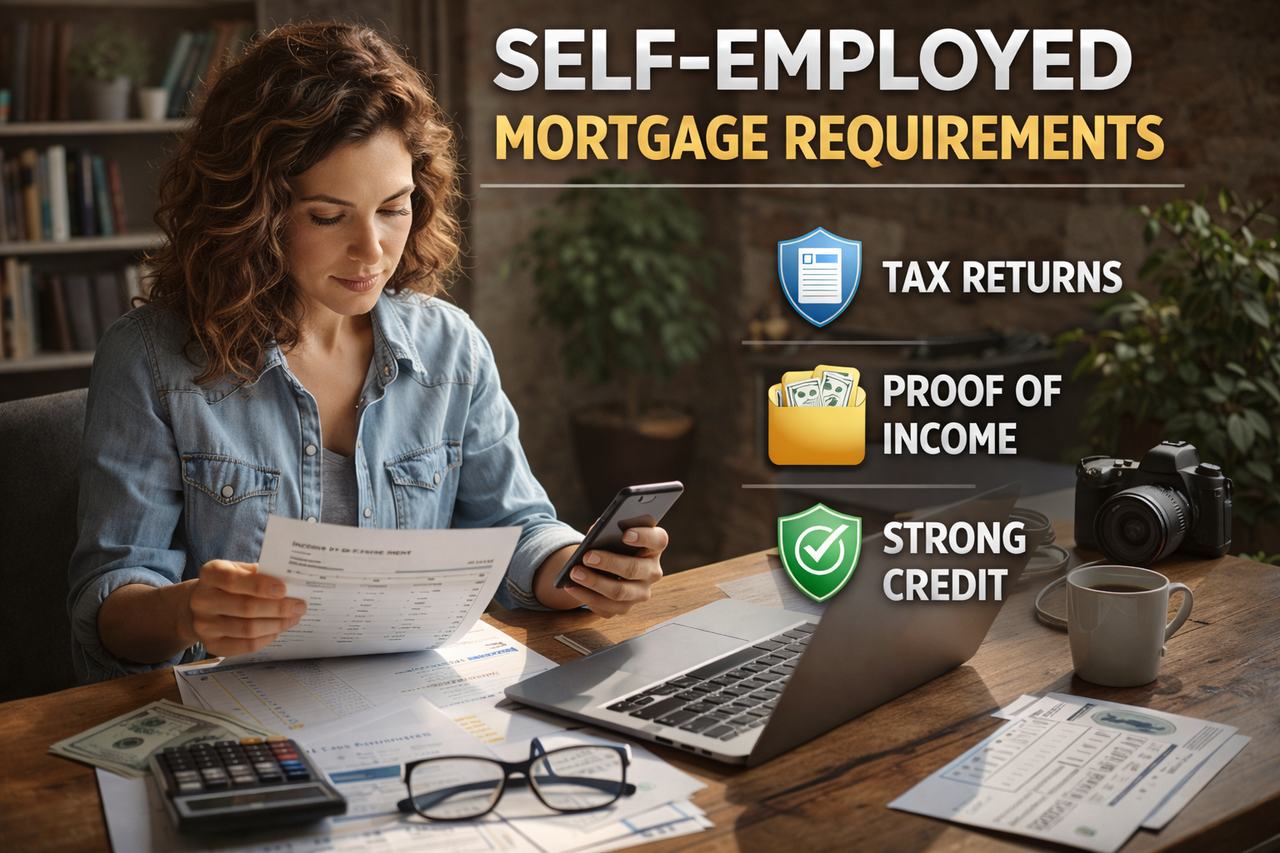
Requirements vary by loan program and borrower profile, but most self-employed approvals come down to the same fundamentals:
- Documented self-employed income that supports the payment
- Consistent business history and stable income trend
- Acceptable credit profile
- Verifiable assets for down payment and closing
- Reserves (especially when income fluctuates)
If you want the “why” behind these requirements and how write-offs impact qualifying income, read: Self-Employed Mortgage Guide.
Time in Business
Many lenders want an established track record of self-employed income. The time requirement depends on the program and how consistent your business profile is.
- Longer history: Typically simpler underwriting
- Shorter history: May require stronger compensating factors (credit, reserves, down payment)
- Recent change in business structure: May trigger extra documentation
Self-Employed Mortgage Documentation Checklist
Think of documentation in two buckets: “minimum needed” and “helps underwriting move faster.”
Minimum documentation (common)
- Personal tax returns (most recent 1–2 years)
- Business tax returns (if applicable)
- Year-to-date profit & loss statement
- Business ownership documentation (license, articles, operating agreement, etc.)
- Bank statements (to support funds and reserves)
Documentation that often helps
- Year-to-date balance sheet
- CPA letter (if requested by program/underwriter)
- Business invoices/contracts supporting stability
- Explanation letter for unusual income swings or one-time events
How Underwriters Review Self-Employed Income
Underwriting focuses on documented, sustainable income rather than gross deposits. The goal is to verify the income trend and determine what portion is stable enough to use for qualifying.
- Income may be averaged over time depending on stability
- Declining trends may require explanation or may reduce qualifying income
- Some non-cash items can be added back depending on guidelines
- Large write-offs can reduce the income used for qualifying
For the full explanation (including write-offs and common pitfalls), read: Self-Employed Mortgage Guide.
Credit, Assets, and Reserves
For self-employed borrowers, lenders often weigh credit strength and liquidity heavily because income can be less predictable than W-2 employment.
- Credit: Strong credit can expand program options
- Down payment: Impacts approval flexibility and pricing
- Reserves: Often required to show you can carry payments during slower months
Helpful references: Credit & Qualification, Down Payment Options, Closing Costs Explained.
Common Mistakes That Create Underwriting Problems
- Late or unfiled tax returns
- Mixing personal and business finances without clean records
- Large unexplained transfers between accounts
- Taking aggressive write-offs right before applying
- Incomplete year-to-date financials or outdated bookkeeping
Self-Employed Mortgage Requirements FAQs
Do I have to show two years of tax returns?
Many programs look at recent history, but requirements vary. If you’re early in self-employment, stronger compensating factors may be needed.
Will business write-offs hurt my approval?
Write-offs can reduce the income lenders can use for qualifying. Planning ahead and keeping clean financials can help.
What if I pay myself in different ways (W-2 + distributions)?
That’s common. The underwriter will evaluate the structure and consistency of income based on your tax returns and business financials.
Next Steps
If you want to avoid surprises, send your documentation early and we’ll identify any red flags before you’re under contract.
Related Mortgage Guides
Disclosure: This page provides general educational information and is not a commitment to lend. Loan programs, underwriting guidelines, and documentation requirements vary by lender and are subject to change. Final approval depends on underwriting and complete documentation review.
NMLS: 80777
Licensed mortgage broker in Missouri, Kansas, and Louisiana.
Frequently asked questions
Who is Self-Employed Mortgage Requirements best for?
Self-Employed Mortgage Requirements may fit borrowers whose goals, documentation and property details line up with the program requirements. A mortgage review is the fastest way to compare options without relying on generic assumptions.
What documents should I prepare?
Most borrowers should be ready to discuss income, assets, debts, credit history, property details and the purpose of the loan. Exact documentation depends on the program and underwriting review.
What is the next step?
The next step is to talk with 360 Mortgage so the team can review your situation, explain available options and outline the application path.